Edward Burtynsky Climate Change Exhibition

Following the global success of Anthropocene, a multimedia exhibition documenting humanity’s irreversible impact on the Earth, photographer Edward Burtynsky continues his exploration of the environmental effects of industrialization with a new exhibition, presented for the first time in Italy at M9 – Museum of the 20th Century. After a successful debut at the Saatchi Gallery in London, the Edward Burtynsky exhibition arrives in Italy, offering the most comprehensive retrospective of Burtynsky’s more than 40-year career.


Renowned for his large-scale images of industrial landscapes, Burtynsky has dedicated his life to capturing the profound impact of human activity on the planet. His work focuses on what he describes as “large-scale industrial incursions across the planet,” documenting the often unseen consequences of industrial processes that serve our current needs but jeopardize the future of our environment.


Curated by Marc Mayer, former director of the National Gallery of Canada, with exhibition design by Alvisi Kirimoto, the Edward Burtynsky exhibition features over 80 large-format photographs, 10 high-definition murals, and an Augmented Reality experience. A new section, Process Archive, offers a behind-the-scenes look at the tools and technologies Burtynsky has used throughout his career, including drones that have expanded his ability to capture vast landscapes from unique perspectives.

Visitors will also encounter Burtynsky’s powerful photographic campaign from 2022, commissioned by the Sylva Foundation, which documents the environmental catastrophe caused by Xylella on Apulian olive trees. This collection starkly illustrates the tangible impacts of climate change in Italy. Additionally, the exhibition screens the award-winning short film In the Wake of Progress (2022), co-produced by Burtynsky and music producer Bob Ezrin, featuring original music by the late Phil Strong. Shown in immersive mode, it debuts in Italy in the M9 Orizzonti room.


Burtynsky’s large-scale images often appear as abstract fields of color, drawing the viewer in before revealing the devastating reality behind them—industrial landscapes that testify to the environmental toll of human progress. This Edward Burtynsky exhibition is a visual reminder of the consequences of industrialization and climate change, prompting critical reflection on our role in shaping the planet’s future.


Burtynsky’s work is housed in over 80 major museums worldwide. His notable exhibitions include Anthropocene (2018), Water (2013), Oil (2009), China (2005), and Manufactured Landscapes (2003). Among his many accolades, Burtynsky received the 2023 PHotoESPAÑA Award and the Pino Pascali Award. He is also recognized for his role in producing the acclaimed documentary trilogy Manufactured Landscapes, Watermark, and ANTHROPOCENE: The Human Epoch, all of which continue to be featured in festivals globally.

Images courtesy of BataGoranCC BY-SA 4.0, via Wikimedia Commons

Murano Glass Exhibition And The Venice Biennale

The exhibition 1912-1930 Murano Glass and the Venice Biennale, curated by Marino Barovier, offers a rare opportunity to explore the evolution of Murano glass at the Venice Biennale. Running until 24 November 2024 at LE STANZE DEL VETRO, this showcase focuses on the pivotal period from 1912 to 1930, highlighting how Murano glass gradually gained prominence at the prestigious event. This Murano glass exhibition presents 135 exquisite works, many of which are exceptionally rare, sourced from renowned museums and private collections.


Between 1912 and 1930, Murano glass became increasingly visible in the Biennale’s exhibitions, with artists recognizing the extraordinary possibilities offered by this medium. The artworks on display demonstrate the creative and technical mastery achieved by Murano glassmakers during this time, showing how the craft evolved into a fine art that could stand alongside traditional painting and sculpture. This period saw the introduction of the Applied Arts section, which included glassworks, housed alongside the Fine Arts exhibits in the Palazzo dell’Esposizione.


One of the highlights of this Murano glass exhibition is the way it illustrates the journey of Murano glass from a craft tradition to a key part of the Venice Biennale’s narrative. The decision to showcase Murano glass in the Biennale was a significant step in recognizing glass as an art form in its own right. By 1930, the Biennale acknowledged the importance of applied arts, leading to the eventual creation of a dedicated pavilion in 1932. This transition is a crucial moment in the history of both the Venice Biennale and the development of glass as a medium for artistic expression.


The exhibition is not only a visual celebration but also a scholarly one, as it is accompanied by a comprehensive catalogue curated by Marino Barovier and Carla Sonego. The catalogue is the product of meticulous research, combining an in-depth investigation into archival documents from the Biennale Historical Archive and a thorough bibliographic study. Visitors to the Murano glass exhibition will gain a deeper understanding of the artistic and historical significance of Murano glass. Its relationship with the Venice Biennale during these formative years.


This exhibition at LE STANZE DEL VETRO provides a unique insight into the delicate balance between tradition and innovation that defined Murano glass production in the early 20th century. As the exhibition runs until 24 November 2024, visitors have ample time to explore this fascinating chapter of art history. It is the rare chance to see some of the finest examples of Murano glass from the period. Whether you’re an art enthusiast, a glass aficionado, or simply curious about the rich cultural heritage of Venice, this Murano glass exhibition offers a captivating look at how one of the world’s most beautiful materials found its place in one of the most important art events globally.


Images courtesy of https://lestanzedelvetro.org/ – Ph. Enrico Fiorese

Julie Mehretu Exhibition at Palazzo Grassi

The Julie Mehretu exhibition titled “Ensemble” will be presented at Palazzo Grassi from 17 March 2024 to 6 January 2025. Curated by Caroline Bourgeois, Chief Curator of the Pinault Collection, together with Julie Mehretu herself, this is the most comprehensive exhibition of Mehretu’s work to date in Europe. Spanning 25 years of her artistic journey, the exhibition features over fifty works, including both paintings and prints, with a particular focus on recent pieces from 2021-2024.


Spread across two floors of Palazzo Grassi, the Julie Mehretu exhibition brings together 17 works from the Pinault Collection alongside key loans from international museums and private collections. This rich selection allows visitors to experience the full scope of Mehretu’s dynamic and evolving artistic practice. Her works are known for their intricate layering of lines, forms, and marks, which create complex compositions that reflect global issues, urban landscapes, and the chaotic nature of contemporary life.


The exhibition is structured as a non-chronological exploration of Mehretu’s oeuvre, encouraging visitors to engage freely with her work. Central to the concept of the Julie Mehretu exhibition is the theme of collaboration and dialogue. Alongside Mehretu’s works, the exhibition features pieces by several of her closest artist friends, including Nairy Baghramian, Huma Bhabha, Tacita Dean, David Hammons, Robin Coste Lewis, Paul Pfeiffer, and Jessica Rankin. These artists, who share with Mehretu an experience of displacement—whether leaving or fleeing countries like Ethiopia, Iran, and Pakistan—engage in a rich visual and conceptual dialogue with her art.


Through this exhibition, Mehretu explores the idea that art is not created in isolation. Instead, it is deeply influenced by connections, relationships and shared experiences. This collaborative spirit is at the heart of Ensemble, revealing how Mehretu’s artistic practice has been shaped by her peers and how her works resonate with broader social, political, and cultural themes.


The Julie Mehretu exhibition will also include a series of public conferences and cultural events at the Teatrino di Palazzo Grassi, providing additional insights into the exhibition’s themes and the artists involved. A comprehensive catalogue, published by Marsilio Arte, Venice, will accompany the exhibition, featuring contributions by Hilton Als, Caroline Bourgeois, Patricia Falguières, Julie Mehretu, Jason Moran, and two in-depth conversations between Mehretu, Paul Pfeiffer, Lawrence Chua, and Caroline Bourgeois.


In collaboration with K21–Kunstsammlung Nordrhein-Westfalen in Düsseldorf, which will present the exhibition in 2025, the Julie Mehretu exhibition at Palazzo Grassi offers a unique opportunity to explore the work of one of the most significant contemporary artists today, showcasing her continued innovation and engagement with the world around her.


Images courtesy of https://www.flickr.com/photos/ugardener/52018331061 – Ph. JR P

Henri Matisse Exhibition “Light of Mediterranean”

The Henri Matisse exhibition at the Centro Culturale Candiani presents a new and captivating project, drawing from the civic collections of modern art at Ca’ Pesaro. This exhibition focuses on the work of Henri Matisse, one of the most significant masters of the 20th century, and his connection to the vibrant artistic movements of his time. Featuring three important lithographs from the 1920s and two drawings from 1947, all from the Galleria Internazionale d’Arte Moderna, the exhibition brings Matisse’s work into dialogue with that of his contemporaries, including Henri Manguin, André Derain, Albert Marquet, Maurice de Vlaminck, Raoul Dufy, and Pierre Bonnard.


Matisse, known for his expressive use of color and line, played a key role in the Fauve movement, which sought to break free from traditional artistic constraints. Central to the Henri Matisse exhibition is the idea of light and color, particularly the Mediterranean light that inspired many of the artists on display. The Fauves, including Matisse, were driven by a desire to capture the golden light of the Mediterranean, a light that “suppresses shadows,” as Derain once wrote to Vlaminck. This light, along with the vibrant use of color, formed the foundation of their expressionist approach.


The exhibition weaves Matisse’s artistic journey with those of his close contemporaries, showcasing how these artists revolutionized modern European art by focusing on the inner qualities of mimetic painting, both optical and conceptual. Matisse’s deep connection to the Mediterranean, especially to cities like Nice and Saint-Tropez, is a prominent theme throughout the exhibition. These locations were central to the evolution of his art, shaping the visual language of the 20th century and influencing the way future generations approached color and form.


Drawing plays a vital role in Matisse’s work, often bordering on obsession, as seen in his meticulous attention to the arabesque lines of his female figures and his reflections on the decorative arts. His work, as explored in the Henri Matisse exhibition, embodies the concept of “pleasure in drawing,” a notion also reflected in the writings of philosopher Jean-Luc Nancy. The exhibition not only explores Matisse’s mastery but also examines how his friendships and collaborations with artists like Derain and Vlaminck contributed to the artistic revolutions that shaped modern art.


At the heart of the exhibition is the Mediterranean itself, a geography of artistic creation that served as a muse for Matisse and his peers. The Mediterranean, with its vivid colors and dynamic landscapes, became a central figure in their work, symbolizing freedom and expression. Through this Henri Matisse exhibition, visitors can explore how the region’s light and landscapes profoundly influenced Matisse and left an enduring legacy on 20th-century art.


Images courtesy of https://www.flickr.com/photos/gandalfsgallery/7793747306 – Ph.

Eva Jospin Exhibition “Selva”. Nature with poor materials

The Eva Jospin exhibition titled “Selva” invites visitors to explore the unique relationship between nature and art through her intricate and immersive creations. Born in Paris in 1975, Eva Jospin completed her studies in 2002 and later became a resident at the Académie de France in Villa Medici, Rome from 2016 to 2017. Her artistic journey is deeply rooted in her fascination with nature, capturing its raw essence as well as the diverse iconographic and iconological interpretations it has inspired throughout history.


Using humble materials such as cardboard, plant-based elements, fibers, metal, and fabric, Jospin creates large-scale plastic compositions that evoke a world of landscapes, trees, plants, geological formations, and architectural structures. These works often possess a fairy-tale quality, imbuing her creations with a mysterious, almost magical tone. Through these intricate compositions, she encourages reflection on themes like the creative intellectual processes of past and present, environmental and ecological concerns, and the perception of space. Her works alter both the intellectual and physical space of the venues in which they are displayed, creating a transformative experience for viewers.


The Eva Jospin exhibition at Venice’s Palazzo Pesaro exemplifies her ability to engage with both the historical and environmental contexts of her surroundings. The ancient palazzo, which houses the diverse collections of Mariano Fortuny, serves as the perfect backdrop for Jospin’s work. Her sculptures interact with the existing collections in a dialogue that reveals surprising and unexpected aesthetic and methodological affinities between her creations and Fortuny’s artistic vision. This connection forms the conceptual foundation of the exhibition and drives the choice of the venue, highlighting the relationship between Jospin’s poetic vision and the historical art housed within the space.


Through Selva, Jospin invites visitors to delve into a world that straddles the line between reality and imagination, where nature and art converge in an immersive experience that challenges both intellect and emotion. The Eva Jospin exhibition not only showcases her technical skill but also her profound engagement with the themes of nature, creation, and environmental awareness, making it a must-see event for art lovers visiting Venice.


Images courtesy of https://www.flickr.com/photos/dalbera/53838929666/ – Ph. Jean-Pierre Dalbéra.

Helmut Newton “Legacy”. Photography Exhibition

From 28 March to 24 November 2024, the Helmut Newton exhibition titled “Legacy” will take center stage in Venice, curated by Matthias Harder, Director of the Helmut Newton Foundation in Berlin, and Denis Curti. This retrospective marks the hundredth anniversary of the iconic photographer’s birth (Berlin, 1920 – Los Angeles, 2004) and stands as the most comprehensive exhibition dedicated to Helmut Newton’s work to date.


With over 250 photographs, polaroids, and archival documents, the Helmut Newton exhibition retraces the legacy of one of the most influential and controversial photographers of the 20th century. Known for his provocative style, Newton’s work pushes the boundaries of fashion photography, often blending boldness with elegance. The exhibition on San Giorgio Maggiore Island, with its stunning views over the San Marco basin, further enhances the power of Newton’s imagery, displaying iconic works alongside a selection of previously unseen pieces that offer new perspectives on his practice.


Born as Helmut Neustädter in Berlin, Newton fled Nazi Germany in 1938 and started his photography career in Australia, where he eventually opened his own studio. In Melbourne, he met June Brown, also known as Alice Springs, who would become his lifelong partner and muse. His career blossomed in Europe and the United States, particularly through his collaborations with renowned magazines like Vogue and designers such as Yves Saint Laurent, Karl Lagerfeld, and Thierry Mugler. Newton’s daring approach to fashion and the female form, as seen in his celebrated Big Nudes series, challenged conventions and left an indelible mark on the world of photography.


The Helmut Newton exhibition is structured into six chronological chapters, allowing visitors to trace the evolution of Newton’s career from his early days in Australia in the 1940s and 1950s, through his work in France in the 1960s, and on to his groundbreaking fashion photography in the 1970s in the United States. The exhibition continues with his prolific period in Monte Carlo and Los Angeles during the 1980s and highlights his work throughout the 1990s, documenting his global travels and extensive body of work.


Curator Matthias Harder emphasizes Newton’s deep connection to Venice, as evidenced by his various projects in the city, such as his 1966 report for Queen magazine and his portrait of Anselm Kiefer. After living in Australia and the United States, Newton returned to Europe, residing in Paris and Monte Carlo while making frequent visits to Venice. This exhibition in Venice is a fitting tribute to his lifelong fascination with the city and his remarkable contributions to photography.


Images courtesy of https://www.flickr.com/photos/drewwilsonphotography/7160325045– Ph. Drew Wilson.

Francesco Vezzoli Exhibition. Musei Delle Lacrime

The Francesco Vezzoli exhibition marks a significant chapter in the artist’s ongoing exploration of the relationship between contemporary culture and classical antiquity. Running at the Museo Correr in Venice, this exhibition is a natural continuation of Vezzoli’s artistic journey, which has evolved over the past decade to create a bridge between past and present, blending solemn historical references with pop culture.


Francesco Vezzoli is known for his ability to merge different media, including video, artistic performance, and his signature portraits adorned with embroidered tears. His work juxtaposes the grandeur of classical art with contemporary icons, creating a dialogue that spans centuries. This new Francesco Vezzoli exhibition builds on this theme, presenting works from his extensive artistic repertoire alongside masterpieces from the Museo Correr’s collection, offering a fresh narrative that views the history of art as alive, relevant, and constantly evolving.


Vezzoli’s ability to recontextualize the past was first showcased internationally in his 2011 Sacrilegio exhibition at the Gagosian Gallery in New York. There, he transformed the gallery into a Renaissance chapel, inserting contemporary supermodels like Claudia Schiffer and Linda Evangelista into reinterpretations of 16th-century Italian Madonnas. This bold combination of sacred and profane elements has become a hallmark of Vezzoli’s work, and his latest project in Venice continues this tradition of blending different eras and artistic expressions.


In Musei delle Lacrime, Vezzoli presents a series of historical and recent works, including some created specifically for this exhibition. By placing them alongside religious and cultural masterpieces from the Museo Correr, Vezzoli encourages a new reflection on themes such as identity, emotion, and the role of the past in the present. His work does not seek to erase or deny history, but rather to engage with it in a way that highlights its ongoing relevance.

The Francesco Vezzoli exhibition is not only a celebration of art history, but also a tribute to the city of Venice, a city that embodies the intersection of tradition and modernity. The project is designed with Venice in mind, paying homage to the city’s rich cultural legacy and the work of architect Carlo Scarpa, who played a significant role in shaping the artistic identity of Venice’s museums. By merging past and present, Vezzoli’s work emphasizes the transcendental power of art and its ability to resonate across different historical moments.


Vezzoli’s previous projects, such as his exhibitions at the Collection Lambert in Avignon (2019) and Palcoscenici archeologici with the Fondazione Brescia Musei, have explored similar themes of archaeology and memory. His work often incorporates ancient art into contemporary settings, as seen in his 2021 sculptures for the project Francesco Vezzoli in Florence, where he placed modern and ancient elements in public spaces, creating powerful visual statements about the coexistence of past and present.


This latest Francesco Vezzoli exhibition at the Museo Correr furthers his exploration of these ideas, inviting visitors to experience the dialogue between his art and the historical treasures of Venice. Through a unique blend of classical and contemporary, Vezzoli’s work continues to challenge and inspire, offering a fresh perspective on the timeless power of art.


Images courtesy of https://www.flickr.com/photos/medievalkarl/16276861420/– Ph. Karl Steel.

Banksy. Painting Walls

The exhibition “Banksy. Painting Walls” offers its visitors the unique opportunity to immerse themselves in the artistic universe of a creative who has dominated the world cultural scene for over twenty years. In particular, through his ability to intervene with artistic messages even in war contexts, Banksy demonstrates once again his extraordinary ability to connect with the present, maintaining an artistic commitment that stands out for addressing crucial issues such as climate change, social inequalities, migration flows, conflicts and human rights.

The focus of this exhibition are three original walls painted by the British artist. These are three extraordinary works from private collections, created by Banksy in 2009, 2010 and 2018 respectively, and located in London, Devon and Wales. The three works stage three young teenagers, embodying the sensitivity of a new generation that seems to resonate in tune with the themes dear to the English artist.

In particular, “Season’s Greetings”, which appeared in Port Talbot, Wales, in December 2018, was chosen as the emblematic image of the exhibition. This work depicts a young man with his arms wide open and his tongue stretched out to taste the snowflakes falling from the sky, but it turns out that these “flakes” are actually ash that is lifted from a burning garbage can. Port Talbot, defined by the World Health Organization (WHO) as the most polluted city in the United Kingdom, thus becomes the dramatic backdrop of this representation.

In addition to these three main walls, the exhibition will include other significant works such as “Heart Boy” and “Robot/Computer Boy”, as well as a selection of unique pieces that will further enrich the exhibition experience, for a total of about one hundred original works.

Tribute of Venice to Marco Polo

On the occasion of the seventh centenary of the death of Marco Polo in 1324, the City of Venice has launched a rich calendar of events in collaboration with the Fondazione Musei Civici di Venezia, Ca’ Foscari University of Venice and many other local, national and international associations. These initiatives aim to celebrate the memory of this illustrious Venetian, recognized for having written the first complete and reliable account of the East, thus contributing to the mutual knowledge between Asia and Europe. Support for the celebrations was sanctioned on 29 December with a decree of the Ministry of Culture, signed by Gennaro Sangiuliano at the request of the City and the Venetian University. The National Committee for the celebrations, chaired by the Mayor of Venice Luigi Brugnaro and coordinated by the Dean Tiziana Lippiello, was established to oversee these activities.

The celebrations, together with the Committee, will last for three years, with further initiatives planned in 2025 and 2026. Marco Polo is famous for exploring the lands of the far East, and his epic history as a traveller has created a deep bond with distant cultures and peoples, both by sea and by land. ” The rediscovery of the figure of Marco Polo raises questions of great relevance”, explains the mayor of Venice and president of the Promoting Committee, Luigi Brugnaro. “How can we dialogue with other cultures while preserving our identity? How can we manage relations between peoples and cities? How can we pass on art and work capacity?” The regions and seas explored by Marco Polo during his twenty years of travel are often today at the center of diplomatic tensions. Thanks to the memory of Marco Polo, Venice intends to launch a message of hope, peace and brotherhood, remaining open to new proposals to pursue this goal.

There are also many initiatives in the Ca’ Foscari calendar, which turn into a moment of deep reflection on the life and contribution of Marco Polo, through a compelling scientific and cultural program. Activities at the local level, which include public readings in symbolic places of the city, cultural routes and cycle conferences open to citizens, aim to facilitate the understanding of the complex figure of this man of the Middle Ages and the implications of his journey on the development of Western thought. Theatrical and multimedia projects will also be activated and realized, with workshops focused on the reception of the myth of Marco Polo in the media of the twentieth century: operas, comics, film and television adaptations, as well as creative workshops dedicated to students of primary and secondary schools in Venice, in collaboration with the Regional School Office of Veneto. For the international public, initiatives are planned in collaboration with Rai for the transmission of historical plays on Marco Polo, in order to spread the knowledge of this fascinating figure globally.

Venice Carnival mask workshop


Buy a ticket for the course


Do this because

  • Take part in a unique decoration course
  • Learn the ancient techniques of making a Venetian Carnival mask
  • Keep your own mask as a very special souvenir


Enjoy an unforgettable artistic activity that will allow you to experience the magic of the Venice Carnival! A master artisan will show you the traditional art of making masks and will also tell you interesting stories!

Your instructor, an experienced decorator, will teach you how to paint and decorate your own mask and will accompany you on every step of the decorating process. You’ll have the opportunity to choose a mask, decorate it however you wish, and then take it home as an exclusive souvenir and memory of this Venetian experience.


Buy a ticket for the course

100 years of NasonMoretti


History of a Murano glass family


The exhibition celebrates one hundred years of activity of the NasonMoretti glassworks, one of Murano’s most original and flourishing businesses.
The exhibition opens the archives and shares with the public of the Glass Museum an important history made up of over ten thousand models.
From the very beginning, Nason & Moretti chose the art of the table, reinterpreting it according to contemporary formulas with a profoundly modern flair.

The glassware has become a design landmark since the 1950s, when the Lidia cups won the Compasso d’oro and its presence at the Venice Biennale began. The exhibition will give an account of the most successful objects created by the furnace and collaborations with some of the most important names in design and architecture, without neglecting a section devoted to current events.


Don’t miss a guided tour of the Murano islands to discover the art of glassmaking and participate in a workshop!


 Buy a ticket for glassworking  

CARLA ACCARDI. The 1970s: the Sheets

The Museo Correr’s initiative falls close to the centenary of the birth of Carla Accardi who, although she lived in Rome, established a constant link with Venice throughout her life, both individually and professionally. Among other things, in 1948 she made her debut at the Biennale, returning to it in 1964 (personal room introduced in the catalogue by Carla Lonzi), in 1976, in 1988 (personal room) and in 1993, also appearing in the 2022 edition. Works, photos and other documentary material attest to her relationship with the lagoon city including an image from 1952 when, on the occasion of an exhibition at the Galleria del Cavallino, she visited the Guggenheim collection with her husband, the artist Antonio Sanfilippo, and Tancredi Parmeggiani.

The Venetian project curated by Pier Paolo Pancotto, as a homage and not an anthological exhibition, presents, in the form of an installation, a restricted selection of works placed in dialogue with the museum’s historical rooms. This is a small number of works, rarely visible but, despite their particularity, entirely indicative of the artist’s research and, in their own way, summarising his creative path.

OPENING HOURS: daily 10 a.m. – 6 p.m. (last entrance at 5 p.m.).

SWIMRUN VENEZIA 2023

Back for its second edition is the Swim Run Serenissima Venezia, an event that is part of the ‘Le Città in Festa’ programme and will take place in the Marina di Sant’Elena on Saturday 24 and Sunday 25 June.

The discipline of the swim run originated in 2006 in Sweden, when the Ötillo race, whose name means ‘Island to Island’, was held for the first time. Today, Ötillo has become a worldwide circuit that organises swim run races in various locations around the world. The Venice event is organised by Kima srls.

On Saturday 24 June, the swimming races will be held, starting at 3.30 p.m., and athletes will compete over distances of 800, 1,800 and 3,500 metres. On Sunday 25, the men’s and women’s swim run and relay races are scheduled, as well as a mixed category. During the competitions, there will be background music by DJ Alberto Milani and live commentary by speaker Gilberto Zorat.

The swim run competition will consist of four running fractions with a view of St. Mark’s Basin and the walkways that skim the water, alternating with four consecutive swimming fractions, for a total of 8 km of running and 2,200 metres of swimming. The start will take place at 10:00 a.m. in front of the church of St. Helena, with a route through the Marina, the island of St. Helena and ending in the dock.
The swimming fractions will take place within the dock, delimited by buoys.
In the last swimming fraction, the athletes will reach the finish line after walking the 200 metres of the dock suspended over the lagoon.
Starting at 12 noon, the relay race will begin, with two running fractions interspersed with a swimming one.

The Ball of Dreams tickets

Once again the doors of Palazzo Zen will open to let the magic of Venice Carnival come alive.

The baroque atmosphere will let you live and be the main role of a dream. Dances, jugglers, music, shows, sumptuous banquet and the desire to transform will let you venture into the Venice at the time of Casanova.

“Wear a costume

Enter the Scene

Live the Venetian Dream

The Ball of Dreams”


Carnival in love grand ball and Venetian serenade tickets

The sweet melody from the Venetian canals, like a Serenade, awakens deep emotions and dreams.

A leader dressed up fully as Casanova with amazing artists, will welcome you in the fabulous Palazzo Zen, to carry you into the baroque Venice, where everything was allowed.

Transform yourself, wear an incredible costume from unique collections and be overwhelmed by lights, singing and games. You will be a part of the most beautiful game in the world: the Venetian Carnival!

Let the dream begin… Let the magic go on… Enjoy the songs of the Venetian serenade…


Venice Carnival 2023 dinner and dance ‘Minuetto’

Enjoy a fun and elegant evening of dancing with international attendees who meet every year in the magnificent Ridotto salon to celebrate the Venice carnival in style.

Held in a real historic building, the party will offer you the possibility of taking a journey back in time, listening to baroque music, lyrical arias, and above all having fun learning the basic steps of historical group dances, under the guide of the dance teachers.

The event will include a welcome apéritif and a four-course seated dinner paired with regional wines.


Venice Carnival 2023 masked ball ‘Carnival Extravaganza’

Enjoy the Grand Ball with a touch of theater in the heart of the Venetian carnivals!

In the Hall of the Ridotto, heart of the sumptuous carnivals of the 18th century where nobles, gamblers and libertines such as Giacomo Casanova were regulars, it will take place one of the most creative parties of the Venice Carnival in Costume® program.

After the welcome cocktail, the dinner will take place in a magical atmosphere full of appearances that only artists, such as opera singers, dancers, and performers, in fantastic Venetian costumes, can recreate.

After dinner, it will take place in the Grand Ball with a LED by the masters of dance: a unique experience that combines fun, elegance, and involvement.


Venice Carnival 2023 ‘Sweet Valentine’

Enjoy a special afternoon on a special day!

Love thrives on atmospheres, as music, dancing together, and the sweet taste of chocolate. On the day dedicated to lovers, you can take part in a sweet and dancing event held in the Ridotto Hall of the historic Palazzo Dandolo near St. Mark Square. Today, the palazzo is part of the hotel Monaco, where the guests will enjoy hot chocolate and Venetian carnival sweets in a festive atmosphere.

A baroque ensemble will accompany the Dance Master and his partner during their dance lesson. You’ll learn the basic steps of period dances, and will be able to replicate them easily. It’s not necessary to come with a partner nor to know how to dance.


Venice Carnival 2023 Gala Dinner and ball ‘Minuetto 1800’

Enjoy a gala dinner and ball with music from 1800s, a masquerade made of elegance and fun in the magnificent Ridotto Hall.

You will experience a journey back in time listening to the great music of the 19th century, its famous arias, and learning the historical group dances under the guide of teachers. With the mystery of the masks, you will discover how much you love the Romantic era and the people around you do.

The event will include a welcome apéritif and a four-course seated dinner paired with regional wines.


Venice Carnival 2023 Dancing Chocolate

Enjoy hot chocolate and dance lessons in a lively atmosphere!

The sweetest event of the Venice Carnival in Costume® is held in a typical campiello, a small square covered by a glass rooftop, of the hotel Splendid Venice. Here, the guests will enjoy hot chocolate and Venetian carnival sweets in a festive atmosphere.

A classical trio will accompany the Dance Master and his partner during their dance lesson. The guests will learn the basic steps of period dances, and will be able to replicate them easily. It’s not necessary to come with a partner nor to know how to dance


Venice Carnival 2023 Ballo Tiepolo® Grand Ball

The magnificent Pisani Moretta Palace and the artists will welcome the guests with a sumptuous apéritif on the first floor and then continue the evening on the noble floor, where the halls will be lit by candles only.

During dinner the, dancers and the various performers who will move between the different rooms wearing sumptuous costumes created by the Atelier Tiepolo. After dinner, the Grand Ball will take place on the first floor. There, the dance master with his partner will involve guests in historical dances such as waltzes and minuets, and a second orchestra will accompany them. Between dances, the guests can enjoy hot chocolate, Venetian pastries and Prosecco wine. The EVENING’S MENU is inspired by the sea and the Venetian lagoon.

Evening schedule:

8.00pm Opening of the doors of the palazzo and welcome apéritif on the first floor
8.30pm Opening of the noble floor for dinner
8.45pm Seated dinner
11.30pm Period dances and buffet of sweets and Prosecco on the first floor
1.30am Closing of the party


Japanese tales – Costumes and stories from Nō Theatre at the Museum of Oriental Art

As part of the Venice 1600 program, to celebrate sixteen centuries since the mythical founding of the city, the Museum of Oriental Art in Venice announces the exhibition JAPANESE TALES. Costumes and Stories from Nō Theatre at the Museum of Oriental Art, curated by the Museum’s director Marta Boscolo Marchi.

From March 26 to July 3, 2022, the exhibition spaces on the third floor of Ca’ Pesaro will host paintings, prints, photos, documents, costumes, musical instruments and masks related to the Nō theatre, one of the most famous Japanese theatrical forms, which made its very first appearance in Europe thanks to the 13th International Theatre Festival of the Venice Biennale in 1954. Most of the items and works on display are part of the heritage of the museum, which mostly consists of Prince Henry of Bourbon-Parma’s collection. In addition to these there are loans from private collections as well as a series of unpublished photographs by Fabio Massimo Fioravanti, who has been researching the Nō theatre since 1989.

The exhibition has been realized with the collaboration of scholars from Italian and international universities composing the scientific committee: Monique Arnaud, Marta Boscolo Marchi, Matteo Casari, Andrea Giolai, Diego Pellecchia, Bonaventura Ruperti and Silvia Vesco.

Inaugurated in 1928, the first Italian State Museum to exhibit Asian art, the Museum of Oriental Art in Venice houses Prince Henry of Bourbon-Parma’s considerable collection, which became part of the public patrimony in 1925, and has since been displayed on the top floor of Ca’ Pesaro. Among the works and artefacts in this collection, the Japanese ones from the Edo period (1603 – 1868) stand out – in number and quality – as the most significant in terms of development of Japanese art. The costumes and works on display are also part of this period: paintings, prints and screens show the diffusion of those stories, drawn from poems, legends and tales of the past, which inspired both theatrical texts and iconographies.

The middle section of the exhibition – the richest – will be dedicated to stage costumes purchased by Prince Henry during his long journey around the world between 1887 and 1889, now kept in the museum’s storage and never exhibited to the public all together until now. In the Nō theatre, the stage costumes focus the public’s attention and reveal the nature, age and social class of the characters. The mask also plays a fundamental role – to accompany the costumes. Some of the masks exhibited will be from the collection of Renzo Freschi in Milan.

The musical accompaniment of the Nō is traditionally entrusted to the hayashi, the ensemble that accompanies the singing and acting, the entry and exit of the actors, the dance, and consists of one wind instrument (flute, fue or nōkan) and three percussion instruments: kotsuzumi, ōtsuzumi and taiko. All the hayashi instruments belonging to the Museum collection will be presented in a dedicated section.

The contemporary staging of the dramas will be evoked through the photographic documentation of Fabio Massimo Fioravanti, who has been carrying out work on the Nō theater since 1989. Eighteen unpublished images have been selected from his archive to capture some salient moments of the representation and measured gestures of the actors, not only on the stage but also behind the scenes – in the mirror room called kagami no ma – or along the bridge that leads from this to the scene. In addition to the photos is the docufilm The Flight of the Heron, by Giuliano Cammarata and Alessio Nicastro, dedicated to the work of the master Udaka Michishige.

Finally, a special section will retrace the arrival of the Nō theatre in Europe in1954 which was through a series of shows held in Venice. In fact, that year the city celebrated the 700th anniversary of the birth of Marco Polo and on the occasion of the 13th International Theatre Festival of the Venice Biennale a group of actors from the Kanze and Kita schools marked the history of the performing arts by performing at the Teatro Verde on the Island of San Giorgio between August 6 and 7, 1954. Through the images and documents preserved in the Historical Archive of the Venice Biennale, it will be possible to reconstruct the phases of this very important exchange between Venice and Japan.

JAPANESE TALES. Costumes and Stories from Nō Theatre at the Museum of Oriental Art, promoted and sustained by Direzione regionale Musei Veneto of the Italian Ministry of Culture, avails itself of the patronage of the General Consulate of Japan in Milan, the Fondazione Italia Giappone (Italy-Japan Foundation), the Istituto Giapponese di Cultura in Roma (Japan Foundation in Rome) and the International Noh Institute, and will be documented through a catalogue published by Grafiche Antiga, realized thanks to the support of the Comitato Giapponese Venezia aVvenire, as part of the initiatives of the Association of International Private Committees for the Safeguarding of Venice.


***********

JAPANESE TALES

Costumes and stories of Nō Theatre at the Museum of Oriental Art

curated by Marta Boscolo Marchi

March 26 – July 3, 2022

Oriental Art of Venice

Ca’ Pesaro – Santa Croce, 2076

Venice

w. orientalevenezia.beniculturali.it

i. @museorientalevenezia

f. @MAOVenezia

t: @museorientaleVe

Press Office

Giovanni Maria Sgrignuoli

e. giovanni@gmspress.com / t. +39 328 9686390

Sabine Weiss. The poetry of the instant

The Casa dei Tre Oci in Venice presents, from March 11 to October 23, 2022, the largest retrospective ever held – and the first in Italy – dedicated to the Franco-Swiss photographer Sabine Weiss, who passed away at the age of 97 at her home in Paris on 28 December 2021, one of the greatest representatives of French humanist photography along with Robert Doisneau, Willy Ronis, Edouard Boubat, Brassaï, and Izis. 

The exhibition is the first and most important international tribute to her career, with over 200 photographs. Curated by Virginie Chardin, the retrospective is sponsored by the Fondazione di Venezia, realized by Marsilio Arte in collaboration with the Berggruen Institute, and produced by the Sabine Weiss atelier – Laure Delloye-Augustins, with the support of the Jeu de Paume and the International Festival Les Rencontres de la photographie d’Arles, under the high patronate of the Swisserland Consulate general in Milan.

The only woman photographer of the postwar era to have practiced this profession for such a long time and in every photographic genre – from reportage, artists’ portraits, and fashion to ‘street’ photography, with particular attention to children’s faces and her extensive travels around the world, Sabine Weiss, who was able to actively participate in the construction of this exhibition, had opened her personal archives in Paris to tell her extraordinary story and present her work in a comprehensive and structured way.

The shots exhibited at the Tre Oci retrace, along with various publications and magazines of the time, Weiss’s entire career, from her beginnings in 1935 to the 2000s. From the outset, as the photographs of children and passersby in the exhibition testify, Weiss directed her lens on bodies and gestures, immortalizing emotions and feelings, in the spirit of French humanist photography, an approach from which she would never deviate, as can be seen from her words: “To be powerful, a photograph must speak to us about an aspect of the human condition, make us feel the emotion that the photographer felt in the presence of her subject“.

Born Sabine Weber in Saint-Gingolph, Switzerland, on 23 July 1924, later taking the surname of her husband, the American painter Hugh Weiss (Philadelphia, 1925 – Paris, 2007), she approached photography at an early age. She completed her apprenticeship with the Boissonnas, a dynasty of photographers who had been working in Geneva since the end of the 19th century. In 1946, she left Geneva for Paris and became the assistant of Willy Maywald, a German photographer specializing in fashion and portraits. When she married Hugh in 1950, she embarked on a career as an independent photographer. Together, they moved into a small Parisian studio and frequented the postwar art milieu.

One of the core groups of works in the exhibition Sabine Weiss. The Poetry of the Instant tells the story of the 1950s, the period in which the photographer gained international recognition. In 1952, her career took a decisive turn when she joined the Rapho agency on the recommendation of Robert Doisneau. From 1953 onwards, her photographs were published by major international dailies and magazines including Picture Post, Paris Match, Vogue, Le Ore, The New York Times, Life, and Newsweek. In that same year, Weiss participated in the exhibition Post War European Photography at the Museum of Modern Art in New York (MoMA), and in 1954 the Art Institute of Chicago dedicated an important solo exhibition to her work. In 1955 Edward Steichen chose three of her shots for the historic anthological exhibition The Family of Man at the MoMA.

From 1952 to 1961, Weiss collaborated with photographers such as William Klein, Henry Clarke, and Guy Bourdin, producing some memorable fashion shoots for Vogue, from which the exhibition displays several vivid color prints along with 15 original issues of the legendary magazine.

A section of the exhibition is dedicated to her portraits of painters, sculptors, actors, and musicians. For five years, Hugh Weiss mentored the artist Niki de Saint Phalle, whereas Sabine was close to Annette Giacometti, wife of the great sculptor Alberto. The exhibition features their portraits alongside those of other personalities such as Robert Rauschenberg, Andrè Breton, Anna Karina, Françoise Sagan, Romy Schneider, Ella Fitzgerald, Simone Signoret, and Brigitte Bardot.

A trip to America in 1955 aboard the ocean liner Liberté in the company of her husband Hugh made a strong impression on her, and the shots taken in the streets of New York, teeming with details, from the Bronx and Harlem to Chinatown and Ninth Avenue, were published in The New York Times in a major spread entitled “A Parisienne’s New Yorkers”. The images tell the story of America from a French point of view, with a marked sense of humor, many of which are exhibited for the first time in Italy, on the occasion of the retrospective at the Tre Oci.

The exhibition also reserves ample space for works created in the 1980s and 1990’s, when the artist was in her sixties and seventies, during her travels to Réunion, Portugal, India, Myanmar, Bulgaria, Japan, Poland and Egypt. As the curator VirginieChardin observes, “What strikes the viewer is the sense of isolation and sometimes the tender sadness that emanate from these later photos, where children and old people resemble each other in their shared fragility. A melancholy and sometimes darkly somber quality emerges from these images, contrasting with the photographer’s lively, playful personality, over which time seems to have no hold.”.

In addition to photographs, the exhibition will also feature extracts from documentary films dedicated to Weiss (La Chambre Noire by Claude Fayard, 1965; Sabine Weiss by Jean-Pierre Franey, 2005; My work as a photographer, by StéphanieGrosjean, 2014) in which the photographer recounts, in different periods of her life, her artistic journey, her travel experiences, and the difficulty of being a female photographer. The strength of her curiosity for the world and her joy of seeing and documenting it make Sabine Weiss a symbol of courage and freedom for all women photographers.

The catalogue, published by Marsilio Arte, includes many previously unpublished images, along with texts by Virginie Chardin, curator of the exhibition, and Denis Curti, artistic director of the Casa dei Tre Oci.

Opening hours and Bookings

Open every day from 11am to 7pm, except Tuesdays.

Bookings

To book, write to:
booktreoci@gmail.com
info@treoci.org

Purchase online:
www.ticketone.it
Call Center: 892.101
Groups: 0410980227


Reopening Fortuny Museum

The Palazzo Pesaro degli Orfei, the magical setting for the creative genius of Mariano Fortuny y Madrazo and his wife and muse Henriette Nigrin is reopening in Venice.

Two years after the Acqua Granda, the home and studio of the artist, who at the beginning of the 20th century chose Venice for his eclectic experimentation, is being handed back to the city as a permanent museum celebrating his memory.

The fascinating museum layout designed by Pier Luigi Pizzi with Gabriella Belli and Chiara Squarcina reevokes the atmosphere of one of the city’s most iconic palaces at the dawn of the 20th century.

The Venetian Gothic palace that was the home and workshop of Mariano Fortuny y Madrazo (Granada 1871, Venice 1949) and his wife, muse and companion Henriette Nigrin was a focal point, at the beginning of the 20th century, for the European intellectual elite and a productive centre in cosmopolitan, hardworking Venice. It is now reopening its doors following essential conservation work on the ground floor (seriously damaged by the Acqua Granda in November 2019) and a complete refurbishment of the piano nobili, no longer just a space for temporary exhibitions but also home to a permanent museum focusing on Mariano Fortuny and his universe of light and innovation.

Extensive work has been done to refurbish and upgrade the palace, overseen by Venice City Council and the technical and maintenance department of the Fondazione Musei Civici di Venezia. The work was funded through Art Bonus thanks to a significant contribution from the brand leader PAM Panorama. The portego, accessed from Campo San Beneto, has been restored and the reception facilities completely revamped.

At the same time there has been a historically grounded reorganization of the museum spaces, with the restoration of the rooms devoted to the memory of the brilliant and talented life of the Spanish artist – the 150th anniversary of his birth was in 2021 – and the reopening on the piani nobili of the marvellous polifora multi-light windows, the focal point of the palace’s now fully valorized architecture and a source of natural light that can be modulated according to needs.

The fascinating exhibition layout has been designed by Pier Luigi Pizzi, a director, set designer and architect of international fame, together with Gabriella Belli and Chiara Squarcina. Massimo Gasparon provided support regarding the complex lighting choices. Visitors can now immerse themselves in the atmosphere of what was a celebrated and important place in Venice at the time, as attested by the many period photographs immortalizing some of the rooms, through which it has been possible to learn more about the tastes, presences, pairings, references and relations between prominent figures, objects, creations, arts and skills.

The Moorish background, classical culture, Oriental influences, myth and the Wagnerian world, multiple interests and passions, paintings (Mariano’s own and those of his father), theatre sets and lighting inventions, stunning garments and incredible textiles springing from the genius of Mariano and Henriette, photographic archives, works from the personal collection, documents and patents, and testimony from artists and friends who visited Venice at the time – all of this coexists and is thrown into new light in the Venetian palace, now open all the year round with a new and permanent visitor route and a space for temporary exhibitions relating to the contemporary.

The collaboration with Tessuti Artistici Fortuny SRL over the next five years will be invaluable.

In keeping with the tradition of the place, once devoted to contemporary art, the inauguration of the museum – marked by two days of free admission on 12 and 13 March, by prior booking only – will be the occasion to present to the public for the first time, as a temporary exhibition, an exceptional donation received by the Fondazione dei Musei Civici di Venezia of a body of works by leading American artists of the Panza di Biumo collection. The exhibition is a tribute to the memory of one of the most important collectors of the twentieth century.

Mariano Fortuny y Madrazo received an international upbringing, having been born into one of the best-known families in 19th-century Spanish artistic and cultural life, a family that had settled in Venice some ten years earlier. Mariano saw the Palazzo Pesaro degli Orfei for the first time in 1898. The building, the largest example of Venetian Renaissance Gothic in the city, was in a state of neglect and decay, but he was fascinated by it and in the space of a decade he managed to restore it to its former splendour and to re-establish the balance and proportions of the structure. The palace between Campo San Beneto and Rio Michiel soon became his home, a space for conducting his artistic and stage set experiments, an extraordinary atelier that he ran together with Henriette Nigrin and a favourite meeting place for the Venetian and international elite.

A multifaceted, eclectic and tireless artist; a talented genius receptive to modernity and the innovations of the 20th century; and an astute businessman capable of applying his creativity to various artistic disciplines, including painting, sculpture, printmaking, photography, theatre, lighting, design, fashion and textiles for furnishings – Mariano Fortuny was all of that and more. He invented production processes, created new materials, designed technical devices for which he took out trademarks and patents. And it is this world, a mix of influences, ideas and materials, that is coming to life now in the new layout of the museum in the Palazzo Fortuny. The building was donated to the city council in 1956 by Fortuny’s widow Henriette, so that it might be perpetually used as a “centre for culture relating to art”, preserving in the first-floor reception room the characteristics and the objects “of what was Mariano’s favourite studio”.

Now, for the first time, over ninety percent of the materials relating to Mariano Fortuny and either owned by the Venetian municipal collections or held on a loan for use basis, such as the precious ancient fabrics of the Fondazione di Venezia, are all on display together in a fascinating museum route that combines the fascination of the living spaces of a house and studio with theme-based rooms that have more of a museum flavour, together with an insight – on the second floor of the palace, also open to visitors from June – into objects and instruments associated with Mariano’s tireless and innovative working practices.

On the first floor of the palace, it is now possible to admire in full – in a perfect setting for society events – a fascinating and unexpected series of wall paintings covering no less that 140 square metres. Using the artifice of trompe l’oeil and applying colours in harmonious combinations, Mariano created the illusion of an enchanted garden, with allegorical figures, satyrs and exotic animals. At the same time, visitors can admire, contextualized between two walls filled with his stage sketches and copies from Tiepolo, a model of the unrealized design produced by Fortuny for a Teatro delle Feste for the Esplanade des Invalides in 1910, in collaboration with Gabriele d’Annunzio and the French architect Lucien Hesse.

Along the immense portego, discreetly lit by the marvellous polifora windows and with a succession of fantastic textiles, highly original lamps inspired by planets and of his own design, pictures, furniture and objects – as documented in period photos – Mariano’s Spanish origins and the intellectual and artistic world of the Madrazo and Marsal families are recalled. There is space too for the pictorial output of both the artist and his father – a fine painter who produced a series of small landscapes on view in a large wardrobe-display cabinet designed by Mariano – interspersed with portraits and works inspired by Henriette that focus on her face, hair and poses.

There are amazing and dramatically striking pairings of fabulous, printed velvets created by Mariano, with motifs inspired largely by the Renaissance; the original model of the attire he designed for the funeral of the fourteenth duke of Lerma, who died in the Spanish Civil War, of which an exceptional dalmatic in gold and silver printed black velvet stands out; and Mariano’s stage costumes for a production of Giuseppe Verdi’s Otello. The opera was performed by Kiki Palmer’s company in the courtyard of the Palazzo Ducale on 18 August 1933, with set and costumes by Fortuny and the direction of Pietro Sharoff.

The succession of small side rooms focus on distinctive themes associated with the life and world of the Spanish artist, who made Venice and this building the epicentre of his extraordinary existence. First and foremost, there is his painter’s studio, recreated like a set, with his easel, nude studies, various models and anatomic examples, and the colours he created and patented (no fewer than 46 temperas and 4 primers) himself – all materials preserved in the archives and storerooms of the Fondazione Muve.

Then there are copies made from old masters (Tiepolo, Tintoretto, Goya, etc.), a fundamental exercise and source of knowledge and inspiration for a painter, and his passion for Wagner, with the paintings inspired by Parsifal and The Ring and the studies for the sets and costumes designed for the premiere of Tristan and Isolde at the Scala in Milan. It was undoubtedly his love of the German composer’s music and his idea of the total artwork that led Fortuny to take an interest in set design, theatre painting and lighting. This in turn prompted the revolutionary invention of the “Cupola”, which would bring indirect and diffused light, colourful skies and clouds to theatres all over Europe.

Photography, another field of interest, sheds light on the places Mariano visited, especially Paris and Venice but Greece and the East as well, and the friends and prominent figures with whom he mixed: Mario De Maria, Cesare Laurenti, Ettore Tito, Pompeo Molmenti, Lino Selvatico, Felice Casorati, Giovanni Boldini, Auguste Rodin, Ignacio Zuloaga, Adolphe Appia, Arturo Toscanini, Giuseppe Giacosa, Gabriele D’Annunzio, Hugo von Hofmannsthal, Marcel Proust, Eleonora Duse, Loie Fuller, Isadora Duncan, Sarah Bernhardt, Emma Grammatica, José Maria Sert, the Marchesa Casati Stampa, Consuelo Vanderbilt and many others.

Spanish weapons and armour, together with marvellous Murano glassware, reflect and evidence his delight in collecting, evoked also with works from the municipal museums that were not part of the family collection, now dispersed. But it is the fashion room – the showroom reserved for the most prominent female elite, that really conjures up the atmosphere of the home-cum-atelier. On display here, amidst a play of veils, are the Knossos shawls and the famous Delphos pleated silk gown created together with Henriette, much sought-after by the divas of the age.

The museum route might end there, but from June onwards there will be guided tours (by prior booking) of the second floor of the palace, offering further discoveries and a genuine gift for enthusiasts of early 20th-century culture and the Fortuny world, for the curious and for all Venetians who – having free admission to the municipal museums – can return time and time again to make fresh discoveries on each occasion.

On the second floor, in fact, are Mariano’s studios, revealing all his abilities, skills and arts – a ‘behind the scenes’ of his creations. There is the printmaking and typography, with presses, etchings, his own productions and the equally fine ones of his father, and the works collected by the family, for instance etchings by Goya, Tiepolo and Piranesi. Then there is the textile laboratory of gowns and fabrics, including his mother’s important collection of garments and ancient fabrics, the original matrices for printing and models for pattern cutting; the theatre, with the wooden stages made by Mariano to try out lighting and stage effects. Alongside this is the photographic studio, with the experimental equipment that led to the patenting of a special kind of photo paper, and finally, his work as a painter and his beloved books. Even Mariano’s study and library, immortalized in many photos from the period, will be open to the public for the first time – a fascinating discovery featuring the furniture he designed, the cuttings and the curiosities he kept, the covered filing cabinets and his most personal mementoes.

Homo Faber Event

Homo Faber Event returns in 2022 for a second edition of the groundbreaking cultural event dedicated to contemporary craftsmanship.

15 exhibition spaces, each dedicated to different aspects of craftsmanship, imagined by a team of world-class designers, curators and architects

→ A special focus on craftspeople from Japan and their time-honoured skills, featuring the work of 12 National Living Treasures, a prestigious designation for its finest master artisans

International master artisans and rising stars illustrate the diversity of materials, techniques, origins and skills behind functional everyday objects and outstanding decorative pieces

→ An immersive experience with interactive digital initiatives, exceptional scenography and live artisan demonstrations

→ Homo Faber in Città, a chance to experience craftsmanship across Venice

Homo Faber Event returns to Venice in 2022 to unveil an unprecedented cultural experience of craftsmanship with 15 immersive exhibitions. For its second edition, the event looks to highlight the excellence of master craftsmanship internationally. With a special focus on craftspeople from Japan, it spotlights the country’s venerated craftsmanship traditions and time-honoured skills, and showcases its influence on European creativity and craftsmanship. Together, the exhibition spaces showcase a diverse array of materials and expertise, from traditional skills in danger of being lost to the most cutting-edge contemporary techniques.

The event champions talented artisans from across the globe, their cherished savoir-faire, their unique stories, and the territorial influences that enrich their masterpieces. Some of the exhibition spaces invite visitors to meet the artisans and share moments with them as they work, while others animate craft with their scenography. Visitors have the chance to explore the connection between contemporary craftsmanship and the wider arts and design world. In one exhibition space, the world’s most prestigious luxury brands reveal the craftsmanship behind their pieces; in another, a rendering by director Robert Wilson of an iconic evocation of Puccini’s opera, Madama Butterfly, takes visitors on a theatrical journey. The role of next generation automata will also be explored, while a crafted tea room considers the relationship craftsmanship has with our everyday lives. Elsewhere, artisans and ateliers reveal the essential role of the artisanal touch in creating design pieces.

Guided by a philosophy of sustainability, the event highlights the importance of making crafts viable and safeguarding them for the future, with a strong focus on the next generation through interactive and informative educational activities aimed at different age groups. The Young Ambassador Programme will animate the exhibition spaces with its talented students. Selected from the best applied arts and design schools across Europe, they will be on hand to offer visitors guided tours.

With Europe’s treasure trove as its starting point, the exhibition broadens its horizons to explore the entwining cultural relationship between Europe and Japan. Homo Faber Event 2022 honours the official recognition that Japan gives to its finest masters, designated as keepers of important intangible cultural properties. Visitors can admire the exceptional objects handcrafted by 12 National Living Treasures – exquisite porcelain, a lacquered harp, hand-dyed kimonos and much more. An evocative photography exhibition by Rinko Kawauchi transports visitors behind the scenes into the secret ateliers of these prized master artisans.

The event offers the public a rare opportunity to explore San Giorgio Maggiore island and the magnificent structures of the Fondazione Giorgio Cini in an exhibition that covers nearly 4,000 square metres. Rooms such as the Longhena Library and Gandini swimming pool, usually closed to the public, will open especially on the occasion of the event, transformed into scenes where craft takes centre stage and visitors can partake in the experience.

Beyond the walls of Fondazione Giorgio Cini, the Homo Faber in Città project allows visitors to experience secret Venice, exploring the craftsmanship hidden between the city’s canals through exclusive visits to Venetian artisans’ workshops and ateliers, museums, shops and more. Using the app or website, visitors will be able to create bespoke self-guided craft tours and experience the city in a completely new way.

Key facts and figures

15 exhibitions
22 curators and designers
12 Japanese National Living Treasures
A showcase of over 400 unique objects
Crafted by over 350 designers and artisans
From over 30 countries
Over 60 immersive experiences

List of curators and designers

Jean Blanchaert – Gallerist (Belgium, Italy)
Frédéric Bodet – Curator and porcelain specialist (France)
Stefano Boeri – Architect, urban planner and chairman of the Triennale Milano (Italy)
David Caméo – Museum director and porcelain expert (France)
Judith Clark – Fashion exhibition designer and curator (UK)
Fondazione Cologni dei Mestieri d’Arte (Italy)
De Castelli – Furniture manufacturer (Italy)
Michele De Lucchi – Architect (Italy)
Naoto Fukasawa – Designer (Japan)
Sebastian Herkner – Designer (Germany)
Rinko Kawauchi – Photographer (Japan)
Simon Kidston – Vintage car broker, expert and collector (UK)
Nicolas Le Moigne – Head of the Master of Advanced Studies in Design for Luxury & Craftsmanship, ECAL/University of Art and Design Lausanne, (Switzerland)
Tapiwa Matsinde – Curator (UK, Zimbabwe)
Stefano Micelli, Professor, Ca’ Foscari University (Italy)
Michelangelo Foundation for Creativity and Craftsmanship (Switzerland)
Panerai – Watch manufacturer (Italy)
Alessandro Pedron – Architect and professor (Italy)
Sylvain Roca – Interior designer and scenographer (France)
Tokugo Uchida – Museum director (Japan)
Venini – Glass manufacturer (Italy)
Robert Wilson – Director and visual artist (US)
Zanellato/Bortotto – Design studio (Italy)
The general curator of Homo Faber Event is Alberto Cavalli, Executive Director of the Michelangelo Foundation for Creativity and Craftsmanship.

The exhibitions

The Ateliers of Wonders
Curated by Rinko Kawauchi
The stunning photographs, exhibited in the Renaissance-style Cypress Cloister, give visitors a close-up look at the workshops of the National Living Treasures of Japan whose work is presented in the 12 Stone Garden exhibition. The award-winning photographer captures the artisans as they create precious objects using centuries-old techniques, expressing tradition at the cutting edge.

12 Stone Garden
Curated by Naoto Fukasawa and Tokugo Uchida
On display are objects by 12 Japanese National Living Treasures, master artisans whose mastery of traditional skills makes them a valued part of the country’s cultural heritage. Among the exquisite works are kimonos, an urushi lacquered harp and a bamboo flower basket. All the objects are displayed on 12 stone-shaped blocks designed by Naoto Fukasawa.

Masterful Gestures
Curated by the Michelangelo Foundation for Creativity and Craftsmanship.
In the magnificent surroundings of the Cenacolo Vestibule, talented craftspeople from France and the United Kingdom work in front of visitors, demonstrating their skills and dexterity and how time-honoured techniques can imbue the present with everlasting beauty. The artisans include four duos drawn from France’s Maîtres d’Art-Élèves programme, presented by the Institut National des Métiers d’Art with the support of the Fondation Bettencourt Schueller; and four talented individuals selected by the Queen Elizabeth Scholarship Trust (QEST), a charity of the Royal Warrant Holders Association, which supports the training and education of talented and aspiring craftspeople in the United Kingdom. The structures are made by the Italian manufacturer De Castelli.

Italy and Japan: Marvellous Liaisons
Curated by Fondazione Cologni dei Mestieri d’Arte
In homage to the cultural exchange between Italy and Japan, which has always found a fertile breeding ground in Venice, this room invites visitors to delve into a dialogue between the finest Italian craftsmanship and the Japanese culture. On display, a selection of objects handcrafted by Italian master artisans, many designated as “MAM”, the Italian equivalent of National Living Treasures, and inspired by Japanese decorative motifs, techniques, materials and formal approaches.

Mechanical Marvels
Curated by Nicolas Le Moigne. Co-curated by Simon Kidston
Discover the creative results of a vibrant collaboration between Association Mec-Art (Pour la Mécanique d’Art) and ECAL/University of Art and Design Lausanne. Five interactive installations based on mechanical know-how, designed by the students of the Master of Advanced Studies in Design for Luxury & Craftsmanship, illustrate the different local traditions recently acknowledged by UNESCO and associated with the Swiss town of Sainte-Croix.

Magnae Chartae
Curated by Michele De Lucchi and his studio AMDL CIRCLE
A homage to paper crafting – its relevance, its diversity and the human hands integral to the creative processes. An imaginative array of paper artworks reveals the beauty, creativity and cultural significance of paper craftsmanship. Visitors can witness the skill and artistry of artisans at work in the room, marvel at the immersive installations and allow themselves to discover the joys of writing with a fountain pen, crafted on site by Montblanc artisans.

Porcelain Virtuosity
Curated by David Caméo and Frédéric Bodet
A celebration of contemporary porcelain craftsmanship across Europe and Japan, with work by master ceramicists including Katsuyo Aoki (Japan), Tamsin van Essen (UK) and Ruth Gurvich (France), along with pieces from porcelain manufacturers Meissen, Sèvres, Nymphenburg and Bernardaud.

Pattern of Crafts
Curated by Sebastian Herkner
The award-winning German designer invites artisans and ateliers to interpret the geometric pattern on the square in front of the Basilica of San Giorgio in marble, mosaic, wood marquetry, textiles and other techniques. Their fine work reflects the designer’s signature style while showcasing the unmatched contributions of master artisans to the world of interiors.

Tracing Venice
Curated by De Castelli and Zanellato/Bortotto
A site-specific installation composed of works made of a mosaic of different metals with special finishes, which are a tribute to Venice and to the precious mosaic floors of St. Mark’s Basilica. Zanellato/Bortotto’s research is interpreted by De Castelli to tell the centuries-long story of a city exposed to the elements. These works represent the patient and incessant work carried out over time on the decorations of St. Mark and are an authentic and sincere tribute to the lagoon city, describing its fragility but also its resilience in resisting the erosive force of the sea.

Blossoming Beauty
Curated by the Michelangelo Foundation for Creativity and Craftsmanship
In an enchanted fairy tale flower garden envisioned by interior designer and scenographer Sylvain Roca, the Venetian glass manufacturer Venini crafts a collection of glass vases in collaboration with renowned flower designers. They will also design bespoke bouquets to complement these exquisite vases, animated by the idea that “blossoming” is the manifestation of creativity and savoir-faire.

Next of Europe
Curated by Jean Blanchaert and Stefano Boeri
A cabinet of curiosities will showcase an impressive selection of functional and decorative objects crafted by master artisans who embody the finest European craftsmanship, many of whom are dedicated to passing on their savoir-faire to the next generation or who represent the young generation themselves. Visitors can catch a glimpse of European “living treasures” working in the room, a rare opportunity to witness first-hand how these masters create objects of such fine craftsmanship.

The Artisan: a crafted tea room
Curated by Tapiwa Matsinde
Enter an enchanted oasis: bridging the functionality of a tea room with the creativity of a bohemian interior, the space is furnished with iconic pieces by artisans, designers and artists from all over the world, to create a sense of wonder through everyday gestures like sitting, relaxing, and enjoying a cup of tea.

WAITING with peace and darkness
Curated by Robert Wilson
The iconic American director and visual artist shines a light on the Japanese inspiration behind his theatrical productions, notably Puccini’s Madama Butterfly. This evocative exhibition will allow visitors to be immersed in Wilson’s staging genius, as he transforms the former Gandini 1960s swimming pool into a dramatic theatrical stage with his signature use of lighting, sound, costumes, artworks, videos, props and furniture, created in collaboration with master artisans using time-honoured techniques. Featuring video portraits of Japanese choreographer Suzushi Hanayagi.

Details: Genealogies of Ornament
Curated by Judith Clark
Witness the transformative power of craftsmanship in this multi-layered exhibition designed by Clark with Sam Collins, which showcases 15 luxury maisons dedicated to making the finest watches, tailoring, kimonos, jewellery, and more. Precious objects cluster around a demarcated route and act as mini “constellations” that change their pattern depending on where the visitor is standing. Along the route artisans sit “finishing” the objects on display, both true (they are the master artisans from the 15 participating maisons) and performative. Beautifully crafted wall panels and bespoke tiled floors reflect the heritage of each craft and its tools. 

Eilean
Curated by Panerai
Welcome aboard Eilean: step onto a legendary 1936 yacht expertly restored by Italian master artisans. Moored in the Venetian waters off San Giorgio Maggiore island, this beautiful Bermudan ketch, whose name means “Little Island” in Gaelic, was built by boat builders in Scotland. Admire the beauty of her design, the quality of her materials and discover the meticulous craftsmanship of the Italian master artisans who brought her back to life.

Entrance

Homo Faber takes place on the Island of San Giorgio Maggiore, in the heart of the Venetian lagoon, just five minutes by vaporetto from Piazza San Marco. All useful information here → www.homofaber.com/it/practical-information

Open 10am to 7pm daily from 10 April – 1 May. Buy your tickets on www.homofaber.com/it/tickets, limited tickets available on site.

To access the exhibition spaces it is mandatory to wear a surgical mask, in addition it is necessary to show the reinforced green pass, i.e. a green pass generated following vaccination or recovery.

Fondazione Giorgio Cini

It is possible to admire “in person” the monumental installation by the American artist on show on the Island of San Giorgio Maggiore, whereas the main part of the Venice and American Studio Glassexhibition is accessible online thanks to the virtual tour and the guided tours.

LE STANZE DEL VETRO is partially reopening to the public! From Tuesday 2 February until 12 March 2021 you can visit the monumental installation Laguna Murano Chandelier by Dale Chihuly (from Monday to Friday, 10 am – 6 pm) on show in the Carnelutti Hall of the Fondazione Giorgio Cini and a key feature of the Venice and American Studio Glassexhibition.

The chandelier, produced in 1996 in Murano by Dale Chihuly together with the glass masters Lino Tagliapietra and Pino Signoretto, incorporates sculptural elements which evoke the Venice lagoon, such as a crab, a jellyfish, a starfish, an eel, an octopus, a pufferfish, sharks, a mermaid and the god of the sea, Neptune, in addition to the explosion of amber-coloured tendril-like candelabra that make up the entire volume. The chandelier is composed of five enormous components, two hanging from the ceiling and three floor-mounted on fixed armatures.

Furthermore, thanks to the 1998 film Chihuly Over Venice, visitors can see Dale Chihuly working alongside the Venetian masters to create the splendid sculpture on display.

You can visit online the exhibition Venice and American Studio Glass through the 3D virtual tour and find out more about the extraordinary works of American and Venetian artists, comfortably from home. You can also take part in the free virtual guided visits.

Palazzo Grassi

Palazzo Grassi presents ‘Henri Cartier-Bresson. Le Grand Jeu’, co-organised with the Bibliothèque nationale de France and in partnership with the Fondation Henri Cartier-Bresson.

Based on a project conceived and coordinated by Matthieu Humery, the exhibition looks at how the work of Henri Cartier-Bresson (1908 – 2004) is viewed by five different curators, focusing particularly on the ‘Master Collection’, a selection of 385 images that the artist himself chose in the early 1970s, upon the request of his friends and collectors Jean and Dominique de Menil, as the most significant of his work. Today there are five copies of this extraordinary set.

Photographer Annie Leibovitz, film director Wim Wenders, writer Javier Cercas, the General Conservator and Director of the Prints and Photography Department of the Bibliothèque nationale de France, Sylvie Aubenas, and collector François Pinault have been invited to select fifty works each from the original ‘Master Collection’.

Through their selection, each curator shares his or her vision of this major artist’s photography and work. The scope of this unique project is thus to renew and enrich our view on Henri Cartier-Bresson’s work through the respective ones of five personalities.

Husky sleedog

The base of the activity is the wonderful natural basin at the Peziè di Parù alpine farm, a few minutes drive from Cortina towards Passo Giau.
After a theoretical introduction of driving, preparation of the sled and dog behaviour, enjoy a 30 minutes ride on snow for beginners and the final activities with the dogs after arrival.

Availability is limited, the activity is upon reservation and can only be confirmed with a minimum number of participants.
The experience is available on Saturdays and Sundays from 9am to 12pm and from 2pm to 4pm in December. In case of bad weather, a new date and time will be chosen.

The activity can be practised from 6 years of age and with a minimum of physical preparation. Disabled people and kids below 6 years of age (accompanied by a parent) will be assisted by an instructor driving the sled. The recommended clothing includes warm, waterproof clothes, gloves, hat, goggles and sturdy trekking or snow boots.

Great war tour ski

The Great War Tour is an history-filled experience that takes you through the defences, trenches and tunnels made by Italian and Austrian troops during the First World War.

It takes place in the ski areas of Lagazuoi – 5 Torri, Arabba – Marmolada and Mount Civetta.

With a total lenght of eigty kilometres it is quite long and intense, that is why you should set off early in the morning, since the tour takes 7-8 hours to complete (including a lunch break).

From Malga Ciapela to Alleghe and from Selva di Cadore to the Giau Pass it is required to take the SkiBus.

Moreover you will need the DolomitI Superski Pass to be able to ski in all the ski areas.

DIRECTIONS:

From Cortina city center take the road that leads to Falzarego Pass from where you can easily reach the Lagazuoi cable car.

Ski bus available to reach the starting points from Cortina’s town centre.

Parco avventura

Adventures in the trees, the Adrenalin Centre is always a big hit with kids, challenging them with routes of various difficulty in the larch forest at Ronco. The Adrenalin Centre Adventure Park offers all ages the opportunity to try the thrill and the adrenalin-charged sensation of being suspended in the treetops. It takes courage, good balance and a head for heights to really enjoy this vertical challenge.

The aptly-named Adrenalin Centre offers 13 equipped routes, each suitable for different ages and abilities, with 120 passages from tree to tree. Each crossing is different, involving pulleys, rope bridges, cables and nets, with safety and maximum respect for nature as the top priorities. The Adrenalin Centre also has a play-area reserved for children shorter than 4 ft (1.2 m).

DEDICATED ROUTES FOR EVERY AGE AND DEGREE OF DIFFICULTY PROPEDEUTICAL PATH:
Path with limited height from the ground for learning progression techniques.
MINI PATHS: For users from 120 cm in height. The height from the ground varies from 2.5 to 7.5 meters.
ROUTES FOR CHILDREN AND ADULTS: For users from 140 cm in height. The ground clearance varies from 2.5 to 16 meters.
EXTRA ROUTES (with supplement): For users from 14 years of age (from 12 years if accompanied on the routes by a parent). The height from the ground varies from 8 to 17 meters.
JUNIOR ADVENTURE PARK: Play area reserved exclusively for children who do not reach the 120 cm in height necessary to access the paths of the Adventure Park for children and adults.

The 14 passages, with limited height from the ground, are completely protected by nets and every four there is the possibility to exit. A protective helmet is provided. For all activities for children, the presence of a responsible adult on the ground is required.

Real Bodies: “Human Art” at Palazzo Zaguri in Venice

Real Bodies Human Art Exhibition” waits for you at Palazzo Zaguri in Venice: a unique exhibition that leads you to discover all the aspects of the human body. As a 3D anatomy atlas, the exposure is realized with real bodies and human finds preserved through plastination – a particular conservation technique.


Inside the noble Palazzo Zaguri, the visitors can observe the plastinated body of a Murano glass master working in front of a typical furnace, and the first plastinated gondolier placed on a real gondola. Everyone will be able to observe the movements of the muscles implied in the classic Venetian rowing technique. These new human anatomical findings have been realized, in over 3 years of work, as a tribute to Venice.


The exhibition director, Venice Exhibition, divided the show into several sections – each one dedicated to a particular apparatus. From the skeleton to the muscles and nerves; from the cardiovascular system to the respiratory, digestive, reproductive, urinary tract, up to the sectional anatomy with a view to the future of biomedicine and biomechanics.


Today more than yesterday, you can understand that Real Bodies is not just a media event but a scientific exhibition accessible to anyone” continues the curator of the exhibition Dr. Antonello Cirnelli – forensic pathologist, specialist in legal and insurance medicine, consultant and expert of the Court of Venice – “Who thinks that the Hippocratic assumption” Observatio et Ratio “(first Observation and then Reasoning) is no longer alive, will reconsider it. In fact, understanding the diseases and their dynamics is a battle that necessarily involves everyone“.


Real Bodies Human Art Exhibition offers the direct and conscious vision of the human body and gives to the children and adults a real capacity for “observation and reasoning“.


MORE INFO

Opening days

Everyday from 10am to 7pm (last entrance at 6pm)


Alberto Burri on the San Giorgio Maggiore island

The exhibition “Burri, la pittura irriducibile presenza” will be open to the public until July 28, 2019 on the San Giorgio Maggiore island. This important project was specifically designed for Venice, and traces the most significant phases of the master’s career through many of his most important masterpieces.

Through 50 unique pieces, mainly from several italian and international museums, the Burri Foundation and prestigious private collections, it will be possible to admire the rares Catrami (1969) and the latest monumental Cellotex (1994). In 1983, 18 works from his Sestante cycle were the protagonists of the exhibition inside the evocative building Ex Cantieri Navali of the Giudecca island, and marked the beginning of a strong bond between the artist and the city of Venice.

The exhibition – curated by Bruno Corà, President of the Burri Foundation, and organized by the Giorgio Cini and the Burri Foundations in collaboration with Tornabuoni Art and Paola Sapone MCIA – offers the unique opportunity to experience an unpublished selection of Burri’s works to the visitors.

Catrami (1948), and Muffe (1948), presented in close comparison with the iconic Sacchi (1949-1950), Gobbi (1950), the enchanting Combustioni (1953), Legni (1955), Ferri (1958), the deformed Plastiche (1960), and the extraordinary evolution of Cretti (1970), one of the Burri’s most famous research topics The visit ends with the great Cellotex, made until the mid-nineties.


MORE INFO

Opening Hours

Everyday from 11 am to 7 pm (except Wednesday)

Free entrance

Cinema Mundi: photography and cinema all in the same place with Stefano de Luigi

From Russia to China, from Korea to Argentina, from Nigeria to India and Iran: this si Stefano de Luigi’s 3-years photography trip. Stefano’s pictures tell the story of a trip around the world, far from the luxury of Hollywood but rich and sparkling at the same time.

His picture will be shown until January 28, 2018 at the 3° floor of Centro Culturale Candiani in Mestre, where Luigi’s photos are collected inside the exhibition called Cinema Mundi.

“Thanks to the movies I studied the light” the photographer says, he’s talking about that light we can recognize in his pictures. Stefano is curious and brave, he became a photographer in 1988, making portraits, reportage and photojournalism. He won several awards, among them we can mention the World Press Photo, that he won for 4 times, and many publications in Vanity Fair, Time, New Yorker, Le Monde Magazine, Stern, Paris Match, Internazionale, D repubblica, Newsweek…

Cinema Mundi opened the 20th edition of Mestre Film Festival a small but a long-running show.

The Festival of Fools 2017

As usual, the Festival of Fools is coming to Venice. This is a cultural event based on the idea of madness, an opportunity to to think about creativity and communication.

This is the 8th edition of the Festival of Fools and its title is : Temporali (Thunderstorms). It will take place in Venice from the 26th to the 28th of May, 2017.

The event will be full of conferences, debates and show all focused on the theme of madness, that captivates all of us, in some way.

People who experience madness and people who just touched it lightly will meet, along with tv celebrities and famous cultural figures, such as philosophers, artists and directors.

In a moment of our life where shortcuts are the favorite choice for everything, there’s still someone asking for a break and a thunderstorm that might change the scene.

FAI Spring days: what to see in Venice area on March 25 and 26

Like every year, Fai (Fondo Ambiente Italiano) is celebrating Spring with the so called FAI Spring days. On the 25th and the 26th of March you will have the chance to visit more than 1000 sites and 400 cities in Italy, such as churches, villages and archeological areas.

Usually, all these places are not open for a visit and most of the times people don0’t even know that they exist.

You will have the opportunity to see several hidden treasures during this weekend, giving a optional donation.

ALL THE PLACES YOU CAN VISIT IN VENICE AREA DURING THE FAI SPRING DAYS

VENICE

During the FAI spring day you will be able to visit:

  • San Domenico Church (on Saturday 25th March, from 9.30am to 1pm and from 2.30pm to 5pm; Sunday 26th March, from 10am to 1pm)
  • Sant’Andrea della Mirada Church (on Saturday and Sunday from 10am to 4pm)
  • Negozio Olivetti in St Mark’s Square (on Saturday and Sunday from 10.30am to 5.30pm)
  • Palazzo Morosini Gatterburg in St Mark’s district (on Saturday and Sunday from 10am to 1pm and from 2pm to 5pm)
  • Scuola Grande della Misericordia in Cannaregio area (on Saturday and Sunday 10am to 1pm and from 2pm to 4pm)
  • Villa Bisacco Palazzi in Chirignago city (on Saturday from 10am to 1pm and from 2pm to 6pm; on Sunday from 10am to 1pm)

MIRANO

FAI delegation organizes a guided tour at Villa Morosini and Villa Erizzo Belvedere in Mirano city, two magnificent mansions which belong to the Mirano’s heritage. (on Saturday from 2.30pm to 6pm and on Sunday from 10.30am to 6p.30pm).

PORTOGRUARO

In occasion of the FAI Spring days 25h edition, on Sunday 26th March the FAI delegation and the new-born Gruppo FAI Giovani (FAI Young Group) are organizing some guided tours in 4 important sites, all related to a theme: “Mansions culture, environment and religioni in the Basso Livenza area.

At the municipality of S. Stino di Livens you will be able to see:

  • The Bandizioi and Pressacon forest, one of the most impressive example of reforestation in the Padan Plain
  • San Marco Evangelista Church, full of precious pieces of art and located in a suggestive background
  • Villa Bigotto in Caroline city, a fascinating XVI century mansion
  • Villa Correr Agazzi, a vivid proof of a luxurious and adventurous life in Biverone.

You can visit these fantastic places on Sunday 26th March, from 10am to 6pm.

Veleziana 2016: dozens of boats in San Marco’s lagoon on October, 16th

On October 16th, Venice will host one of the most amazing event in the San Marco lagoon: the Veleziana 2016.

The Veleziana is the most magical regatta, organized by the Compagnia della Vela. For one day only Venice will be a unique meeting point for dozens of sailing boats. This event is the autumn classic regatta that will close the sailing season, bringing a lot of sailing boats in San Marco’s lagoon, divided in 12 categories.

veleziana-2016

Boats of more than 5 meters can partecipate to the regatta. Among the 12 categories there is also the Elan 210, the protagonist of a former regatta, called Velezianina, on October, 15th. The winners of each category of the Velezianina 2015 will partecipate, driving several Compagnia della Vela’s Elan 210, which needs a crew of 3-4 people.

The award ceremony will be on November, 26th.

Among the sponsor of this 9th edition there are: the Sartori Jewellery, which raffles a Officine Panerai watch, Carlo Moretti Glassmaker with some Murano handmade products and Rigoni d’Asiago, SLAM, Armare Ropes and Duvetica with some other prizes.

During the same day CONI organizes the Sani Sapori event.

Would you like to partecipate? Click here to subscribe.

Venice Fashion Night 2016: when fashion meets Venice

When fashion meets Venice there’s only one word that you can use: Venice Fashion Night 2016.

Get ready to be surrounded by the Made in Veneto creativity with fashion shows and extraordinary performances that involve designer and emerging artists. Hotels and Venitian art galleries give some space to the independent art. Streets will be under spotlights.

The real new is that the Venice Fashion Night 2016 lasts a week, not just a night! From the 22nd to the 29th of October you will have the chance to meet a new concept of art. Venice will be to be the city of talents.

We can summarize the Venice Fashion Night 2016 in 3 main moments:

  • a tour around the places where the Venetian creativity becomes real, in Venice and in the Veneto region. Ateliers, abs and factories will be open to public for the occasion to show their abilities and experience.
  • a digital storytelling made by the Instagrammers who partecipate to the event, recording and posting photos and video of parties, fashion shows and photo shootings.
  • a totality of events, performances, exhibitions and more that will end the Venice Fashion Night 2016 on October, 29th

The main purpose of the Venice Fashion Night 2016 is celebrating the Made in Italy with their fundamental representatives: creatives, artists, designers, textile manufacturing companies.

All events are free and open to public.

Venice Fashion Night 2016 is an event organized by VeneziadaVivere.com, Venezia Unica and the municipality of Venice.

Cover photo credit: VeneziadaVivere

Venicemarathon 2016: 42km in the Venetian territory

Venicemarathon is one of the most important running event in Venice and surrounding. Venicemarathon is not just a running competition, but an occasion for everybody to discover the beauties of the Veneto Region in a different way.

The 31st Venicemarathon edition is scheduled for October, 23rd. The departure time is at 9.30am.

You still have time to sign up for the marathon through this link.

The Venicemarathon is worldwide recognized and Bronze Label marathon, certificated by the IAAF – International Association of Athletics Federations.

The marathon will run from Villa Pisani to the Doge’s Palace in Venice, 42, 195 km in total.

Don’t be afraid to partecipate even if you are not a sportsman, you can choose a shorter itinerary such as the 10K.

The 10K is a non competitive run on the last 10km of the Venicemarathon. It starts from the Exposport – San Giuliano Park in Mestre.

The family Run, instead, is a non competitive run open to everybody, organized in different cities in October, that gets families, students and children involved to spend a day out in a spirit of amusement.

Exposport is a Sport and Leasure Fair in San Giuliano Park, where people can find the biggest producers of running staff, such as shoes, clothes and accessories.

The Venicemarathon is joining the Venicemarathon Charity Program.

73rd Venice International Film Festival: films in competition and out of competition

The program of the 73rd Venice International Film Festival is full of stars and exclusive parties, but the real protagonists, as you know, are the movies. Who will win the Golden Lion 2016?

Twenty are the movies partecipating in the competition to win the Golden Lion, the award of one of the most important kermess of this industry.

The 73rd Venice International Film Festival is taking place in Venice Lido from August, 31st to September 10th and its calendar is full of shows. In addition to the film in competition there are other sections: Orizzonti section (Horizons), open to the new trends and the rising filmmakers, Film out of competition, regarding movies of well-known stars who have already been part of the Festival.

Paolo Sorrentino, a famous Italian director, is waited at the Venice International Film Festival with his new movie, The Young Pope, a miniseries partially set in the Venitian Lagoon. During the Festival, the first two episodes will be showed.

Sam Menders has been elected as the President of the Jury this year, among the Italian actors there are Chiara Mastroianni and Giancarlo De Cataldo.

THE FILMS IN COMPETITION

ANA LILY AMIRPOUR – THE BAD BATCH
Usa, 115’
Suki Waterhouse, Jason Momoa, Keanu Reeves, Jim Carrey, Giovanni Ribisi

STÉPHANE BRIZÉ – UNE VIE
France, Belgium, 119’
Judith Chemla, Jean-Pierre Darroussin, Swann Arlaud, Yolande Moreau

DAMIEN CHAZELLE – LA LA LAND
Usa, 127’
Ryan Gosling, Emma Stone, John Legend, J.K. Simmons, Finn Wittrock

DEREK CIANFRANCE – THE LIGHT BETWEEN OCEANS
Usa, Australia, New Zealand, 133’
Michael Fassbender, Alicia Vikander, Rachel Weisz, Emily Barclay

MARIANO COHN, GASTÓN DUPRAT – EL CIUDADANO ILUSTRE
Argentina, Spain, 118’
Oscar Martínez, Dady Brieva, Andrea Frigerio, Nora Navas, Gustavo Garzón

MASSIMO D’ANOLFI, MARTINA PARENTI – SPIRA MIRABILIS
Italy, Swizerland, 121’ (documentary)

LAV DIAZ – ANG BABAENG HUMAYO (THE WOMAN WHO LEFT)
Philippines, 226’
Charo Santos-Concio, John Lloyd Cruz

AMAT ESCALANTE – LA REGIÓN SALVAJE
Mexico, 100’
Ruth Ramos, Simone Bucio, Jesús Meza, Edén Villavicencio

TOM FORD – NOCTURNAL ANIMALS
Usa, 115’
Jake Gyllenhaal, Amy Adams, Michael Shannon, Aaron Taylor-Johnson, Isla Fisher, Laura Linney

ROAN JOHNSON – PIUMA
Italy, 98’
Luigi Fedele, Blu Yoshimi Di Martino, Sergio Pierattini, Michela Cescon, Francesco Colella

ANDREI KONCHALOVSKY – RAI (PARADISE)
Russia, Germany, 130’
Julia Vysotskaya, Christian Clauss, Philippe Duquesne, Victor Sukhorukov, Peter Kurt

MARTIN KOOLHOVEN – BRIMSTONE
Netherlands, Germany, Belgium, France, UK, Sweden, 148’
Dakota Fanning, Guy Pearce, Emilia Jones, Kit Harington, Carice Van Houten

EMIR KUSTURICA – NA MLIJECNOM PUTU (ON THE MILKY ROAD)
Serbia, UK, Usa, 125’
Monica Bellucci, Emir Kusturica, Sloboda Micalovic, Predrag Manojlovic

PABLO LARRAÍN – JACKIE
Usa, Chile, 95’
Natalie Portman, Peter Sarsgaard, Greta Gerwig, John Hurt

TERRENCE MALICK – VOYAGE OF TIME
Usa, Germany, 90’ (documentary)
Cate Blanchett

CHRISTOPHER MURRAY – EL CRISTO CIEGO
Chile, France, 85’
Michael Silva, Bastian Inostroza, Ana Maria Henriquez, Mauricio Pinto

FRANÇOIS OZON – FRANTZ
France, Germany, 113’
Pierre Niney, Paula Beer, Marie Gruber, Ernst Stötzner, Cyrielle Claire

GIUSEPPE PICCIONI – QUESTI GIORNI
Italy, 120’
Margherita Buy, Marta Gastini, Laura Adriani, Maria Roveran, Caterina Le Caselle, Filippo Timi

DENIS VILLENEUVE – ARRIVAL
Usa, 116’
Amy Adams, Jeremy Renner, Forest Whitaker, Michael Stuhlbarg

WIM WENDERS – LES BEAUX JOURS D’ARANJUEZ (3D)
France, Germany, 97’
Reda Kateb, Sophie Semin, Jens Harzer, Nick Cave

SPECIAL EVENTS

“The Young Pope” Episode 1 & 2 – dir. Paolo Sorrentino
“Planetarium” – dir. Rebecca Zlotowski

SPECIAL PROGRAMS

AMBROGIO CRESPI – SPES CONTRA SPEM – LIBERI DENTRO
Italy, 70’ (documentary)

THOMAS KOOLHAAS – REM
Usa, 75’ (documentary)

LORENZO VIGAS – EL VENDEDOR DE ORQUÍDEAS
Venezuela, Mexico, 75’ (documentary)

FILMS OUT OF COMPETITION

BRUNO CHIARAVALLOTI, CLAUDIO JAMPAGLIA, BENEDETTA ARGENTIERI – OUR WAR
Italy, Usa, 68′ (documentary)

KASPER COLLIN – I CALLED HIM MORGAN
Svweden, Usa, 91′ (documentary)

ANDREW DOMINIK – ONE MORE TIME WITH FEELING (3D)
UK, 112′
Nick Cave

PHILIPPE FALARDEAU – THE BLEEDER
Usa, Canada, 93′
Liev Schreiber, Naomi Watts, Elisabeth Moss, Ron Perlman, Jim Gaffigan, Pooch Hall

ANTOINE FUQUA – THE MAGNIFICENT SEVEN
Usa, 130’
Denzel Washington, Chris Pratt, Ethan Hawke, Vincent D’Onofrio, Byung-Hun Lee, Peter Sarsgaard

MEL GIBSON – HACKSAW RIDGE
Usa, Australia, 131′
Andrew Garfield, Vince Vaughn, Teresa Palmer, Sam Worthington, Luke Bracey

NICK HAMM – THE JOURNEY
UK, 94′
Timothy Spall, Colm Meaney, Freddie Highmore, John Hurt, Toby Stephens

BENOÎT JACQUOT – À JAMAIS
France, Portugal, 86′
Mathieu Amalric, Julia Roy, Jeanne Balibar

YASUSHI KAWAMURA – GANTZ:O
Japan, 95′ (animation)

JEE WOON KIM – MILJEONG (THE AGE OF SHADOWS)
South Korea, 114′
Song Kang-ho, Gong Yoo, Han Ji-Min

ORIZZONTI

DORIA ACHOUR – LE RESTE EST L’OEUVRE DE L’HOMME
France, Tunisia, 14′
Houssin Benwarda, Anissa Daoud

RAÚL ARÉVALO – TARDE PARA LA IRA
Spain, 92′
Antonio de la Torre, Luis Callejo, Ruth Díaz

BIBHUSAN BASNET, POOJA GURUNG – DADYAA
Nepal, France, 17′
Parimal Damai, Lachhima Damai

MAURIZIO BRAUCCI – STANZA 52
Italy, 13′
Vincenza Modica

PETER BROSENS, JESSICA WOODWORTH – KING OF THE BELGIANS
Belgium, Netherlands, Bulgaria, 94′
Peter Van den Begin, Lucie Debay, Titus De Voogdt, Bruno Georis

RAMA BURSHTEIN – LAAVOR ET HAKIM (THROUGH THE WALL)
Israel, 110′
Noa Koler, Amos Tamam, Oz Zehavi

CHIARA CASELLI – MOLLY BLOOM
Italia, 20′
Chiara Caselli, Enrico Carotenuto, Elisabetta de Vito, Lilian Sassanelli, Nicole Guerzoni, Lorenzo Ciambrelli

FEDERICA DI GIACOMO – LIBERAMI
Italy, France, 89′
(documentary)

MAMADOU DIA – SAMEDI CINEMA
Senegal, 11′
Fallou Keita, Assane Lo, Saikou Lo, Penda Daly Sy

REHA ERDEM – KOCA DÜNYA (BIG BIG WORLD)
Turkey, 100′
Ecem Uzun, Berke Karaer

LUCA FERRI – COLOMBI
Italy, 20′
Giovanni Colombi, Annunciata Decò, Dario Bacis

BAYU PRIHANTORO FILEMON – ON THE ORIGIN OF FEAR
Indonesia, 12′
Pritt Timothy

GIOVANNI FUMU – GOOD NEWS
South Korea, Italy, 17′
Eun U, Soonwoo Kwak

FLURIN GIGER – RUAH
Swizerland, 18′
Fabian Villiger, Christina Brandenberg, Annina Walt, Mona Petri, Jürg Plüss

WEI HU – CE QUI NOUS ÉLOIGNE
France, 18′
Camille Debray, Isabelle Huppert, Nai An, André Wilms, Zhang Xianmin

KEI ISHIKAWA – GUKOROKU
Japan, 120′
Tsumabuki Satoshi, Mitsushima Hikari

SARA KERN – SRECNO, ORLO! (GOOD LUCK, ORLO!)
Slovenia, Croatia, Austria, 14′
Tin Vulovic, Primož Pirnat, Nina Ivanišin, Tin Marn

KARL LEMIEUX – MAUDITE POUTINE
Canada, 91′
Jean-Simon Leduc, Martin Dubreuil

JUAN PABLO LIBOSSART – AMALIMBO
Sweden, Estonia, 15′
Margaretha Ulfendahl, Anna Odell

JAKE MAHAFFY – MIDWINTER
Usa, New Zealand, 17′
Jill Larson, Eleanor Hutchins

MARCELO MARTINESSI – LA VOZ PERDIDA
Paraguay, Venezuela, Cuba, 11′
Librada Martinez, Cinthia Quiñonez, Raulito Cáceres

MARCO MARTINS – SÃO JORGE
Portugal, France, 112’
Nuno Lopes, Mariana Nunes, David Semedo

BILL MORRISON – DAWSON CITY: FROZEN TIME
Usa, France, 112’
(documentary)

KATELL QUILLÉVÉRÉ – RÉPARER LES VIVANTS
France, Belgium, 103′
Tahar Rahim, Emmanuelle Seigner, Anne Dorval, Bouli Lanners, Kool Shen

DEEPAK RAUNIYAR – WHITE SUN
Nepal, Usa, Qatar, Netherlands, 87′
Dayahang Rai, Asha Magrati, Rabindra Singh Baniya, Sumi Malla, Amrit Pariyar

PARVIZ SHAHBAZI – MALARIA
Iran, 100′
Saghar Ghanaat, Saed Soheili, Azarakhsh Farahani, Azadeh Namdari

CHAI SIRIS – 500,000 PEE (500,000 YEARS)
Thailand, 15′
Montree Reun-ngeun

GASTÓN SOLNICKI – KÉKSZAKÁLLÚ
Argentina, 72′
Laila Maltz, Katia Szechtman, Lara Tarlowski, Natali Maltz, Maria Soldi, Pedro Trocca, Denise Groesman

TIM SUTTON – DARK NIGHT
Usa, 85′
Robert Jumper, Anna Rose Hopkins, Eddie Cacciol, Rosie Rodriguez, Karina Macias, Aaron Purvis

ANDREI TANASE – PRIMA NOAPTE (FIRST NIGHT)
Romania, Germany, 17′
Alfredo Minea, Cristiana Luca, Mimi Branescu, Elvira Deatcu

FIEN TROCH – HOME
Belgium, 103′
Sebastian Van Dun, Mistral Guidotti, Loïc Batog, Lena Suijkerbuijk, Karlijn Sileghem, Els Deceukelier, Robby Cleiren

RONNY TROCKER – DIE EINSIEDLER
Germany, Austria, 110′
Andreas Lust, Ingrid Burkhard, Orsi Toth

MICHELE VANNUCCI – IL PIÙ GRANDE SOGNO
Italy, 97′
Mirko Frezza, Alessandro Borghi, Vittorio Viviani, Milena Mancini, Ivana Lotito, Ginevra De Carolis

NICHOLAS VERSO – BOYS IN THE TREES
Australia, 112’
Toby Wallace, Gulliver McGrath, Mitzi Ruhlmann, Justin Holborow

BING WANG – KU QIAN (BITTER MONEY)
Hong Kong, France, 120′
(documentary)
BIENNALE COLLEGE

ALESSANDRO ARONADIO – ORECCHIE
Italy, 90’
Daniele Parisi, Silvana Bosi, Masaria Colucci, Sonia Gessner, Francesca Antonelli, Re Salvador

SHUBHASHISH BHUTIANI – MUKTI BHAWAN (HOTEL SALVATION)
India, 103’
Adil Hussain, Lalit Behl, Geetanjali Kulkarni, Palomi Ghosh, Navnindra Behl, Anil K Rastogi

SOFIA BROCKENSHIRE – UNA HERMANA (ONE SISTER)
Argentina, 68’
Sofía Palomino, Adriana Ferrer, Saúl Simonet, Sebastián Carbone, Mateo Giménez

JORGE THIELEN ARMAND – LA SOLEDAD
Venezuela, 85’
José Dolores López, Marley Alvillaes López, Adrializ López Jorge, Thielen Hedderich, Maria del Carmen, Agamez Palomino
FUORI CONCORSO ORIZZONTI

“Dark Night” – dir. Tim Sutton

CINEMA IN THE GARDEN

MARCOS CARNEVALE – INSEPARABLES
Argentina, 108’
Oscar Martínez, Rodrigo de la Serna

FRANCESCO CARROZZINI – FRANCA: CHAOS AND CREATION
Italy, Usa, 80’
(documentary)

JAMES FRANCO – IN DUBIOUS BATTLE
Usa, 110’
Bryan Cranston, Ed Harris, James Franco, Josh Hutcherson, Nat Wolff, Robert Duvall, Sam Shepard, Selena Gomez

KIM KI-DUK – GEUMUL (THE NET)
South Korea, 114’
Ryuu Seung-bum, Lee Won-gun, Kim Young-min

GABRIELE MUCCINO – L’ESTATE ADDOSSO
Italy, 103’
Brando Pacitto, Matilda Lutz, Taylor Frey, Joseph Haro

CHRIS RENAUD, YARROW CHENEY – THE SECRET LIFE OF PETS (3D)
Usa, 90’
(animation)

MICHELE SANTORO – ROBINÙ
Italy, 91’
(documentary)

LAURIE SIMMONS – MY ART
Usa, 86’
Laurie Simmons, Lena Dunham, Parker Posey

VENITIAN CLASSICS – Selection of restored classic films and documentaries on cinemarc

ASHIM AHLUWALIA – EVENTS IN A CLOUD CHAMBER [DOCUMENTARY]
India, 20’ (documentary)

WOODY ALLEN – MANHATTAN (1979)
Usa, 97’
Woody Allen, Diane Keaton, Mariel Hemingway

ALESSANDRO BIGNAMI – E VENNE L’UOMO – UN DIALOGO CON ERMANNO OLMI [DOCUMENTARY]
Italy, 47’ (documentary)

NOEL BLACK – PRETTY POISON (DOLCE VELENO, 1968)
Usa, 89’
Anthony Perkins, Tuesday Weld, Beverly Garland

MARCO BONFANTI – BOZZETTO NON TROPPO [DOCUMENTARI]
Italia, 75’ (documentary)

ROBERT BRESSON – L’ARGENT (IL DENARO, 1983)
France, Swizerland, 83’
Christian Patey, Sylvie Van den Elsen, Michel Briguet

LUIGI COMENCINI – TUTTI A CASA (1960)
Italy, France, 115’
Alberto Sordi, Serge Reggiani, Carla Gravina

STEFANO DELLA CASA, FRANCESCO FRISARI – PERCHÉ SONO UN GENIO! LORENZA MAZZETTI [DOCUMENTARI]
Italy, 61’ (documentary)

NICK EBELING – ALONG FOR THE RIDE [DOCUMENTARI]
Usa, 90’ (documentary)

MARCO FERRERI – BREAK UP. L’UOMO DEI CINQUE PALLONI (1965)
Italy, France, 85’
Marcello Mastroianni, Catherine Spaak, Ugo Tognazzi

INTERNATIONAL FILM CRITICS’ WEEK – indipendent festival of 7 films – organized by a commission nominated by SNCCI

MARCO BELLOCCHIO – PAGLIACCI [SPECIAL EVENT – OPENING SHORTS]
Italy, 18’
Lucia Ragni, Luca Micheletti, Federica Fracassi, Rebecca Liberati, Corrado Invernizzi, Mino Manni

FATIMA BIANCHI – NOTTURNO
Italy, 15’
Claudia Consonni, Rosaria Girotti, Giovanna Gossi, Laura Morelli, Carmen La Corte, Elisabetta Sisti, Florinda Trombetta

VINCENT BIRON – PRANK
Canada, 78’
Etienne Galloy, Constance Massicotte, Simon Pigeon, Alexandre Lavigne

RICCARDO CARUSO, ROBERTO TENACE, LUIGI LOMBARDI, ELISABETTA FALANGA – DODICI PAGINE
Italy, 13’
Vittoria Araldi, Claudio Guain, Davide Bellofiore, Michele Galasso

MARIA GIOVANNA CICCIARI – ATLANTE 1783
Italy, 20’

IRENE DIONISIO – LE ULTIME COSE
Italy, Swizerland, France, 85’
Fabrizio Falco, Roberto De Francesco, Christina Rosamilia, Alfonso Santagata, Salvatore Cantalupo, Anna Ferruzzo, Nicole De Leo, Maria Eugenia D’Aquino, Margherita Coldesina, Matteo Polidoro

EDOARDO FERRARO – COLAZIONE SULL’ERBA
Italy, 14’
Riccardo Pandolfi, Giacomo Bottoni, Francesco Melchiorri, Giorgia Torregrossa, Davide Dentamaro

ROSSELLA INGLESE – VANILLA
Italy, 13’
Carolina Dovera, Eriberto Peruzzo, Mariangela Di Paolo, Antonio Iurino, Oscar Genovese

KEYWAN KARIMI – DRUM
France, Iran, 95’
Amirreza Naderi, Sara Gholizade, Akbar Zanjanian, Elyas Rasouli, Honaramooz, Ardalan Haji Rahim, Ahmad Ghoorchi, Ali Farschchi, Mohammad Safajouyi

CHIARA LEONARDI – ALICE
Itale, 14’
Francesca Leonardi, Sofia Leonardi, Chiara Leonardi, Massimo Leonardi, Elena Bonati
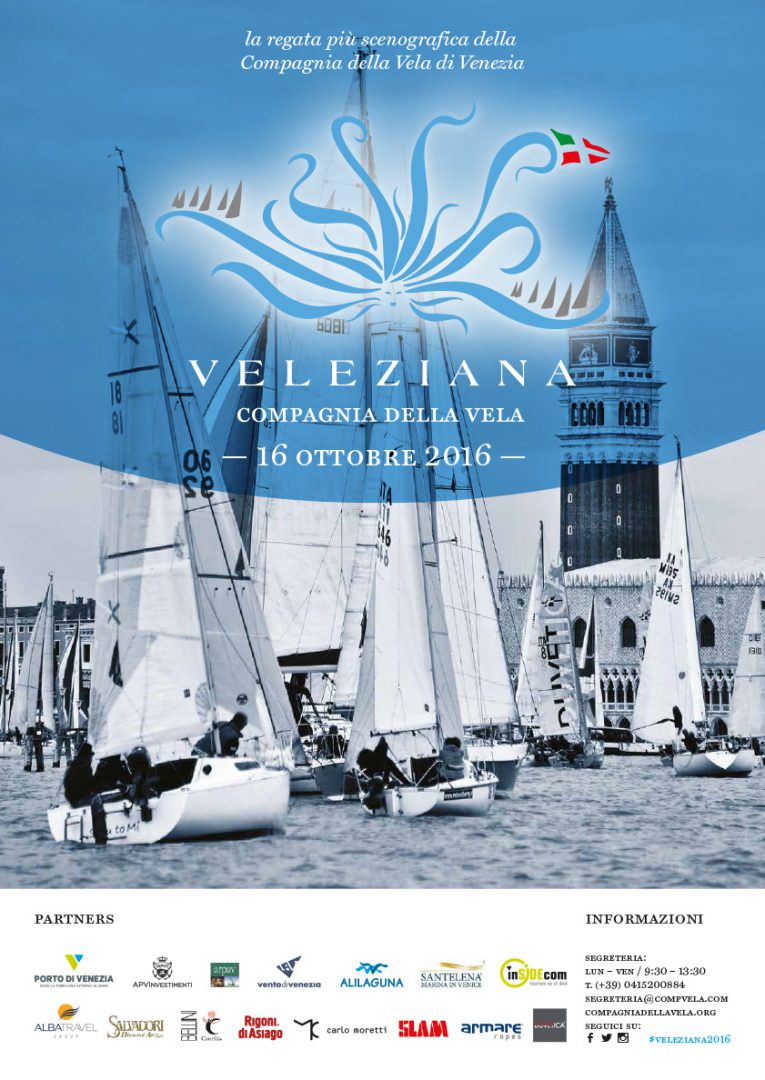
The legend of the Devil’s bridge on Torcello Island

On Torcello island there is a bridge called The Devil’s Bridge. This particular name has no certain origines, some people say that it comes from the nickname of a family who used to live there, but other people think that is connected to an ancient story, a legend, where the main character are a witch, a young Austrian soldier, a young girl and the devil himself.

THE LEGEND OF THE DEVIL’S BRIDGE ON TORCELLO ISLAND

This legend tells the story of a Venetian girl who fell in love with a young austrian soldier during the Austrian occupation in Venice. Their love wasn’t approved by the girl’s parents who did everything they could to stop it.

The girl was forced to leave Venice, in order to avoid any chance to see her lover, untile she received the news that her beloved had been murdered by hidden hands. She lost herself in despair, she stopped eating and started abandoning herself to death, when a family friend advised her to go and visit a witch he knew, to solve her problems.

THE PACT WITH THE DEVIL

The witch was happy to help the young girl and made a pact with the Devil: 7 souls of 7 Christian children, who died prematurely, for the Austrian soldier’s life. They agreed to meet at the Devil’s Bridge, on Torcello island.

The two women reached the island by boat, few months after the pact was made, and they waited for the Devil to come, on the right side of the bridge. The young girl was holding a lighted candle in a hand and a gold coin in the other. She was ready to see her soldier again.

The girl started crossing the bridge, the witch invoked the Devil who suddenly appeared. Seeing the girl with the gold coin, the Devil took the space&time key out of his mouth and he stripped it up and let it fall right over the bridge, into the water, then he took the coin and the Austrian soldier appeared on the left side of the bridge.

The young girl saw him and pass through the Devil’s body to reach him, once in front of him, she blew the candle out. The darkness showed them the way to live happly ever after.

The witch still had to pay her debt and she agreed with the Devil to bring the 7 young souls there, at the Devil’s Bridge of Torcello Island, on December 24.

Unfortuately, the witch was killed by a young man who discovered the pact and wanted to save the souls of these poor children. On December 24, the Devil came to Torcello to receive his delivery, without knowing about the witch’s death.
Since that day, the Devil appears every year on the same day, under the shape of a black cat, waiting for the 7 young souls.

Altino: the real origins of Venice

Everyone knows the story of Venice, from its highest moment of glory to its tragic fall with Napoleon Bonaparte’s occupation, but what do we know about Venice, before all this? The foundation of Venice dates back to 421, but what happened before that?
To know the history of the origins of Venice, however, you need to take a big step back and also one on the mainland, because everything starts from here.

THE FLOURISHING CITY OF ALTINO

Have you ever heard about a city called Altino? It’s sounds like Quarto d’Altino – a small town in Treviso area -, in fact, during the Roman Empire, there was a town, called Altino around here, along the The Appian Way, which became great thanks to its proximity with the Venitian Lagoon.

Recent studies have found that the city of Altino, after it was annexed to the Roman Empire, has experienced a healthy and rich moment of development.

Pliny the Elder himself wrote about Altino, telling about its flourishing economy, especially in the wool trade, the shellfish fishing and the breeding of dairy cows.

It seems that the early Altino looks like Venice, since it was crossed by canals and bridges too. Ancient texts tell that lots of activities in Altino were made on a boat, exactly the same is still happening in Venice, nowadays.

The city of Altino was discovered to be a complex and modern city, for that time. Thanks to archaeological excavations, the presence of many buildings, including a theater and an amphitheater – as big as the arena of Verona – came to light.

THE FALL OF ALTINO AND THE BIRTH OF VENICE

With the arrival of the Huns and Attila, the inhabitants of Altino had to escape, taking advantage of the fact that they knew how to surf the lagoon while the Hunt’s didn’t.

The inhabitants of Altino hid themselves on the islands of the Venetian lagoon, Torcello was one of them, and slowly rebuilt their lives and their houses.

A lot of the marbles used for the construction of the Venetian palaces comes from Altino. The city of Altino is reborn from its ashes, like a phoenix, becoming one of the first Republic in the whole Europe: The Republic of Venice.

3 reasons why you should love the St. Erasmus Violet Artichoke

Personally, I love artichokes, all kind of them, but being Venetian, I particularly love the Sant’Erasmo Violet Artichoke.
St. Erasmus is the biggest island in the Venetian Lagoon, it is also called the vegetable garden of Venice, for being the garden of Venice, in fact, the population density here is extremely low, because of the great presence of fields, including the ones dedicated to the Violet Artichoke.

If you have the chance to talk to a local, he will probably list a thousands of reasons why you should love the St. Erasmus Violet Artichoke, but I will tell you the 3 reasons why I love it and I have developed a kind of addiction for “castraura” .

1. YOU CAN EAT IT RAW

The “castraura”, is the first bud of the artichoke. It is so good and tender that you can eat it raw. If you are visiting St. Erasmus Island in May, you can experience the thrill of tasting the artichoke right after its harvest.
Eating the Violet Artichoke raw is a particular gastronomic experience you cannot miss, expecially if you cut it in stripes and add a little olive oil and a lemon juice on top.

2. HOWEVER YOU PREPARE IT, IT’S YUMMY

The second reason why I love the Sant’Erasmo Violet Artichoke is that no matter how you prepare it, it’s always fantastic. You can fry it, eat it with rice, sautéed or make an artichoke lasagna and in many other ways, but if you have the chance to go to the Violet Artichoke Festival you can taste it the way locals cook it. Locals know all the secrets of its cuisine, for sure. The artichoke beer was the great news of the year.

3. IT IS A SLOWFOOD PRESIDIA PRODUCT

Being a local and traditional culture, exclusively coltivated at St. Erasmus and on a few other areas of the Venice lagoon, the Violet Artichoke has become a Slow Food Presidium, which means that it is safeguarded product and it is defended from the environmental degradation and the threat of the agricultural industry. The Artichoke Violet is unique and you will love it. Trust me!

MASTERPIECES FROM THE VITTORIO CINI COLLECTION

Masterpieces from the Vittorio Cini Collection shown off in his house of San Vio: Palazzo Cini Gallery.

From 8 April 2016, Palazzo Cini Gallery of Venice reopenes the doors to visitors with a great exhibition that shows off the art collection of the leading 20th-century Italian collector: the industrialist and philanthropist Vittorio Cini (1885– 1977). The second floor of the museum house will host the exhibition Rediscovered Masterpieces from the Vittorio Cini collection, conceived as a temporary extension of the permanent collections of the Gallery: on display paintings from Venetian artists, some of which are shown off for the first time.

More than 30 masterpieces can be admired until 15 November 2016: unique pieces of art from Guglielmo Veneziano, Stefano di Sant’Agnese, Michele Giambono, Nicolò Di Pietro, Carlo Crivelli with its amazing Madonna Speyer, Jacopo Bellini, Bartolomeo Montagna, Cima da Conegliano, Andrea da Murano and Giovanni Mansueti.

The magnificent beauty of Renaissance is represented by valuable works of Tiziano, as the San Giorgio painting, Lorenzo Lotto, Bernardo Licinio, Benedetto Diana, Giovanni Cariani.
From the 18th century we can admire great painters of veduta from the classic Venetian school: Giambattista Tiepolo, Canaletto and the two brothers Francesco and Gianantonio Guardi – founders of the Venetian academy in 1756.

Three drawing album are exceptionally displayed: the series known as Fasti veneziani, a collection of 58 papers illustrating events of Venice history.

The whole Palazzo Cini at San Vio is worth visiting once in lifetime. It was chosen to host the finest items from his immense collection, which had reached qualitative standards that very few similar Italian collections could rival: paintings, sculptures, glass works, porcelain, small bronzes, rugs and mirrors.

Opening
11 am – 7 pm (ticket office closes at 6:15 pm)
closed on Tuesdays

Tickets: € 10

PRIMAVERA DEL PROSECCO, 2016

A special spring event will lead you to discover the enchanting hills in the renowned Valdobbiadene area: don’t miss the Primavera del Prosecco 2016!

The biggest wine-touristic event in the region of Venice – at its 21st annual – started in March 2016: the Primavera del Prosecco, as every year, you will have the opportunity to visit the extraordinary hills of Prosecco and to taste prestigious wines in the best wineries of the whole Veneto.

The area of Conegliano Valdobbiadene – with the 17 wine shows organized – will welcome tourists and visitors until June 8th, with tastings of wine and local food, concerts, outdoor activities and visits between old churches and ancient villages.

The Marca Trevigiana looks like an unique vineyard interspersed with abbeys, centuries-old trees and farmhouses. Along the way, in addition to admire the beauty of the landscape, in typical taverns you can taste flavors of the past and discover the variety of wines that represent innovation and tradition of the DOCG Conegliano Valdobbiadene. All the events are available here.

Don’t miss the chance to try the main wines: Rive, Verdiso, Colli di Conegliano DOC white and red, Refrontolo Passito DOC Colli di Conegliano – sung by Mozart’s Don Giovanni – Torchiato di Fregona DOC. And, of course, the two best qualities of Prosecco: Conegliano Valdobbiadene Prosecco superiore DOCG and Valdobbiadene Superiore di Cartizze DOCG – perfect for the spring with their delicate fragrance of fruit and white flowers.

SU E ZO PER I PONTI, 2016

On 10th April, don’t miss the chance to join the Su e Zo per i ponti walk and discover Venice in a different way!

Every year more than 10,000 people take part to one of the most important spring events in Venice: the Su e Zo per i ponti (i.e. up and down the bridges, in Venetian language), a historical walk in which participants get involved in a stroll around the streets of Venice in the name of friendship and solidarity. This year the Su e Zo per i ponti walk takes place on 10th April.

Different itineraries lead through the less known areas of the city on the water, also touching its most famous landmarks. A day of sustainable tourism, respecting the city we are in, its art, its history, its real soul and its essence.

The Su e Zo per i ponti walk is a real day of celebration: several folk groups put on their performance either in open spaces along the itinerary, creating a burst of colours and sound – and giving the opportunity to live Venice in a unique way. Two contests are also organized for the occasion.

VIDEO CONTEST

In collaboration with TGS Eurogroup, the Association Amici del Pasinetti – always interested in solidarity and peaceful living competition – has decided to organize a competition for short videos taped during the “Su e Zo” with video cameras, cameras, mobile phones.
A jury of experts will select the best videos which will be awarded and admitted to the VideoConcorso “Francesco Pasinetti”.

SCRIVI A VENEZIA CONTEST

Writing down impressions on the town or a glimpse of it (a “calle”, a canal, a “campiello”, a palace…), a thought, a piece of poetry, you may be included among the authors quoted in the literary route next year – with a prize and a nice surprise!

SATURDAY 9th APRIL
SU E ZO PRELUDE

09.00 pm
Su e Zo Night Live
a special evening of music, a tribute to Venice and Su e Zo
In collaboration with Hard Rock Cafe Venezia.

SUNDAY10th APRIL

09.00 am
Holy Mass in S. Mark’s Basilica

10.30 am
Start from Piazza S. Marco

10.30 am
Start from S. Lucia Railway Station

12.00 am
Parade of Folk Groups in S. Mark’s Square

12.30 am
Prize giving ceremony for the largest groups

15.00 am
Closing of the event

The event will take place in all weather conditions.

REGISTRATION FEE: http://www.suezo.it/en/quota-di-iscrizione

ALDO MANUZIO AND THE RENAISSANCE IN VENICE

The Gallerie dell’Accademia of Venice are dedicating an exhibition to the most famous printer in the world: Aldo Manuzio.

Until 19 June 2016, the exhibition Aldo Manuzio. Il rinascimento di Venezia at the Gallerie dell’Accademia of Venice, will show an unrepeatable period in the history of European and Western culture – Renaissance – and it will particularly present the story of the man who invented the concept of modern book and of publishing: Aldo Manuzio.

Together with Manuzio’s most famous illustrated books, an itinerary of paintings and sculptures from Renaissance is presented for the occasion: masterpieces by Giorgione, Carpaccio, Bellini, Tiziano, Lorenzo Lotto and Pietro Lombardo – some of them on loan from the great museums of Europe and US.
An important part of the exhibition is dedicated to the intense relationship that tied Aldo Manuzio to the culture of northern Europe and to Erasmus of Rotterdam: he thought that having his works printed by Manuzio was of fundamental importance for the circulation of his thinking throughout Europe.

Between 1495 and 1515 Aldo Manuzio printed in Venice a hundred-odd editions of a unique beauty, which actually created the modern book and publisher – and invented the reading public. Manuzio managed to conceive of and achieve his extraordinary programme of making the great classics available to scholars and writers for the first time: those of Greek culture, and then collecting the writings in Latin along with those of the new Italian literature. He has been careful both in the format and the typefaces, rediscovering beauty in the ‘divine’ proportions of the classical world.

Masterpieces of painting and sculpture created in this same period and with the same achievement of rediscovery of classical culture will enter into dialogue with the most beautiful books in the world in this amazing exhibition – which is a rare opportunity, not to be missed.

Opening time

Monday: 8.15 am – 2.00 pm (last entry at 13:15 pm)
From Tuesday to Sunday: 8.15 am to 7.15 pm (last entry at 6:30 pm)

Tickets

Gallerie dell’Accademia + Palazzo Grimani + exhibition: € 15

VENICE NIGHT TRAIL, 2016

The first edition of Venice Night Trail is coming in the enchanting venue of Venice lagoon!

Venice Night Trail is the name of the new event organized by Venicemarathon: more than 2000 athletes are expected to race in the amazing Venice-by-night venue on Saturday, 23rd April.
The first edition of the Venice Night Trail is inserted into the double-sport event “Ali Venice Running Day”, which in addition to the trail will organise the Corrimestre 10 km the day after in San Giuliano Park in Mestre, and the Panoramica with 5k, 11k and 18k.

The Venice Night Trail – with its 16 kilometers and 51 bridges – will offer a unique opportunity to race in the magical atmosphere of Venice by night, and it is supposed to be available to all: athletes will have the opportunity to choose between competitive and non-competitive version.

There are already more than thousand assigned bibs and only 2000 places are available for this first edition.

THE RACE
The start of the race is at 9.00 pm. The competition starts and finishes in Dorsoduro district, in the port area of San Basilio and the first exciting crossing of the Grand Canal takes place at the first kilometer with the Calatrava Bridge. The trail runs then in the most typical areas of Venice, campi and campielli of suggestive beauty, going further to S. Elena and the Biennale, and then back to Piazza San Marco where the participants can enjoy the beautiful lighted square by night. The race will then continue again in the heart of the city, will touch the La Fenice theater and then going through the Grand Canal on the Academy Bridge and go further to the Punta della Dogana. From there the athletes will get back the Fondamenta delle Zattere to San Basilio, along the Canale della Giudecca.

SUBLIME CANOVA, THE RENEWED SECTION AT MUSEO CORRER

The Canova collection in the renewed section of Museo Correr from 21st November, 2015

From 21st November, 2015, the Canova collection of Museo Correr, in Venice, has returned to its original neoclassical setting, thanks to the precious work of a small task force of restorers and artisans.
This museological project – called Sublime Canovawas born in 2012 from an idea of Gabriella Belli, director of the Fondazione Musei Civici di Venezia, and Andrea Bellieni, manager of the Museo Correr – while the set-up has been created by Daniela Ferretti, art director of the Fondazione.

In comparison to the museum’s general themes, the Canova section appeared only to have a weak connection: the plan for the renewed Canova section concerned the display of the words in accordance with a flexible order that places a chronological overview above a simply typological one. The aim was to highlight Canova’s creative processes, from idea to finished work, passing through the stages of drawing, sketch, model and life-size model – and to the part of the collection that was still in the museum storage.
The whole Canova section is now revalued in its amazing complexity, toghether with the strong connection between the artist – Antonio Canova (Possagno, 1757 – Venice, 1822) – and Venice.

ROOMS
The Ballroom hosts the largest and most demanding sculptures (Apollo and Daphne, Daedalus and Icarus, Perseus), which require the space to enable an an observer to walk around them. In the room 4, the Canova cabinet has re-assembled and most of the large bas-relief plaster works are displayed here, together with the drawings and sketches; in the room 5, the display will be of some minor sculptures and prints.

TICKETS
San Marco Square Museum Ticket: full price 18 €, reduced 12 €
Family and school offers available.

OPENING HOURS
from April 1st to October 31st 10 am – 7 pm (ticket office 10 am – 6 pm)
from November 1st to March 31st 10 am – 5 pm (ticket office 10 am – 4 pm)

REPORTING FROM THE FRONT: ARCHITECTURE BIENNALE 2016

Reporting from the front is the title of the 15th International Architecture Exhibition of Venice, curated by Alejandro Aravena

Open from Saturday May 28th to Sunday November 27th, 2016 at the Giardini and the Arsenale, Venice, the 15th International Architecture Exhibition title is Reporting from the front. The exhibition, directed by Alejandro Aravena, is organized by La Biennale di Venezia, chaired by Paolo Baratta.

This year, the purpose is to offer new perspectives on what Architecture represents, as Alejandro Aravena said in his introduction: “In his trip to South America Bruce Chatwin encountered an old lady walking the desert carrying an aluminum ladder on her shoulder. It was German archeologist Maria Reiche studying the Nazca lines. Standing on the ground, the stones did not make any sense; they were just random gravel. But from the height of the stair those stones became a bird, a jaguar, a tree or a flower.”
“The lady on the ladder who, climbing up onto the highest steps can gaze over a far broader horizon, and by doing so conquers an expanded eye” announces Aravena. “We immediately loved this picture – stated President Paolo Baratta – because in a way it represents la Biennale as a whole, with our attitudes and our goals.”

The aim of the 15th International Architecture Exhibition is to give voice to those who acquired another perspective in architecture, and to widen the range of issues to which architecture is expected to respond in the present and in the future.
Reporting from the front will be about sharing with a wider audience, facing issues like segregation, inequalities, peripheries, access to sanitation, natural disasters, housing shortage, migration, informality, crime, traffic, waste, pollution and participation of communities.

The Exhibition will also include the 62 National Participations in the historic Pavilions at the Giardini, at the Arsenale and in the historic city centre of Venice. Five countries will be participating for the first time: Philippines, Kazakhstan, Nigeria, Seychelles and Yemen.

THE VENICE GHETTO: 500 YEARS OLD

The Venice Ghetto in 2016 celebrates 500 years of history

The term ghetto was used for the first time in Venice. Since fourteenth century, Jews were segregated in the part of the island called geto: in old Venetian language the verb getar means to found, and it refers to the presence of many foundries in that particular area, located in Cannaregio sestiere (i.e. district). The number and the importance of Jewish community grew so much – as the complaint of Christians towards them – that on March, 1516, the Republic of Venice instituted political rules to control and to restrict their activities.

Today, the Ghetto is still an active center of Venice, and the Jewish Community too: in order to promote this historical event, a special committee – I cinquecento anni del Ghetto di Venezia (i.e. The five houndreds years of Venetian Ghetto) – has been created and managed by the President of Venetian Jewish Community, Paolo Gnignati. The committee organized several formal occasions to celebrate the anniversary: an opening ceremony and concert in the venue of The Fenice Opera House on 29 March, 2016, the exhibition Venice, the Jews and Europe. 1516-2016, and the restoration of Jewish Museum.

OPENING CEREMONY
On the day of the anniversary (29 March, 2016), The Fenice Opera House will host an official ceremony: conductor Omer Wellber is invited to lead the Fenice symphony orchestra. The event is arranged in collaboration with Fortunato Ortombina, the artistic director of La Fenice. Program: Symphony No. 1 in C major by Gustav Mahler.
The evening is for invite only.

EXHIBITION VENICE, THE JEWS AND EUROPE. 1516-2016
Organized in collaboration with MUVE foundation of Venice in the prestigious venue of Doge’s Palace, the international exhibition – opened from June 19th to November 13th, 2016 – will narrate the story of Ghetto’s settlement and the relationships between the Jews and the city of Venice.
The scientific committee is lead by Donatella Calabi – professor at IUAV University of Venice, major expert on the urban history of the Jewish Ghetto – and it counts on an equipe of world-renowned scientists and researchers. Calabi is also the curator of the exhibition, realized in cooperation with Gallerie dell’Accademia, Kunsthistorisches Museum and Louvre.

DOCUMENTARY FILM
Directed by Emanuela Giordano, the documentary film The Venice Ghetto, 500 Years of Life recreates the story of the Venetian Ghetto collecting memories and narrations from people who could see events and live them from the inside. Everyone talks about a particular topic: the roots, the relationships between Jewish Community and Serenissima Republic, influent people of the Ghetto, the Cabala, the food, the language, arts and crafts. Little by little, we are led to discover a long story of persecution and integration.
Trailer: 500 Years of Life – promo sub eng from Tangram film on Vimeo

POSTWAR ERA: A RECENT HISTORY

Current exhibition of Peggy Guggenheim Collection in Venice celebrates Postwar era through new perspectives

Postwar era: a recent history. Homages to Jack Tworkov and Claire Falkenstein. This is the curious title of the new exhibition hosted by Peggy Guggenheim Collection, one of the most well-known and prestigious museums of Venice.
Opened until april 4, 2016 and curated by Luca Massimo Barbero, the exhibition offers an original perspective about postwar American and European art until 1979, the year of Peggy Guggenheim death.

Peggy has been a woman of remarkable artistic sensibility: in the brilliant narrative of Postwar era we can admire more than seventy paintings and sculptures, some of them never exhibited, both from her personal collection and from donations to the Foundation after her death. On display artists as Vedova, Ciussi, De Kooning, Afro, Santomaso and the sculptor Basaldella, all influenced by American Abstract Expressionism.

Postwar era also allows us to step into the work of two artists in the Foundation’s collection: Jack Tworkow (1900-1982), a Polish-born American Abstract Expressionism painter, and Claire Falkenstein (1908-1997), who designed the water-side gates of Guggenheim Collection, Peggy’s former home, located on the Grand Canal.

Ticket: full price € 15, discounts for students and senior visitors, free for children under 10 yrs

Andrea Schiavone and the splendors of the renaissance in Venice

An extraordinary exhibition in Venice at Correr Museum

Until April 10, 2016 the halls of the wonderful Museum Correr overlooking St. Mark’s Square in Venice, hosts the first exhibition dedicated to Andrea Schiavone, the inventor of an innovative style which was sensational and an artist who ‘stood out from the crowd’, admired by Tintoretto, Carracci and El Greco.

This monographic exhibition it’s an extraordinary opportunity to discover Schiavone’s central role in the golden age of painting in the Venetian Republic through 140 works from all over the world. He’s an artist who from the start stood out as a sensational novelty, who was was ground-breaking and in a certain way enigmatic on the extraordinary field of Venetian Renaissance painting, with its polyphonic concerto that included outstanding artists first in Venice, and then in Europe. A fascinating and modern artist who therefore ‘stood out from the crowd’ and it is to this Dalmatian artist that, after decades of studies and research, the first monographic exhibition will be devoted, offering the public the first real opportunity to discover Schiavone’s central role in the golden age of painting in the Venetian Republic.

On display together are more than 80 of Andrea Meldola’s works paintings, drawings, prints– most of which have never been shown at an exhibition before and are on loan from Queen Elizabeth’s Royal Collection, the Kunsthistorisches Museum and Albertina in Vienna, the New York Metropolitan Museum of Art, the Croatian Academy of Science and Arts in Zagabria, the Gemäldegalerie in Dresden, Musée du Louvre in Paris and the London British Museum.

Visitors will also can admire cornerstones of Schiavone’ painting, alongside important paintings by other great artists of the period in comparison. Masterpieces by his ideal maestro Parmigianino – the marvellous Madonna with Child from the Uffizi – a friend of his youth, Jacopo Tintoretto, Titian – with the Aldobrandini Madonna from the National Gallery in London – as well as works by Vasari, Salviati, Bordon, Bassano, Polidoro da Lanciano, and Lambert Sustris; all of these artists were not only important for Schiavone, but also for the extraordinary scene of Venetian art in the age of Mannerism.

Venice Carnival 2016

Arts and Trades are the protagonists of the Venice Carnival 2016, titled this year “CREATUM: an idea for a new start, a rebirth of Venice’s ancient origins.”

Heart of Venice Carnival 2016 will be St.Mark’s Square, where mask makers, weavers, tailors and glass-makers will relive in their 18th century Venetian workshops. From January the 30 to February the 9th the square will be transformed into a great crafts’ laboratory. An extraordinary village, the Creatum, designed by Massimo Checchetto scenografo of Teatro La Fenice, will become a stage where Venice will show her skills in gondolas and oars’ construction, masks and customs’ production, all accompanied by music and acting made by Gran Teatro La Fenice and Teatro Stabile del Veneto. All activities will be amplified on a big screen set up in the Square.

A bridge for a stage and a Ferris wheel for the Angel’s arrival will complete the set of a fairy-tale, where much-awaited traditional engagements come to life: the Festa delle Marie, historical parade of the 12 girls in magnificent Renaissance costumes; Sunday 31st January, the Flight of the Angel from St. Mark’s Bell tower, performed by Irene Rizzi, (2015 “Maria” Carnival winner).

Together with the mainland, where the Carnival will spread, and celebrations become a showcase exhibiting long traditions of Venetian life, even Calli and Campi in Venice will become places for musical and theatrical events.

These events will be backed up by evening and nocturnal events at the Arsenale, like the open-air urban costume performances, the sumptuous King’s Banquet (“Banchetto del Re”) – the official Carnival “gala dinner”, together with “The Club” and the Dance Machine where guests will be taken back to times echoing the pomp and splendour of the Venetian Republic, the centre of civilization.

BRIAN DE PALMA – JAEGER LECOULTRE GLORY TO THE FILMMAKER 2015

Brian De Palma receives the Jaeger-LeCoultre Glory to the Filmmaker 2015 Award.

In few days the 72nd Venice International Film Festival will start. From September 2nd and for 11 days Venice will host the annual appointment of the cinema. As already announced, the pre-opening will take place on September the 2nd in the Sala Darsena (starting at 8:30 pm) with the screening of The Merchant of Venice (1969) and Otello (1951) by Orson Welles.

The Biennale di Venezia and Jaeger-LeCoultre has announced that the great American director Brian De Palma will receive the Jaeger-LeCoultre Glory to the Filmmaker 2015 Award, dedicated to personalities who have made particularly original contributions to contemporary cinema. The award will be given on September 9th at 9.30 pm in the Sala Grande of the Palazzo del Cinema during the 72nd Venice International Film Festival (September 2-12, 2015), directed by Alberto Barbera and organized by the Biennale chaired by Paolo Baratta.

Following the ceremony, the 72nd Film Festival will present the world premiere, Out of Competition, of the documentary De Palma (109’) by Noah Baumbach and Jake Paltrow. The film grew out of the two directors’ spending time with Brian De Palma for over ten years. It’s an intimate conversation between filmmakers, telling his six decade long career, his life, and his filmmaking process.

Regarding this award, the Director of the Festival Alberto Barbera declared, “The child of an artistic era (the ‘70s) full of innovative ferment, Brian De Palma has made a name for himself as one of the most skillful directors in constructing perfect narrative mechanics with great creative freedom, experimenting with new technical solutions, rejecting the classic rules of the language, abandoning himself to aesthetic virtuosity, and celebrating his favorite authors. When watching a movie by Brian De Palma, we revert to being basic spectators. Although our eyes are wide open to avoid falling into the trap, we know full well we’re bound to fall into it anyway.”


REGATA STORICA 2015

Every year the first weekend of September Venice presents an event that should not be missed: the Regata Storica.

On Sunday September 6th 2015, the charm of the Regata Storica comes back in Venice. After the historical parade with the beautiful traditional boats, there will be the awaited competitive races that will fill every canal.

The Regata Storica has ancient origins. On the occasion of the Regata Storica, both residents and tourists attend and support the races on the several boats that fill the St. Mark’s Basin and the Grand Canal. Among all the races, the best known and most exciting is the Gondolini race.

The historical parade, which will start at 4pm, commemorates the welcome given in 1489 to Caterina Cornaro, the wife of the King of Cyprus, who renounced her throne in favour of Venice.

The traditional event will be preceded and followed by lots of collateral events, such as the concert organised in honour of the Regata Storica that will take place at San Salvador Church at 8pm of Saturday 5th 2015 (FREE ENTRANCE).

PROGRAMME

THURSDAY 3rd SEPTEMBER
6.00 pm, Campo della Salute
Presentation of the teams and blessing of the Gondolini

SUNDAY 6th SEPTEMBER


4.00 pm
HISTORICAL AND SPORT WATER PAGEANT: parade along the Grand Canal by historical crafts with costumed crews, boats and gondolas of the Venetian rowing associations (Voga alla Veneta). Course: from St. Mark’s Bay all the way down the Grand Canal.

4.30 pm

Maciarele and Schie regatta: two oared regatta on mascarete dedicated for children.

Categories:
– Schie (under 10 years). Course: from Rialto to Ca’ Foscari
– Maciarele Junior (under 12 years). Course: from San Stae to Ca’ Foscari
– Maciarele senior (under 14 years). Course: from San Stae to Ca’ Foscari

4.50 pm

YOUNG ROWERS’ TWIN-OARED PUPPARINI REGATTA
Course: St. Mark’s Bay, Grand Canal, around the paleto in front of Ca’ Farsetti, to finish at Ca’ Foscari.

5.10 pm

WOMEN’S TWIN-OARED MASCARETE REGATTA

Course: the Castello Gardens, St. Mark’s Bay, Grand Canal, Rialto (around the paleto between Riva de Biasio and San Marcuola), and back down the Grand Canal to finish at Ca’ Foscari.

5.30 pm

Batane regatta
Course: from Punta della Dogana to Ca’ Foscari

5.40 pm

SIX-OARED CAORLINE REGATTA

Course: the Castello Gardens, St. Mark’s Bay, Grand Canal, Rialto (around the paleto in front of the Santa Lucia railway station), and back down the Grand Canal to finish at Ca’ Foscari.

6.00 pm, after the passage of caorline (match for third place) and 6.30 pm, after the passage of gondolini (final)
International Universities Boat Challenge
Challenge on eight-oared galeoni boat by the crew of the Ca’ Foscari and Iuav Universities of Venezia versus the teams of other Universities
Course: From Rialto to Ca’ Foscari

6.10 pm

TWIN-OARED GONDOLINI REGATTA
Course: the Castello Gardens, St. Mark’s Bay, Grand Canal, Rialto (around the paleto in front of the Santa Lucia railway station), and back down the Grand Canal to finish at Ca’ Foscari.


COLLATERAL EVENTS

Saturday 5TH September 2015 at 8 p.m.
San Salvador Church, Rialto
Concert: HOMAGE TO CATERINA CORNARO, QUEEN OF CYPRUS
“SALVE REGINA” di D. Scarlatti e J.A. Hasse
Ensemble MusicaVenezia
Free admission
Info: tel. (39) 389 485 9828 – mail: ass.musica.venezia@gmail.com


Tuesday 8th September 2015 at 6 pm, Canottieri Giudecca
In the round of meetings “Storie sotto el fèlze”: Regata storica e regatanti del terzo millennio
With Gaetano Bregantin, Giorgio Crovato and Gloria Rogliani
Free admission.


GUSTO VENETO – TASTING VENICE

Until October 2015 many and many itineraries to discover food and wines of Veneto region.

Until October 2015, in conjunction with Milan Expo 2015, you will have the chance to appreciate a rich series of events dedicated to food and wine products of Veneto region officially recognised by UE. Gusto Veneto is the project that offers this extraordinary chance to discover one of the best aspects of the region.

More than 45 events give the opportunity to visit some new destinations and tourist attractions through 14 routes – from the Dolomiti to the Adriatic Sea, from the Palladian Villas to the vineyards of the hills and the historical cities.

One shouldn’t miss one of the many appointments dedicated to wine, the top-of-the-range among the products of Veneto region. An example is “Calici di stelle”, a suggestive event that every year attracts hundred of visitors in the fascinating setting of Villa Cedri.

Veneto region is also the land of ‘radicchio’ and other seasonal products like asparagus, strawberries and cherries. Not to be missed the event “TERRE DEL TIEPOLO E SEMENTI DEL RADICCHIO” (Land of Tiepolo and Radicchio) and the Festival of Cherries in Marostica.

The tasty project Gusto Veneto also offers the chance to know better products of the dairies like the asiago cheese and the typical salamis like the ‘soppressa’.

Discover all the special routes on the official site of Gusto Veneto and choose your next destination!

All the itineraries are free (except for taste menus)


VENETIAN VILLAS FESTIVAL 2015

Discover the fascinating Venetian Villas with several events, shows, tasting itineraries and theatrical performances of Venetian Villas Festival 2015.

In summer 2015 the Venetian Villas Festival comes back again! Venetian Villas Festival is a great event that offers the opportunity to live a fascinating journey appreciating wine and food excellences of the Veneto region. More than 50 events, meetings, workshops and exceptional soirées are organised in Veneto and Friuli Venezia Giulia region offering the visitor a very rich programme of events to choose.

Who wants to know something more about wine cultivation and the historical and landscape heritage should not miss the event SORSI D’AUTORE (Author’s sips). Until July 12th the event proposes many appointments of taste and culture with some special guests. Among them: Enrico Mentana, Corrado Formigli, Giuseppe Cruciani and Carlo Petrini, “guru” of the slow-food movement.

The website Ville Venete Tour presents the first online catalogue that gathers all the accessible villas. It has been realised by the Venetian Villas Association and offers the user to discover the extraordinary heritage of the Venetian Villas: more than 150 villas are opened to the public for guided tours, events and hospitality.

The opening of the villas gives the opportunity to promote a journey through breath-taking and unique places.

The full programme is available here.


PROPORTIO – FORTUNY MUSEUM

A unique exhibition in Venice explores the omnipresence of universal proportions in art.

Until November 22th 2015 the fascinating spaces of Palazzo Fortuny in Venice hosts “Proportio”, the exhibition organised by the Axel & May Vervoordt Foundation and the Fondazione Musei Civici di Venezia that explores the omnipresence of universal proportions in art, science, music and architecture.

PROPORTIO carries on the highly acclaimed exhibition project that has already presented a trilogy of exhibitions: Artempo (2007), In-finitum (2009) TRA (2011) and Tàpies. Lo Sguardo dell’artista (2013).

Throughout human history, the concept of proportions has been applied across civilisations. In the West, the knowledge of sacred geometry was intentionally guarded for hundreds of years and may have been forgotten or discarded. PROPORTIO want to relaunch a contemporary dialogue about the lost knowledge of proportions and sacred geometry. The work of artists, scientists, architects, philosophers and other thinkers helps the visitor to understand how proportions can inform the essential design of life in the present and how we can use them to have a blueprint for the future.

The exhibition includes specially commissioned works by leading artists such as Marina Abramovic, Bae Bien-U, Michael Borremans, Maurizio Donzelli, Riccardo De Marchi Arthur Duff, Anish Kapoor and Izhar Patkin, which are displayed alongside major works by Berlinde de Bruyckere, Luciano Fabro, Antony Gormley, Anselm Kiefer, Ellsworth Kelly, Sol Lewitt, Agnes Martin, Fausto Melotti, Mario Merz, Ad Ryman and Bill Viola. Moreover you can admire a unique selection of Egyptian artefacts, a series of Dutch Old Master architectural paintings, a splendid portrait by Botticelli and a monumental sculpure by Antonio Canova.


MARIO MERZ – UNREAL CITY

A great exhibition in homage to Mario Merz at the Gallerie dell’Accademia in Venice

From May 8th to September 20th 2015, in conjunction with the 56th International Art Exhibition of the Venice Biennale and with Milan Expo 2015, Venice presents the exhibition “Mario Merz – Unreal City”. It is the first exhibition of Merz’s work to be held in any public institution in Italy since the artist’s death and it brings contemporary art to the new spaces of the Gallerie dell’Accademia.

Unreal City is also conceived as the artist’s ideal homage to Venice, the unreal city par excellence, a metaphysical and surreal place where nature and culture combine themselves perfectly.

In the artist’s works of art natural materials come together with urban and industrial elements. There’s a deep affinity between the artistic research of Mario Merz and the issues proposed by Expo 2015 in Milan, “Feeding the Planet – Energy for Life”, so that it’s the perfect setting to propose the extraordinary modernity of Merz’s poetic message.

WORKS
From the 60s Mario Merz started to use neon lights, which have become the heart of some of his most iconic works of art: from the permanent installation like the Fibonacci series, on the Mole Antoneliana’s dome, and the igloo in Turin, to the big spiral of Naple’s metro station and the light installations of the central station of Zurich and Amsterdam Schiphol Airport.

Two rooms are dedicated to Merz’s art, starting from a selection of works of his graphic research, which represents an important part of his artistic life. The exhibition culminates In in his large scale environmental installations In the following room you will have the chance to admire Senza titolo (Luoghi senza strada) (1994), an igloo made of slate, which shows the employment of different materials, and the Wax Spiral (1970-1981) that propose again the theme of the Fibonacci series. a progression in which each number is the sum of the two before. The artist interpreted the numerical sequence as the emblem of the dynamics associated with the growth processes in the organic world. After some other masterworks of big size (like “Fulmine in Tazza” and “La natura è l’equilibrio della spirale”), the exhibition path ends in the courtyard of the Gallerie dell’Accademia with the big 8 igloo of 74 steps created in 1992.

OPENING TIMES
Monday from 8.15 am to 2 pm
Tuesday – Sunday from 8.15 am to 6.30 pm
The ticket office closes at 6.30 pm

ADMISSION (exhibition + museum)
Full price € 15,00
Reduced price € 12,00

GLASSTRESS GOTIKA 2015

Once again Glasstress returns to Venice: the amazing exhibition that every year takes several contemporary artists to express their art through the media of glass.

Until September 22th 2015, Palazzo Franchetti hosts the exhibition “Glasstress”, a collateral event of Venice Biennale. Since 2009, this project have been encouraging a dialogue between contemporary art and glass – one of the most magical, flexible and innovative medium – thanks to the participation of international well-known artists in Venice, the city of glass.

GOTIKA is the title that has been chosen for the exhibition of this year. A fascinating theme with many connections and reflections of today society and the world of contemporary art that make this edition even more ambitious.

Glasstress Gotika 2015 is a joint project of the State Hermitage Museum in St. Petersburg and the Berengo Studio of Venice, in partnership with Fondazione Musei Civici di Venezia and Ermitage Italia.

Palazzo Franchetti, located on the Grand Canal in Venice, presents almost 100 hundred historical glass artworks and other gothic objects from the exclusive Hermitage collection such as monstrance, reliquaries, glass crosses and armors – most of them never seen by the public. These works of art are on display with the other newly commissioned art works created by 50 artists coming from 20 countries together with the glass masters of the Berengo furnace in Murano, all with a Gothic theme.

Beyond the exhibition “Glasstress”, Palazzo Franchetti also presents “Life Bank”, a site-specific project by Belgian artist Koen Vanmechelen, who in collaboration with the Slow Food Movement will transform the old Banca di Venezia at the top floor of the Palazzo Franchetti into a “Gothic garden” dedicated to bio-diversity with a monumental installation created with ancient cereals and plants.

Opening times
Everyday from 10 am to 6 pm

Tickets
Full prince: 10€
Reduced price 8€ (groups, over 65)


Scent of a dream. A journey in the world of coffee.

On show in Venice, the photographic journey taken by Sebastião Salgado in partnership with illy to pay homage to the men and women of coffee.

During the Biennale, a not-to be missed exhibition is presented by Fondazione Bevilacqua la Masa at his seat of St. Mark’s Square. We are talking about “Scent of a dream. A journey in the world of coffee”, a unique event that gives the chance to admire a selection of 75 photos by the great Sebastião Salgado.

The exhibition presents some of the most representative images selected from the photographic journey which the great Salgado have taken in partnership with illy to pay homage to the men and women of coffee plantations: a journey that involves people, landscapes and a harmonious relationship with the earth illustrated through highly expressive, evocative and emotive, black and white pictures.

This is one of the most significant reportage ever realized dedicated to the world of coffee. For more than 10 years, Salgado has immortalizes in his black and white pictures the flow of daily life in the coffee plantations and the beauty of the earth where the coffee bean is grown and harvest. The photographic itinerary has involved ten of the countries from which illy buys coffee were: Brazil, India, Indonesia, Ethiopia,Guatemala, Colombia, China, Costa Rica, El Salvador and Tanzania.

The exhibition is also accompanied by the “PROFUMO DI SOGNO. Viaggio nel mondo del caffè” published by Contrasto. The book, curated by by Lélia Wanick Salgado, the photographer’s wife, tells the story of this journey through the images created by the great photographer and text by Andrea Illy, Luis Sepulveda, Angela Vettese and of course, Sebastião Salgado.

Opening Times
From Wednesday to Sunday: 10.30 – 17.30

FREE ENTRANCE


NEW OBJECTIVITY – Art in Germany at the time of the Weimar Republic 1919-1933

For the first time in Italy, 150 works of the Modern German Realism at the Correr Museum of Venice.

From may 2015 the Museum Correr of Venice presents a great exhibition, the first event in Italy to explore the themes that characterize the dominant artistic trends of the Weimar Republic: NEW OBJECTIVITY – Art in Germany at the time of the Weimar Republic 1919-1933.

The exhibition features about 150 works of art by more than 40 artists (including paintings, photographs, draquings and prints) and it is organized by the Los Angeles County Museum of Art (LACMA) in association with the Fondazione Musei Civici di Venezia and with the support of 24 ORE Cultura – Gruppo 24 ORE.

NEW OBJECTIVITY – Art in Germany at the time of the Weimar Republic 1919-1933 gives the visitor a unique chance to discover the art of some less known artists like Hans Finsler, Georg Schrimpf, Heinrich Maria Davringhausen, Carl Grossberg, and Aenne Biermann. In the set-up special attention is directed to make a comparison between painting and photography, offering the unique opportunity to examine the similarities and differences between the movement’s diverse media.

In the period between the end of World War I and Nazism arrival, Germany’s first democracy was a laboratory for cultural experiences, witnessing the end of Expressionism, the exuberant anti-art activities of the Dadaists, the establishment of the Bauhaus and the emergence of a new realism.

This new realism has been called in different ways like Post-Expressionism, neo-naturalism, Verism, and Magic Realism, and has been recognised by the exhibition Neue Sachlichkeit  (New Objectivity) held in Mannheim in 1925.

The exhibition path is divided into into five thematic sections: Life in Democracy and the Aftermath of the War points out the difference of conditions between Germany’s rising bourgeoisie and those suffered most from the war’s effects; The City and the Nature of Landscape explores the growing disparity between an even more industrialized urbanity and nostalgic longing for the rural world; Still Life and Commodities focused on a new form of the traditional still life; Man and Machine examines the artist’s different approaches towards the trasformation and dehumanization effects due to rapid industrialization; lastly, New Identities: Type and Portraiture shows a new trend in portraiture in which subjects are more represented as social classes rather than individual subjects.

Opening times
Every day from 10am to 7pm
The ticket office closes at 6pm

Tickets
Full price € 12,00


BIENNALE COLLEGE DANCE 2015

Four days of choreographic performances in the sestieri of San Marco, Dorsoduro and the Arsenal: this is Biennale College Dance 2015.

Next Biennale College Dance 2015 will take place in Venice from June 25th to 28th and his director Virgilio Sieni has revealed the theme of this edition: “Give place to dance as a space for sharing with the public and innovate together the sense of attendance”.

Four long days of choreographic performances are scheduled in San Marco, Dorsoduro and the Arsenal, running from noon till evening. As V. Sieni said “Venice in this sense becomes a metaphor for a world that reflects the property left by the community (streets, canals, buildings, fields, squares, bridges, the lagoon, the body of the city), and invites us to inaugurate a series of exercises for the future based on the dignity of the gesture, the body and the dance understood as research on the human territory and beauty “.

For this edition of Biennale College Dance 2015 Virgilio Sieni has invited 16 choreographers who will lead for 3 weeks some workshops involving professional dancers but sometimes also younger dancers and citizens. The result will be the creation of short choreographic works that will be presented to the public on June the 25th, 26th, 27th and 28th.

The choreographers invited are already well-known or new prominent names of the international scene, as Laurent Chetouane, Xavier Le Roy, Cesc Gelabert, Alessandro Sciarroni, Radhouane El Meddeb, Claudia Castellucci, the historical founder of the Societas Raffaello Sanzio, Emanuel Gat and Sharon Fridman, exponents od the new generation of Israeli dance established in Europe, Olivia Grandville (which recreate a choreography of Boris Charmatz), Marina Giovannini and Michele Di Stefano, who won the Silver Lion prize last year, and obviously Virgilio Sieni. Next to them some younger protagonists: Save Sanchis, co-choreographer of some performances with Anne Teresa De Keersmaeker, the Kinetic Collective of Francesca Pennines, Anna Ajmone and the Swiss Yasmine Hugonnet.


CY TWOMBLY PARADISE – CA’ PESARO

Cy Twombly arrives in Venice with a great exhibition at Ca’ Pesaro: a colourful and deep testimony of a work that is regenerated every time it appears.

From May 6th 2015 Ca’ Pesaro presents a special retrospective dedicated to one of the greatest masters of contemporary art, Cy Twombly (Lexington, Virginia, 1928 – Rome, 2011) who returns to Venice – where he attended the Biennale five times from 1964 and the last one was in 2001 when he won the Golden Lion – with an important monographic exhibition curated by Julie Sylvester and Philip Larratt-Smith.

This exhibition is a testimony of a work that is regenerated every time it appears and of an artist who never ceases to amaze “for the extraordinary visual intelligence and acute sensitivity to all forms of physical, natural and artistic beauty” as Philip Larratt-Smith has written in the catalogue.

The work of CY Twombly, who passed away in 2011, is focused on the universal themes of love, art, beauty and death, but the particularity of his artistic vision and his perspective of the world offers an extraordinarily original interpretation to these themes.

Like many of his generation, Twombly reacted against the dominant trend in painting of Abstract Expressionism, but unlike others, who opted for a Pop or Neo-Dadaist vision, he made a synthesis between the heritage and established techniques of gestural abstraction and the tradition of European painting. Many are the themes of his artistic research and they are explored in the majestic spaces of Ca’ Pesaro.

The exhibition proposes an itinerary full of references that take the visitor from the early wall paintings on wood dated 1951 to a selection of the artist’s last works created in 2011 when the artist was at the physical limit of his old age. We are talking about eight paintings of gestural baroque circles in yellow, red and orange on a bright green background (half margarita, half key lime). These were the last paintings of the artist, created a few weeks before the death.

Admission
From May 6th to September 13th 2015
Admission accorded to the times and tickets of the museum

Opening times
10am – 6pm (ticket office: 10am – 5pm)
Closed on Monday


GLASS FROM FINLAND IN THE BISCHOFBERGER COLLECTION

Finnish design arrives in Venice with the exhibition “Glass from Finland in the Bischofberger Collection” presented by Cini Foundation.

The Cini Foundation of Venice carries on the project Le Stanze del Vetro, a research about the art of glassmaking in the twentieth century. This time the study goes beyond the Venetian glass discovering a new dimension: the lively design and glassmaking art of Scandinavia. The Finnish glass is the protagonist of the new exhibition that will be opened until August 12th 2015.

In exhibition over 300 glass works from the private collection Christina and Bruno Bischofberger, one of the biggest design of the 20th century collection. You will have the opportunity to admire masterpieces like jugs, vases, plates, glasses and ornaments created by the foremost 20th century Finnish designers: Aino and Alvar Aalto, Arttu Brummer, Kaj Franck, Göran Hongell, Gunnel Nyman, Timo Sarpaneva, Oiva Toikka and Tapio Wirkkala.

The exhibition path starts with works that date back to 1932, when Finnish glass started to be known worldwide becoming also protagonist of some important exhibition like the International Exhibition in Paris in 1937 and the Triennals of Milan in 1933 and 1936.

The itinerary continues with the masterpieces of the 50s of those are considered to be the visionary genius of Scandinavian design – Alvar Aalto, Kaj Franck, Gunnel Nyman, Timo Sarpaneva and Tapio Wirkkala – the the artists of the “golden age” of Finnish glass. In the end, you will admire the colourful and refined glasses of the 60s and 70s, created by designers like Oliva Toikka. Through an irreverent approach to the glass, these artists lead the Scandinavian design to be more contemporary.


FREE ENTRANCE


MARTIAL RAYSSE 2015-1958 / 1958-2015

From April 12th Palazzo Grassi presents a great retrospective dedicated to Martial Raysse.

Until the end of November 2015 the Pinault Foundation, which is located in Palazzo Grassi in Venice, presents MARTIAL RAYSSE 2015-1958 / 1958-2015, the first retrospective of the French artist being organised outside France after a long time.

The exhibition path takes an approach to Martial Raysse‘s work that is not chronological but thematic. Through more than 300 works among paintings, sculptures, video or neon line installations, the visitor can explore the colourful artistic world of one of the most significant contemporary French artists, Martial Raysse, from the 50s to the most recent developments.  The exhibition covers every aspect of the artist’s work: his small sculptures, which range from simple figures to games played with himself, the drawing as work of preparation, his films that show his libertarian ideas, and also the paintings that represent his most accomplished work. Moreover, the path proposes some works that can be seen as self-portraits, reflecting the needs of the artist and the loneliness he has to live in order to move forward in his research.

As the curator Caroline Burgeois said, Martial Raysse is one of the few artists for whom tackling the history of “great” art head on is what really matters, and this has been since the outset of his career. Therefore, there are renaissance references – like in “Portrait of the Ancient Friend” (1963) or in “Via Velazquez” (2003) or again in the drawing “Ramonalisa” (1993) – but also the paramours that are beloved in French paintings, the banal aspects of daily life and a lot of women portraits. All is presented by distance, through humor or by trying to copy the masters, in accordance with the principle expressed by Eugenio Garin that “to imitate is to become aware of oneself”.

The exhibition also reveals the great amount of effort for his work, that want to propose a sort of philosophy of life. Through his radical use of colour and treatment freedom, Raysse want to show us the beauty of the world, the need for each of us to be involved in it, the responsibility that each of us has for the others and for the community.

Opened every day from 10 am to 7 pm (closed on Tuesday)
The ticket office closes at 6 pm

Full ticket
€ 15,00 Palazzo Grassi OR Punta della Dogana
€ 20,00 Palazzo Grassi AND Punta della Dogana

VINO IN VILLA FESTIVAL 2015

Vino in Villa, the traditional event dedicated to Prosecco Conegliano Valdobbiadene, becomes a Festival that combines wine and culture.

Art, photography, music, literature, philosophy, poetry and the Conegliano Valdobbiadene Prosecco Superiore: those are the ingredients of Vino in Villa, the traditional date of May dedicated to the most appreciated Italian sparkling wine DOCG. This year the event becomes a unique cultural festival that will embrace the fascinating hills (candidate to become a UNESCO World Heritage Site) from Conegliano, hometown of Cima da Conegliano, the great artist of the Renaissance, to Valdobbiadene.

Vino in Villa Festival will take place from May 14th to May 15th 2015 involving not only Conegliano but also Pieve di Soligo and Valdobbiadene. The closing event expected for Sunday 17th May will be held in the castle San Salvatore in the small village of Susegana, where you will find a wine tasting table which proposes more than 300 different labels, from big companies to the smallest one. Moreover, you will have the chance to appreciate a performance of jazz music with Enrico Rava and Tiziano Scarpa.

Those days a rich programme of events will be waiting for you from 4pm to 9.30 pm (for more info visit the website www.prosecco.it).

The Festival, curated by Massimo Donà (Venetian philosopher and musician, author of the book “Filosofia del Vino”), will host some Italian and international prominent figures who will show how wine can be an important factor that brings together cultural, cultural, social, intellectual and human aspects.

Opening times: Sunday May 17th , tasting from 10am to 10pm.

Arte e Vino: two Italian jewels in a unique exhibition

On the occasion of Expo 2015, Verona presents Arte e Vino, an extraordinary exhibition.

On the occasion of Expo 2015 dedicated to the theme “Feeding the Planet, Energy for Life”, Verona, which has hosted the most important Italian wine fair since almost 50 years, presents one of the most important and unique exhibition scheduled in Italy for the international event and it will take place from April 11th to August 16th 2015 in Palazzo della Gran Guardia. We are talking about Arte e Vino, art and wine matched in a prestigious exhibition.

The remarkable cultural event has been possible thanks to the participation of the city of Verona, the Autonomous Province of Trento, VeronaFiere, the MART Museum (Museum of Modern and Contemporary Art) of Trento and Rovereto, and the State Hermitage Museum of Saint Petersburg.

THE EXHIBITION PATH
The exhibition path of Arte e Vino seems like a kaleidoscopic journey into the universe of the representation of wine in art experience, both sculpture, paintings and minor arts. The exhibition presents almost 170 works of art from more than 90 Italian and foreigner loaners , taking you through an extraordinary itinerary that come from the combination of two jewels our culture and history, symbols of Italy in the world: art and wine.

The exhibition includes not only works of great Italian artists like Lorenzo Lotto, Tiziano, Guido Reni, Luca Giordano, Annibale Carracci, Giuseppe Maria Crespi, Pietro Longhi, Sebastiano Ricci, GianBattista Tiepolo, Depero, De Pisis, Morandi, but also of other important international artists, such as Peter Paul Rubens, Jusepe Ribera, Nicolas Poussin, Jacob Jordaens, Philipp Hackert, Gerrit von Honthorst, Philippe Mercier, Nicolas Tournier and Picasso.

OTHER EVENTS
Beyond the exhibition it is interesting the presence of a wine shop next to the bookshop where you will have the opportunity to buy the wine of the companies that support the project and a taste corner that will propose you some matches between renowned wine labels and local products.

OPENING TIMES
From Monday to Thursday and on Saturday and Sunday from 9.30 am to 8.30 pm
On Friday from 9.30 am to 10.30 pm (The ticket office closes 1 hour before the closing time)
Opened also on April 25th, May 1st, June 2nd, August 15th.

TICKETS
Full price € 12,00 (audio guide included)
Reduced price € 9,00 (audio guide included)


PRECIOUS – FROM PICASSO TO JEFF KOONS

The extraordinary jewel collection created by some great artists on display at VITRARIA Glass +A Museum in Venice

On the occasion of the exhibition Precious – From Picasso to Jeff Koons, the VITRARIA Glass + A Museum presents more than 160 jewels belonging to the collection Velvet and created by some of the most important contemporary artists like Pablo Picasso, Jeff Koons, Louise Bourgeois, Damien Hirst, Lucio Fontana and Anish Kapoor.

The collection gather together amazing works of art that are often unknown to the public. After stopping in Roubaix, New York, Athens, Valencia, Miami and Seoul, the exhibition give the chance also to the Italian public to admire the less known face of more than one hundred names of modern and contemporary art.

The incredible collection have been gathered over the years by Diane Venet, Parisian collector of origin and New Yorker by adoption, wife of the renowned artist Bernar Venet. It will be possible to appreciate it in the Vitraria Glass + A Museum, the new museum in the heart of Venice that opened its doors in September 2014. The museum is characterized by an inter-disciplinary approach where “Glass” expresses the thematic objective that focuses on the glass through the contamination of this element with art, design, architecture, new technologies and fashion. “A +” mean the aim of the museum to expand its research, affording an exhibition area and presenting itself as a meeting and trade place for artists, designers and the creative industry.

Each jewel is conceived as a wearable work of art, it holds a story and was created by the artists thinking about a person in particular. That’s perhaps this intimate aspect that make them even more fascinating.

The double meaning of the exhibition starts right from the title: Precious. It refers to very rare and precious works of art but also to objects that hold, since their creation, a strong symbolic and personal content. For example you may think about of the pebbles picked up on the beach and then painted by Picasso for Dora Maar, or the pieces of bone on which he engraved the portrait of Marie-Thérèse.

Tickets
Full price: 8 €
Reduced price: 5€

Opening times
Every day from 10am to 1pm and from 2pm to 5pm
Opened on Saturday evenings from February 21st 2015
Closed on Monday


ACQUAE EXPO 2015 VENEZIA

On the occasion of Milano Expo 2015, Venice presents the pavilion Acquae Venezia 2015 collateral to the Universal Exposition.

The pavilion Acquae Venezia 2015 will be inaugurated on May 3rd 2015. The collateral event of Milano Expo 2015 dedicated to water themes will take place in a new building built in Marghera – Venice and designed by the archistar Michele De Lucchi. Among all the events already scheduled for the exhibition in Venice we mention “The Immersive Tunnel” that will give the chance to climb down the depths of the ocean with the “Lift of the Abyss”, to become a meteorology expert and make your weather prediction in the “Climate Theatre”, and to discover sea flavours in the “Water Food World”.

Aquae Venezia 2015 is sponsored by Expo 2015 which has conferred on the initiative the status of “Collateral” in virtue of the theme of Water, completely coherent with the theme of Expo: “Feeding the Planet, Energy for Life”.

Acquae, with his pavilion that extends for 50.000 mq, will propose a thick programme including exhibitions, experiential activities and conferences, tasting itineraries and spectacular events address to the public, but also international events dedicated to companies and the research world. For six months (from May to October) there will be a rich programme of exhibitions, activities, conferences, B2B business area, workshops and matchmakings in which the theme of water will be treated through different points of view: from environment to work, from industry to agriculture, passing through feeding, health and wellness and leisure.

WORK AT SEAWORLD AND ALTABIRRA
Among other events presented: “Work at Seaworld – International exhibition dedicated to maritime economy and Blue Economy” and “AltaBirra – Exhibition dedicated to beer with high creative level” of Officina Comunicazione & Eventi. One of the most awaited attractions is the “Lift of the Abyss”. Thanks to this experience you may perceive to climb down the Mariana Trench admiring the fauna of the sea of different depths. Moreover, there will be a space for drinks, including wines, spirits, teas and infusions and lastly, there will be an area dedicated to meteorology and environment.

THE INTERNATIONAL FOOD EXPERIENCE AREA
Among the permanent sections there is also The International Food Experience Area, realized in collaboration with ELIOR. The area is dedicated to food, offering a boutique of taste and several rest areas dedicated mainly to worldwide culinary traditions related to fish dishes. Cooking classes and cooking shows are also expected.

THE LEONARDO’S PARK
The section “The Leonardo’s Park” completes the project. It is a thematic park, located outside the pavilion, where children and adults will have the opportunity to learn scientific aspects related to water in a pleasant, dynamic and interactive way.

CONFERENCES
There will be three main moments. “Water and Life”, organized by Umberto Veronesi Foundation with the scientific coordination of Chiara Tonelli, a series of scientific conferences dedicated to wellness and health.

The convention promoted by UN-WWAP World Water Assessment Programme (UNESCO) to talk about the “Water for a Sustainable World” presented for the firs time in New York on March 20th 2015.

“Water Planet”, by eAmbiente and with the scientific coordination of Gabriella Chiellino, a series of three B2B and B2C exhibitions dedicated to reclamation systems, irrigation, the fight against desertification, recycling of polluted areas.

TICKETS FOT ACQUAE VENICE 2015: 22€ at the ticket office or 20€ online.


Henri Rousseau – Archaic candour

The masterpieces of Henri Rousseau in a unique exhibition held in the Doge’s Palace of Venice until July 5th 2015.

From March 6th 2015 Venice enriches its cultural activities with the special exhibition Henri Rousseau – Archaic candour held in the fascinating Doge’s Apartments of the Doge’s Palace. The exhibition boasts the special collaboration of the Musée d’Orsay and the Musée de l’Orangerie in Paris and the patronage of the Soprintendenza per i Beni Architettonici e Paesaggistici di Venezia e Laguna.

In Italy it is an extraordinary event that give the chance to admire some of the most famous works of the French painter through eight thematic sections. Hard to classify, Rousseu is certainly a central figure in the figurative art between the end of the 19th century and the revolutionary period of the avant-garde movements, famous for his dreamlike atmospheres, his forests and enchanted landscapes.

The exhibition boasts masterpieces like the famous “Self-portrait” (1889-90) that the artist considered the first “portrait-landscape” in the history of art, “The poultry yard” (1896-98), bought by Kandinsky and showed in the first Blaue Reiter exhibition in Munich, “War or the ride of discord” (1894), painted by Rousseau with that innocent eye that Ardengo Soffici, a great adimirer, defined as childlike innocence. That “archaic candour” also emerges in the paintings dedicated to wild nature and in his famous jungle scenes, of which six works are on display.

The exhibition Henri Rousseau – Archaic candour doesn’t mean to be another celebration of the French painter’s naïveté but rather the presentation of a long series of studies started more than three years ago. The project has given Rousseau’s work the right critical and historical light: the artist was a kind of referee for some of the greatest artists of the historical avant-garde movements, for intellectuals like Apollinaire and Jarry, for great collectors like Wilhelm Uhde and Paul Guillaume, and for many painters who preceded and and went beyond the Cubism and Futurism experiences, from Cézanne to Gauguin, from Redon to Seurat, from Morandi to Carrà, from Frida Kahlo to Diego Rivera and not to mention Kandinskij and Picasso.  All of these artists will be present in the show with works that establish a coherent dialogue with those painted by Le Douanier in his short but intense creative period from 1884 to 1910.

Opening Times

From 9 a.m. to 7 p.m. (from Sunday to Thursday)
From 9 a.m. to 8 p.m. (from Friday to Saturday)

Full price € 13,00


VENICE CARNIVAL: ITINERARIES AND SHOWS IN THE MUSEUMS

Venice Carnival 2015 offers a rich programme of events from January 31st to February 17th. All the museums, theaters, churches and foundations will be involved.

On the occasion of Venice Carnival 2015 the most important venetian museums, theaters, churches and foundations are involved in a rich programme of events, proposing special shows, itineraries and other offers. All the events are connected by the main theme of food in relationship with the venetian culture and art, the music and theater.

In particular, from January 31st to February 17th the Civic Museums of Venice Foundation proposes a new themed itinerary about food and an interesting marathon of music and theatre on February 12th – the so-called Fat Thursday.

During the carnival period, they present an original themed itinerary through a rich selection of works closely related to the iconography of food, in order to highlight the connection between food and culture in the artistic traditions of Venice. The project reflects also the main theme of Expo 2015 “Feeding the Planet, Energy for Life”.

In the museums (from the Natural History Museum to Ca’ Rezzonico, Palazzo Mocenigo and Ca’ Pesaro) some information sheets will offer you a suggestive interpretation of the artworks displayed in the itinerary. They compare some different aspects – artistic, historical, naturalistic and the anthropological one – in order to reveal in an original way the world and the relevance of food in the venetian tradition.

The marathon on Thursday 12th of February

On the occasion of the “Fat Thursday” (giovedì grasso) Palazzo Ducale, Correr Museum, Ca’ Rezzonico, Palazzo Mocenigo and the house museum of Goldoni are involved in a kind of marathon of music and theater during which several artistic groups will present some short perfomances (about 20 minutes) just in front of the most significant works of each collection. The shows will be proposed more times during the day (every half an hour from 11am to 4.30).

The activities proposed on February 12th are organised in collaboration with the Conservatorio Benedetto Marcello of Venice, which will present the two performances at Palazzo Ducale and Correr Museum. For the theater, the shows will be proposed by Pantakin – Commedia Circo Teatro Eventi (Palazzo Ducale and Ca’ Rezzonico), by Kairós – Il tempo giusto Danza e Teatro (Ca’ Rezzonico and house museum Goldoni) and by Arte-Mide (Palazzo Mocenigo).

During the day the Educational Service MUVE will also propose some activities and creative workshops for all the children in Palazzo Ducale and Ca’ Rezzonico (at 3pm and 4pm).

Entrance with the museum tickets

Venice Carnival 2015: The Big Opening

The Big Opening of Venice Carnival: an extraordinary floating show, the exhibition of a pianist and his piano suspended in the air and the traditional “Festa Veneziana”

Venice Carnival 2015, presented in Palazzo Labia, reveals a rich and tasty programme reflecting the main theme of Expo Milano 2015: food.

31st January 6.00pm to 6.30pm: “The Magic Banquet” – water show in Sestiere Cannaregio (a district of Venice)

The 2015 Venice Carnival will be officially opened with a magnificent floating show along the Rio of Cannaregio, “The Magic Banquet”. The show has been conceived by Nu’art and is directed by Gabriele Rizzi. “The Magic Banquet” combines the best international performances with suggestive scenic design, following the tasty theme of food. The event is divided into two parts (one taking place at 6pm and the other at 8pm) but any chapter represents a celebration to the powers of flavour. Coffee cups and strawberries will be some of the elements of a floating world, telling in an ironic and astonishing way the flavours of a menu typically Made in Italy. The show will reach the peak with 4 hot-air balloons and 4 floating structures, just before the grand final, when a big hot-air balloon representing Venice will burst on the scene.

February 1st, from 11am: the traditional “Festa Veneziana” on the water, water parades and the world changing piano.

On February 1st, the typical feast continues in Cannaregio with the floating “Festa Veneziana”, combining the rowing culture and the pleasure of local cuisine. At 11pm a rowing water parade will start from Punta della Dogana, going along with a pianist who will literally fly with them on the Grand Canal. Actually, Venice Carnival Opening will be the chance to present for the first time the great performance “The world changing piano” in which the pianist Paolo Zanarella will play his piano six metres above the water. When the boats will arrive in Rio Canareggio, the “Festa Veneziana” will start with the opening of the wine and food stalls, offering everyone more than 20.000 wine tasting and Venetian specialities for free: from Pasta e fagioli (pasta and beans) to bigoli in salsa, from baccalà to sarde in saor and, to not forget, the delicious carnival cakes: frittelle e galani.

All the events are free for everyone


REOPENING OF THE GLASS MUSEUM IN MURANO

From February 9th the renovated Glass Museum in Murano will be opened to the public again offering a new refined exhibition itinerary.

After a radical renovation and enlargement of the exhibition spaces, the Glass Museum of Murano opens its doors to the public. The museum had been closed for months but now it opens again with a doubled exhibition surface, a completely renovated exhibition path and redesigned spaces offering the visitor the chance to appreciate in a new way his visit in the world of the art of glass.

The Glass Museum of Murano, one of the twelve museums part of the Civic Museums Foundation of Venice, is maybe the only place in the world where the art of glass is represented from its beginnings: from some examples of the Roman times dating from the 1st and the 3rd century AD to some arts of the Renaissance, the original glass masterpieces of the eighteenth century and the innovative pieces of the 19th and 20th century. With no doubts, it is the only museum dedicated to the art of glass located in a still active and strongly rooted context thanks to the several furnaces still operating in Murano.

The project of renovation and restyling has involved both Palazzo Giustinian and an area of the former factory of glass beads next to the museum garden (the former Conterie). Now the restored complex has become a fascinating white cube that keeps the architectural lines of the old building and combines the natural and the artificial light that comes from the view to Fondamenta Giustinian.

Here you can find an original selection of 50 artworks dating from the Roman times to the 20th century. The exhibition path introduce you in the world of the art of glass illustrating in a suggestive way the main stages and the development of the glassmaking industry in Murano.

Moreover, the new area will host temporary exhibitions and some events. First of all an homage to the master of glass Luciano Vistosi, the great sculptor of glass dead in 2010 after many years of international success. The exhibition will be opened from February 9th to May 31st and will include a selection of glass works in black and white.

Opening Times

From April 1st to October 31st: 10-18
Ticket office: 10-17

From November 1st to March 31st: 10-17
Ticket office: 10-16

Closed on December 25th, January 1st, May 1st.

Vaporetto

Line 4.1 or Line 4.2 – Museo Murano stop


Christmas markets in Venice and Mestre

Also this year at Christmas time the city of Venice and Mestre host the traditional Christmas markets.

Starting from 29 November 2014 until January 6, 2015 the main squares and streets of the cities of Mestre and Venice will host the Christmas markets, which have now become a regular event for adults and children.

First to inaugurate Christmas season is the market of Mestre, the mainland of Venice; on December 29, 2014 in Piazza Ferretto from 9am until 7pm, timetable that will be observed every day until 6 January 2015 (except public holidays), will be open all the stalls, rich in local crafts, food and wine typical of the Veneto and other regions, objects and various toys. In addition to all the different stalls the program of La Piazza in Festa also provides music and concerts on Saturday and Sunday, jugglers and circus theater, book presentations and entertainment for children. The market will then remain open until Epiphany.

With regard to the city of Venice, the markets will be held in different areas of the city and will remain in the city until Christmas Eve. The Christmas proposed by the city of Venice is a fascinating journey through craft products, tastings, Christmas trees, concerts and activities for the little ones. The best known and most “Christmassy” between Venetian markets  is the one of Campo Santo Stefano which is held from early December until Christmas eve. The goal is to create a meeting point where tourists and Venetians can taste regional specialties, with great music and can spend the holidays together. Very characteristic is also the fact that most of the stands of this market are placed inside wooden houses, built with special care, modeled on those of the countries of northern Europe.

In addition to the famous market of Santo Stefano, it is served also another one much less characteristic between Campo San Bortolomio and Strada Nuova, also open until Christmas Eve.

Remarkable is definitely the island of Murano, where to welcome visitors during the Christmas season the tourists will find installations of glass in theme with Christmas, the most important works of the master glassmakers.

Grand Concert of the Immaculate Conception

The unavoidable Concert of the Immaculate Conception the 8th of December in Venice at the Church of San Giovanni and Paolo: the Marciana Choir.

The 8th of December 2014 at 5pm at the Church of San Giovanni and Paolo in Venice is renewed again this year the appointment with the Grand Concert the Immaculate Conception.

The Church of San Giovanni and Paolo is one of the most majestic religious buildings of the city, considered the Pantheon of Venice for the significant number of Venetian doges and other important characters buried there from the thirteenth century. Inside, on December 8 will perform the Marciana Choir led by Marco Gemmani.

The Marciana Choir is one of the most old musical institutions operating in the world with a thriving historical past and a tradition marked by great composers. Drawing from his vast repertoire, accompanies by years the liturgical celebrations in St. Mark’s Church in Venice, both in the most solemn occasions such as Easter, Christmas and the Feast of St. Mark, as at Chapter Mass on ordinary Sundays. This unique formation is one of the few remaining in Italy to perform regularly polyphony of merit during the liturgical office, continuing its own tradition.

The schedule of the concert considers musics from Francesco Cavalli, Andrea Gabrieli, Alessandro Grandi and Claudio Monteverdi.

The appointment of the concert of the Immaculate Conception in Venice opens the campaign Tende 2014-2015 titled “GENERATE BEAUTY” to support projects of the Foundation AVSI in Ecuador, Kenya, Syria, Sierra Leone and Iraq.

Any proceeds from the event will be donated to non-profit NGO AVSI.

Admission is free until depletion of available seats.

New Year’s Eve in Venice

For a special New Year’s Eve Venice is absolutely the perfect destination.

New Year’s Eve in Venice is a synonym for music, toasts and fireworks in one of the most romantic locations in the world: St. Mark’s Square and the Basin.

This year the format will be that of the White Venice as it was last year: a crowd of nearly 100,000 people all dressed in white, celebrate the new year with rivers of Cinnamon Bellini, the timeless kiss of midnight with a fireworks display absolutely breathtaking , made up of hundreds of lights that reflect on the lagoon and on the facades of the wonderful palaces that overlook St. Mark’s Basin.

A large stage will be set up ad hoc in the centre of the square and the program will consist of a series of events both before and after midnight, as well as musical entertainment.

To allow any of the many visitors who will come to the city as every year the City of Venice and Trenitalia have planned special runs until late at night which will connect Venice to Mestre, surrounding cities and Veneto.


Gospel Concert at Goldoni Theatre in Venice

Voices @ Christmas: the  new show proposed for Christmas period from Goldoni Theatre.

The Permanent Theatre of Veneto offers this year, for the Christmas period 2014 in Venice, a fabulous display of Gospel music. Saturday December 2o and Sunday December 21 the choir Big Vocal Orchestra will perform a concert lasting an hour and a half in which intertwine the classical repertoire of best known Christmas Charrols, the melodies from films, some famous songs from Musicals, and pop songs.

The choir counting over 200 voices, directed by Marco Toso Borella in collaboration with Cristina Pustetto, who is also the artistic director of this project, is probably the most numerous choral composition currently present in Veneto. The Big Vocal Orchestra always manages to impress the spectators with the effect of the massive amount of entries, involving the audience with the choice of the repertoire and together conquering the scenic effect: the choreography accompany the songs with continuous effects creating a giant wave of surprise and energy. The choir will also be accompanied by an instrumental section that will consist of: keyboard, drums, bass and acoustic guitar as well as exciting solo voices.

The goal is to arouse in the public moods, memories, traditions and relive the excitement of the magic of Christmas. This then is the way the Big Vocal Orchestra manages to engage the public in an overwhelming show, making the concert a ‘unique experience for the listener and for those who sing, because music communicates, combines, agrees, tells’.


Dates and opening times

Saturday, 20/12/2014 21:00

Sunday, 12/21/2014 17:00

Sunday, 12/21/2014 21:00

Prices

Parterre 20.00

1st – 2nd order 17,00

3rd order 13,00

4th order 10.00


Ice Skating Rink

A big ice skating rink in Venice from Christmas 2015 until Carnival 2015

Like every year a modern skating rink on ice will be installed in Campo San Polo in Venice, for all Christmas period (from the 6th of December) until the end of Carnival 2015 (17th February).

The ice rink, which measures about 600 m and can accommodate up to 200 skaters, is located in the heart of the inner city of Venice, a short walk from the Rialto Bridge. All around the track, is set up a village stand in the style of the Christmas markets with products and wine and typical local crafts.

The program of the track provides that the afternoon is dedicated to children, in the evening there is a lot of music and shows of figure skating.

In order to skate is obviously available a rental service of skates.

Opening times:

For the complete calendar check here

Closing days: 12 January 2015; 19 January 2015; 26 January 2015

Opening nights (until 11pm): 31 January 2015; 7 February 2015; 14 February 2015; 17 February 2015


Prices:

For NON Residents:

Adults 

€ 10.00 (with rental of skates)

€ 8.00 (with personal skates)

Children up to 12 years

€ 8.00 (with rental of skates)

€ 6.00  (with personal skates)

Leonard Freed – I love Italy

The exhibition that celebrates the artworks of the famous Magnum photographer Leonard Freed is arrived in Venice-Mestre at the Cultural Centre Candiani.

The exposition “I love Italy”, will be opened at the Candiani Centre, a multifunctional culture centre which has become the main cultural centre of the Administration within the territory of the Venetian mainland, until the 1st of February 2015. It gathers 100 of the most intense snapshots dedicated to its beloved Italy, where the New Yorker photo reporter Leonard Freed made more than 40 travels within fifty years and that was one of the most intense source of inspiration, because, according to the author, in this country “the past is always present not only in places but in everyday life of the people”.

This particular aspect of his research of Leonard Freed, started after his first travel with a painter that was his friend: after coming back to the United States he started analyse it in the Italian districts, such as Little Italy, welcomed by the spontaneity and traditional customs of Italo-Americans. Then he carried on the researches in Italy, between Rome, Florence, Naples, Milan and Palermo, telling through amazing black and white pictures the daily life, faces and gesture of Italians.

Member of the Magnum Photos from 1972, Leonard Freed (1929-2006), was an important freelance photojournalist; he collaborated with most eminent magazines of the period, from Life to Look, up to Paris Match, Stern and Sunday Times, to name some of them. Freed, chosen in 1967 by Cornell Capa for the exhibition “Concerned Photography”, left us unique testimonies of the Jewish community of Amsterdam, of the Kippur War and the civil rights movement in America; this last work is still a very important document of a travel made with Martin Luther King, during his march through United States from Alabama to Washington. Freed felt deeply his role of photographer, more as an artist than a reporter; photography was for him a way of existing and understanding the world. “My camera is my my psychiatrist’s couch”, and also “What I’m trying to put in my photos is the element of time. Time passes and we need to be aware of it. Photography can give us this awareness.

Opening times: from Wednesday to Sunday 16.00 – 20.00

Extraordinary openings: 8 December and 6 January 16.00 – 20.00

The poetry of light. Venetian Drawings from the National Gallery of Art Washington

On display at the Museo Correr in Venice 130 extraordinary drawings from the National Gallery of Art in Washington retrace the art and the myth of Venice

From December 6, 2014 will be on display in Venice at the Correr Museum, directly from the National Gallery of Art in Washington, more than one hundred and thirty works from the sixteenth to the nineteenth century all realized in Venice, when the city of the Doges and the mainland were the cradle of the finest Italian artists. A group of finely selected drawings through shadows, light and shade, highlights and definition of shapes and movements explore the endless possibilities that come from the light.

It is a fascinating exposition “The poetry of light” that, through the exhibition of works by artists such as Mantegna, Bellini, Carpaccio, Giorgione and Titian, passing through Veronese, Tintoretto, Canaletto, Tiepolo, until getting to the passions of “foreigners ” artists for Venice, as John Singer Sargent, revealed as a unique study of the results that the creativity of the great Venetian masters was able to transfer even in the graphic field.

The exhibition, which is organized by the National Gallery of Art in Washington in collaboration with the Venice Civic Museums Foundation and with support from The Gladys Krieble Delmas Foundation, is run by Andrew Robison, senior curator of the department of drawings and prints of the National Gallery of Art, Washington.

The exposition begins by introducing the designs of the most important artists of the Renaissance: Andrea Mantegna, Giovanni Bellini and Vittore Carpaccio. Then follow some pieces by Giorgione and Romanino, of which is exceptionally presented a signed drawing, which is a beautiful combination of soft effects inundated with an extraordinary light – Madonna and Child, Saint Anthony, Saint Francis and a donor – and is considered by critics the touchstone of art on paper of the teacher, as from the point of view of authenticity as for quality. Inevitable pieces by Lorenzo Lotto and Titian, perfect representatives of the Venetian Renaissance.

The final part of the exhibition takes us to the myth, in that dream that built and spread throughout the world the romantic imagery of Venice, but the Serenissima no longer always unique. The show in fact ended with some beautiful designs of James McNeill Whistler and John Singer Sargent, both friends of Henry James, where the same light becomes poetry.

Opening hours

10:00 to 17:00 (every day)

The ticket service ends 1 hour before closing

Last admission 16.00

Tickets

Full € 12.00

 Reduced € 10.00


“The spirit of Venice’s music” Festival

Last year the Festival “ The spirit of Venice’s music ”, organized by Theatre la Fenice, was focused on the idea of Europe, and the cultural side of the festival offered the premiere of Hotel Europe by Bernard-Henri Lévy. In 2015 the focus will be on the dialogue between Christianity and Islam, in which the city of Venice has a strategic role. With regard to 2016 the trilogy will be closed with the staging of The Bridge on the Drina masterpiece of Ivo Andric headed by the film director Emir Kusturica and with the musics of Dejan Sparavalo.

This year’s edition will concentrate on Venice as emblem and the centre of cultural, musical, economic and philosophical exchanges among different civilizations and cultures of the Mediterranean and the Middle East.

From the musical point of view a particular attention will be given to twines, focusing on the production of the sixteenth century from Willaert to Gabrieli and Monteverdi, or on the oriental influences, such as in greghesche, musical works in which there’s the use of other languages than Italian, or melodies from distant countries reached by the trade of Venice.

Will be staged Juditha triumphans by Antonio Vivaldi, opera that perfectly represents the Venetian way to look at the east countries, next to the premiere in modern times of Antonio Caldara‘s Daphne.

Will also be staged The disagreement between a Saracen and a Christian by Giovanni Damasceno (675-749), a text that symbolizes a world characterized by relations using a profound dialogue in which the interlocutors address and debate issues of great relevance with absolute mutual respect.

There will also be concerts of the Baroque Orchestra of the Festival in various Venetian Churches, on the Islands and in Mestre, and also some piano concerts of the winners of the Venezia Prize with the collaboration of Solisti Veneti.

In the meanwhile there will be an exhibition named “Women at Opera” which can be considered as an important part of the search for new horizons and new perspectives about opera. In this exhibition there will be a path made by the satirical cartoons of Pat Carrara exposing the history of opera, with the aim to demystify some stereotypes and at the same time bring out the leading role of women, not only leading lady.

New Year’s Concert at La Fenice Theatre

Daniel Harding conducts the New Year’s Concert 2014-2015 of La Fenice Theatre of Venice.

Daniel Harding will direct the 12th edition of the New Year’s Concert of the Theatre la Fenice, as he did in 2010-2011.

The dates of the concert will be three:

Tuesday 30 December 2014 at 5pm

Wednesday 31 at 4pm

-Thursday 1 January 2015 at 11:15 am live on the Italian Tv channel Rai1.

The first part of the concert will, as usual, only be played by the orchestra. The second part, which will also see the participation of soloists and chorus, will be devoted to opera and will end, as is the tradition of New Year’s Concerts of the Theatre la Fenice, with the chorus “Va’ Pensiero” from Nabucco and the toast ” Libiam ne ‘lieti calici “ from La Traviata by Giuseppe Verdi.

The tickets for the event are already on sale, with a price range between 30 and 300 euros at the Hellovenezia ticketoffices and at the Theatre la Fenice, at all branches of Banca Popolare di Vicenza, through telephone ticketing (041 2424), on-line ticketing (www.teatrolafenice.it).

DANIEL HARDING

Born in Oxford, he started his career as assistant of Sir Simon Rattle at the City of Birmingham Symphony Orchestra in 1994. It is principal guest conductor of the London Symphony Orchestra, which is why he works regularly with orchestras such as the Dresden Staatskapelle,Vienna Philharmonic, Berlin Philharmonic, Koninklijk Concertgebouw Orchestra, Symphony Orchestra of the Bavarian Rundfunk, the Leipzig Gewandhaus Orchestra, Philharmonic Orchestra della Scala. In 2005, he opened the season at La Scala in Milan with Idomeneo, followed in 2011 by Cavalleria Rusticana and Pagliacci, for which he won the Premio Abbiati from the Italian critics, and in 2013 by Falstaff. He also directed Don Giovanni and The Marriage of Figaro at the Salzburg Festival with the Vienna Philharmonic and The Flying Dutchman at the Staatsoper in Berlin and Vienna. Regularly collaborating with the Festival of Aix-en-Provence where he conducted new productions of Così fan tutte, Don Giovanni, The Turn of the Screw, La Traviata, Eugene Onegin and The Marriage of Figaro.

Museums in Venice -The great exhibitions in 2015

Plessi at Ca d’Oro, Kooning and Manunzio at the Accademia Galleries: big expositions in Venice for the  year 2015.

The Museum Centre in Venice for the year 2015 offers a range of exhibitions not to be missed: Plessi at Ca d’Oro, a major proposal from the Tagore Foundation at Grimani Palace, the long-awaited outfitting of the Great Accademia Galleries with the opening of the new wing, de Kooning and Manuzio at the Accademia Galleries.

PLESSI LIQUID LIFE – CA ‘D’ORO

It starts with a big show at Ca d’Oro titled PLESSI. LIQUID LIFE. The flow of memory – 1.000 projects, a site-specific installation on the theme of water, an issue that Venice has chosen as its code on the occasion of Expo 2015, next to feed and food. Water is not only an element inherent in fame and international identity of the city, but it is also an emblematic element of the entire production of Fabrizio Plessi that becomes in his work, through the theme of the flowing liquid and the flow, the primary metaphor of memory, history and the creative process itself. A large video installation will be structured on two floors of the building, accompanied by a frame of 1000 drawings.

FRONTIERS REIMAGINED – GRIMANI PALACE 

In Grimani Palace, in conjunction with the upcoming Biennial of Art, the Superintendence and the Tagore International Foundation will present Frontiers Reimagined. 38 international artists, established or emerging, explore the overcoming of the idea of cultural frontier. The exhibition, which opens with a tribute to Rauschenberg, a forerunner of this explicit research, offers works by Sebastiao Salgado, Lee Waisler, Robert Yasuda, Joel Shapiro, Susan Weil, Golnaz Fathi, Kenro Izu, Donald Sultan, Nino Suwannee Sarabutra, Hiroshi Senju, among others.

DE KOONING AND MANUZIO – ACCADEMIA GALLERIES
As for the new wing of the Accademia Galleries, presented to the public last year, the Superintendent Damiani has announced that it has already been established an exhibition that will be so enriched with sections devoted to art of the Nineteenth Century, statuary, and find a large-scale space Baroque paintings of the seventeenth century of the Italian school or not, and the paintings of that important period of art represented by the Venecian Eighteenth-century.

While working on the new outfitting, the Galleries will host, for the Biennale an exhibition of contemporary art, dedicated to the work of Willem de Kooning, organized in collaboration with The Willem de Kooning Foundation of New York; and in autumn an exhibition event of extraordinary cultural depth and interest, which will concern the work of Aldo Manuzio, extraordinary printer and intellectual, and the Venetian culture between the fifteenth and sixteenth centuries.

Lyric Season 2014/2015 of the Theatre La Fenice

The Lyric Season 2014/2015 of the Theatre la Fenice in Venice opens with a double opera on the 22nd of November 2014, with the staging  of two major Venetian masterpieces of Verdi, Simon Boccanegra and La Traviata. The schedule of performances will continue with eight new arrangements, seven works of repertory and two guests ballets for a total 129 performances distributed throughout the year, including the opening of 22 November and the closing of October 31, 2015.

OPERA
In addition to Verdi’s Simon Boccanegra directed by Chung with the oversight of De Rosa, the eight new arrangements will include: The Capuleti and The Montecchi of Vincenzo Bellini directed by Omer Meir Wellber with the oversight of Arnaud Bernard; the Signor Bruschino of Gioacchino Rossini with the direction of Bepi Morassi and scenes, costumes and lights of the School of scenography of the Academy of Fine Arts in Venice (project Atelier of fenice at the Malibran Theatre); Alceste by Christoph Willibald Gluck directed by Guillaume Tourniaire, with oversight, scenes and costumes of Pier Luigi Pizzi; Norma by Vincenzo Bellini directed by Gaetano d’Espinosa with oversight, scenes and costumes of the Afro-American artist Kara Walker (special project of the 56. International Art Exhibition of the Venice Biennale); Juditha triumphans by Antonio Vivaldi directed by Alessandro de Marchi with the oversight of Elena Barbalich; a diptych formed from the Diary of One Who Disappeared by Leoš Janáček and Voix Humaine by Francis Poulenc directed by Gianmaria Aliverta and respectively Claudio Marino Moretti at the piano and Francesco Lanzillotta at the direction; and Die Zauberflöte by Wolfgang Amadeus Mozart directed by Antonello Manacorda with the oversight of Damiano Michieletto.

Besides Traviata, reclaimed throughout the course of the year as part of the project Expo Traviata with 37 performances directed by Diego Matheuz, by Omer Meir Wellber, Gaetano d’Espinosa, Francesco Ivan Ciampa and Riccardo Frizza, the seven works will include Elisir d’amore and Don Pasquale by Gaetano Donizetti directed both by Omer Meir Wellber with the oversight respectively of Bepi Morassi and Italo Nunziata; Madama Butterfly and Tosca by Giacomo Puccini directed respectively by Jader Bignamini and Riccardo Frizza and directed the first by Àlex Rigola (sets and costumes by Mariko Mori) and the second by Serena Sinigaglia; La scala di seta and La cambiale di Matrimonio by Gioachino Rossini with both scenes, costumes and lighting of the Academy of Fine Arts in Venice, the first directed by Bepi Morassi and the second directed by Enzo Dara and musical direction by Lorenzo Viotti.

BALLET
As for the two performances of ballet, the first will see the extraordinary return to Venice of the ballet in six movements Third Symphony of Gustav Mahler by John Neumeier, forty years after the Italian premiere took place in St. Mark’s square, just ten days after the premiere of Hamburg in 1975, interpreted by the dancers of the Hamburg Ballet. The second will be the fourth edition of the International Dance Gala that from 2012 annually brings to Venice the best young talent graduated from the major international academies.


Advent in Music

During all Sundays of Advent concerts of sacred music in some churches of Venice for the festival “Advent in Music”.

Also this year the Association Alessandro Marcello proposes, in occasion of Chritmas 2014, the festival Advent in Music, a cycle of four free concerts of sacred music with free admittance, one for each Sunday of Advent starting at 4pm, in some of Venice Churches.

The Association Alessandro Marcello, founded in 2012, is promoter of various cultural and musical initiatives, marked by the high level of the scheduling offered to Venetians and tourists. Mainly operating in sacred places, the Association points to a path of spiritual elevation through sacred music and art, while respecting the cultural and religious diversity of the participants.

For the cycle Advent in Music the start is on the 30 of November in the Church of Sant’Elena with the Ensemble Labirinto Armonico composed of baroque violin, baroque cello and harpsichord. In the Church of San Trovaso will follow: the 7th of December a concert for organ, clarinet and soprano, the 14th of December liturgical songs of Advent and Christmas with the singers of the church of Sant’Anna of Belluno, and in the end the 21st of December choir and organ.

The association Alessandro Marcello thanks to the commitment of its volunteers, to the collaboration of Asolo Musica and to the support of the Veneto Region, in 2014 has organised 23 concerts which the public was able to participate for free.

PROGRAMME:

Sunday 30 November (Church of Sant’Elena) 4pm

ENSEMBLE LABRINTO ARMONICO (Abruzzo)

Baroque Violin: Pierluigi Mencattini

Baroque Cello: Galilio di Ilio

Harpsichord: Walter d’Arcangelo

Sunday 7 December (Church of San Trovaso) 4pm

Concert for organ, clarinet and soprano

Soprano: Eva Bresaola (Verona)

Clarinet: Paolo Forini

Organ: Roberto Bonetto

Sunday 14 December (Church of San Trovaso) 4pm

Liturgical songs of Advent and Christmas in patriarchal rite

The singers of the Church of Sant’Anna (Belluno)

Director and organist: Renzo Bortolot

Sunday 21 December (Church of San Trovaso) 4pm

CONCERT FOR CHOIR AND ORGAN

Choir “Una Voce” (Venice)

Director: Monica Barbiero

Organist: Margherita Gianola

Feast of San Martino

The celebration of San Martino, one of the most traditional Venetian feast, brings back the kids to the streets of the city, looking for sweets and money

As it is from a very long time, on the 11th of November in Venice is celebrated the feast of San Martino, one of the most folkloristic and traditional celebration of the city. While the meaning of the feast, that is sharing, kindness and compassion, values personified by San Martino, has never changed with the passing of time, the way of living and celebrate this event has experienced many changes.

Initially for the celebration of San Martino were eaten typical products such as chesnuts with wine, because in the Christian tradition the day of San Martino corresponded with the second to last before the beginning of a long period of penance and without food that accompanied the believers up to Christmas. For the rural world it corresponded with the end of the agricultural year.

With the passing of time the meaning that the celebration had for the Christian and rural tradition got lost; so no more typical autumn products eating, they’ve been substituted by the typical sweet of the celebration: the San Martino. Also this sweet had changed within the years, at the beginning it didn’t represent the Saint and was made of quince.

Nowadays in the pastry shops and in the houses of the Venetians we can find the sweets of San Martino of many different sizes and shapes, covered of candies, sweets and chocolate. The kids, frequently accompanied by their grandfathers or their teachers, walk through the streets of the city, getting into the shops beating pots and covers singing a rhyme, and asking for an offer in order to buy a San Martino, or to earn some money or some sweets. The celebration of San Martino can be considered as the Venetian equivalent of Halloween.

There are two versions of the rhyme; the most traditional one, that often is teached to the kids by their grandfathers, is this one:

“San Martin xe nda’ in soffita (San Martino went to the attic)

a trovar ea nona Riitta, (to meet his grandmother Rita)

nona Ritta no a ghe geera (grandmother Rita wasn’t there)

san Martin col cuo par teera,“  (san Martino with his behind on the floor).

The most modern version says:

“San Martin xe nda’ in soffita (San Martino went to the attic)

a trovar ea so novissa, (to meet his girlfriend)

so novissa no ghe gera (his girlfriend wasn’t there)

san Martin casca par tera, (san Martino fell to the ground)

e col nostro sacchetin,  (and with our little bag)

cari signori xe san martin,  (dear Sirs is San Martino)

FORA EL SOLDIN!!!” (out the coins).

Toots Zynsky’s Bowls

The spectacular bowls of Toots Zynsky on display until November 23 at the Palazzo Loredan.

Until the 23rd of November 2014 are on display in the main floor of Palazzo Loredan, Venice – Campo Santo Stefano, the incredible bowls of Toots Zynsky, contemporary artist famous for her work in “wire of glass” (filet de verre), a technique of her own invention that has evolved into more than thirty years of work, starting from the experimentation of different techniques of handling craft of glass: blowing, pate de verre, fusing, casting, etc.

Toots Zynsky‘s bowls are true works of art: the relationship between inside and outside imposes the proportions and shapes. The base of each bowl is always smaller than the mouth, to let the walls explode like the petals of a flower. Those are real glass sculptures in the form of bowls assuming a baroque opulence made of instinctive curves. A key feature in these curves is to offer to those who look from the outside, glimpses of its internal surfaces. We’re in front of extremely expressive curves, and the glass as it’s forged narrates the series of sculptural decisions culminating in a final form.

Zynsky uses a palette of about sixty colours, and her assistants spend most of their time preparing the wires, with the help of a device created for her by a Dutch engineer. The top layer is made, by contrast, with threads of clear glass that, with the fusion under heat, form a kind of semi-transparent coating which often dampens the vivid colours of the outer surface. The wires will remain separated even after the fusion, so the work seems made of fibres, a little rough to the touch. The weave offers an extra dimension to the veils of intense colour, giving a specific contribution to the aesthetics of the concave and convex.

The works originate from the composition of many layers of wires superimposed on a plan of refractory ceramic. Spread out each piece is for the artist exactly the same thing as drawing or painting. When the composition in plan is complete, starts the work of thermo fusion in an electric furnace. As soon as the wires begin to merge the sheet, composed of thousands of wires, is moved on a series of metal substrates preheated, that gradually became deeper and more round in order to finish the piece inside and out giving it a free form crushing and pulling it manually.

Free entrance

Everyday from 10.00 am to 6.00pm

The Serenissimo Prince. History and stories of Doges and Dogaressas

An exhibition at Palazzo Ducale describes the story of the Doges and Dogaressas in Venice.

The apartment of the Doge at Palazzo Ducale in Venice, renovated for the opening of the exhibition, following the great success achieved until now from the show will host until the 15th of February 2015 this exposition that describes – through works from the prestigious collections of the Museo Correr, its Library and its cabinets of drawings, prints and numismatics – the historical evolution of a symbolic figure of Venice: the Doge. Doges and Dogaressas in Venice tells through paintings, sculptures, illuminated manuscripts, coins, medals and traditional insignia of power, the story of an extraordinary world collapsed in 1797 and later immortalized in the size of myth.

The scenic route starts with three important depictions of the Lion of St. Mark, the work of Jacobello del Fiore (1415), Donato Veneziano (1459) and Vittore Carpaccio (1516), which represents the prize to the beautiful portraits of the Doge Francesco Foscari, Alvise Mocenigo and Leonardo Loredan, respectively, of Lazzaro Bastiani, Giovanni Bellini and Carpaccio, with which is highlighted the rise of the image of the prince to real icon of the Venetian Republic. The portrait of Sebastiano Venier by Andrea Vicentino closes the series of the Doges that have made Venice important with the energy and commitment of the use of weapons, which culminated in the Battle of Lepanto.

A big part of the space in the exhibition is dedicated to the memory of Dogaressas, particularly to Morosina Morosini Grimani (1595-1605), of which are shown a portrait attributed to Palma il Giovane and a celebratory painting of his coronation, and to Elisabetta Querini Valier (1694-1700), the fourth and last wife of a Serenissimo to receive officially a public investiture.

Opening dates:

From January 26th to June 30th 2014

Opening hours:

8.30 am – 5.30 pm (last admission 4.30 pm) till March 31st;

8.30 am – 7 pm (last admission 6 pm) from April 1st

Tickets:

Ticket full price: 16,00 euro

Ticket reduced price: 8,00 euro

For Peace Sake. The long road through Europe

Peace treaties from 1529 until the mid ‘700 on display in Venice, at Palazzo Ducale.

Part of the valuable documentary heritage, made up of extraordinary documents and cartographic images of Europe, coming from the State Archive of Venice, is on display at the Poll Hall of the Palazzo Ducale until January 12, 2014: For Peace Sake. The long road to Europe.

This is an exhibition prepared in conjunction with the Semester of Italian Presidency of the Council of the European Union that aims to celebrate the theme of peace as the supreme value of European culture, from the Renaissance up to the Declaration of Human Rights promulgated in 1789.

For Peace Sake. The long walk to Europe exposes peace treaties between European authorities since the Peace of Bologna of 1529-1530 reaching the peace treaties of Cateau-Cambresis, Westphalia, Aachen and Nijmegen, of which the original documents, result of consummate Venetian diplomacy are kept in the bottom of the dispatches of Senate ambassadors and other documentary series of the State Archives of Venice. The sequence of events and documents is embedded in a context of growing awareness of the need to find political and diplomatic means that would avoid destructive wars, whose main victims were civilians, theme that with the passing of time became more and more present on the stage of history , upsetting the worn-out clerks.

Divided into four sections – Imago Europae; Venice and the courts of Europe: the archives of diplomacy; Europe in search of peace; The Greeks in Venice. Signs of peaceful coexistence – the exhibition runs through three centuries of European history, marked by partial or total conflicts, by shifting alliances, diplomatic marriages, sudden reversion of sides by hosts and fortune, as Machiavelli taught, but scanned at the same time by important treaties, which put an end to the historic wars such as the Thirty Years one, or the one of devolution, the one of Holland and of United Provinces, that of the Spanish Succession, and then Polish, and Austrian.

Timetable

8:30 to 17:30 (entry allowed until 16.30)

Closed on 25 December and 1 January

Tickets

The exhibition is open on the ticket of the ‘Museums of St. Mark’s Square “

Azimut/h. Continuity and New

The Peggy Guggenheim Collection of Venice hosts the exhibition Azimut/h, Continuity and New.

Until 19th January 2015 the Peggy Guggenheim Collection of Venice will be the headquarters of the exposition Azimut/h, Continuity and New, which dedicates a very important tribute to avant-garde, celebrating Azimut/h, the gallery and magazine founded in 1959 in Milan by Enrico Castellani (1930) and Piero Manzoni (1933 – 1963).

The intent of the exhibition in Venice, edited by Luca Massimo Barbero, is to remind to the public the fundamental role that Azimut/h had, becoming the generational link that was able to create a meeting point between the new revolutionary generation and the conservative state of being contemporary. Azimut/h was born in the after war Milan, and it was an experience as unique as lightning quit, that can be placed between September 1959 and July 1960.

Azimut (the gallery) and Azimuth (the magazine) gave birth to a “new artistic conception”, that we can find in the dialectic of “continuity and new”. The supporting idea of the exposition, of strong philological mold, is to let visitors virtually and ideally enter in a space in which they can meet the protagonists of the Italian and European late fifties-early sixties avant-garde, paying particular attention to new European generations and those of the emerging American Neo-Dada, which the magazine promoted well in advance of the critics.

The exhibition Azimut/h, Continuity and New develops within six rooms, in which each piece symbolizes an historical-artistic situation: here you can admire works of intense narrative meaning, each with its own particular story that, as many windows, offer different points of view around the experience of Azimut\h. In the exhibition you can admire the works of avant-gardists such as Jasper Johns, Robert Rauschenberg, Yves Klein, Jean Tinguely, Heinz Mack, Otto Piene and Günther Uecker, and many others.

A special multi-medial project, made by Zenith, allows the visitor to enter into a kind of path-summary of the story of Azimut/h. In addition, on the occasion of the exhibition, visitors will become “living sculptures”, getting on the authorized reconstruction of the famous “magic basis” of Manzoni, that the artist used transforming into a work of art who mounted it.

Timetables:

Opening 10-18 daily

Closed Tuesdays and December 25

Ticket:

Adults: 14 €

Conventioned: 12 €

Seniors over 65 years: 12 €

Students up to 26 years: 8 € (over compulsory school with a valid student card)

Children up to age 10, members: free

Historical Naval Museum – New Management

The new management of the Historical Naval Museum of Venice allows everyone to make the best use of its original and unique expository heritage.

From June 2014 the Historical Naval Museum of Venice is part of the museum sites supervised by Vela which handles, after a decision of the City of Venice, the organization and management of the events and of the territorial marketing, in partnership with MUVE, the Civic Museums Foundation of Venice.

The new management of the Historical Naval Museum of Venice, with the extension of the visiting time followed by a project of development of the findings, allowing the public to enjoy the particular and original expository path, drawing perfectly the history of the interesting and fundamental chapter linked to the naval and maritime history of Venice.

The Museum develops nowadays on five levels, for a total of 4000 square meters, structured in 42 rooms. On the inside the exposition is rich of sea traditions, precious finds, ancient maps, navigation tools, boats and documents tracing the history of the Venetian Republic.

In addition to the main building, is part of the museum circuit, from 1983, also the Boats Pavilion, about 1250 square meters, situated in three warehouses headquarters of the ancient “fabric or workshop of the oars” of the galleys of the Arsenal.

Restored and brought back to their original vision of the sixteenth century, the ancient warehouses – at the moment can be visited on Saturday and Sunday with fixed start from the main museum – were used for the storage of larger boats that could not be located in the main building of the museum like typical Venetian boats, ancient ceremonial gondolas, lagoon work boats, military boats, racing boats. In the last few years have been assigned to the museum two other open spaces, inside the Arsenal, where have found a place a Motozattera of World War II and a submarine Class “Toti”, the Dandolo.

There’s also a new graphic guise, that reminds the “bunting” lifted up from the ships on special occasions, an explanation that will be displayed on posters, flyers and information kiosks that will contribute to the promotion of the museum in the city.

The access to the Museum is provided with a full € 5 ticket and € 3.50 reduced ticket (between 6 and 25 years old, max 2 guides for groups of children or students, citizens over 65; MUVE Friend Card holders).

Free Museums in Venice on Sunday November 2nd 2014

 On November 2nd 2014, in Venice all the state museums will open their doors for free to the public.

The Decree of the new Minister of Culture in Italy states that the first Sunday of the month is free and unrestricted the entry to all the public museums and the archaeological sites will be visited for free. More than 430 museums, monuments and archaeological sites throughout Italy will open their doors for free to the public, welcoming locals and tourists for a day dedicated to the discovery of the national cultural heritage.


On Sunday, November 2, 2014 in Venice all the state places of culture will then be opened without any charge.


Only the State Museums of Venice will be opened for free. Admission is free to the Museum of Palazzo Grimani, where is also hosted an extraordinary exhibition which sees for the first time exposed to the public the entire corpus of Polychrome Woodcuts of one of the most well-known Japanese artists, Utagawa Hiroshige.

Entrance free even at the National Archaeological Museum in St. Mark’s Square and the Rooms of the Biblioteca Marciana, included in the integrated path of “The Museums of St. Mark’s Square,” with the normal opening hours: 10:00 to 17:00 (last admission at 16:15)

Will also have free admittance the Museum of Oriental Art and the Galleria Giorgio Franchetti, which presents the exhibition DIVINE. Splendors of scene: about 350 pieces of jewelry from the Fantasy Collection by Patrizia Sandretto Re Rebaudengo.

It’s part of the State Museums also the National Museum of Villa Pisani in Stra, an amazing villa just outside Venice that deserves a throughout visit.

THE DIVINE MARCHESA

Venice and Palazzo Fortuny celebrates in a unique exhibition the great woman who fascinated D’Annunzio and became the muse of the greatest artists of her time: the Marchesa Luisa Casati.

The Divine Marchesa. Art and Life of Luisa Casati from Belle Époque to spree years” is the first extraordinary exhibition dedicated entirely to Luisa Casati Stampa, the woman who, at the beginning of the 20th century, through a exaggerated makeup, over-the-top performances and a transgressive lifestyle, transformed herself in a work of art, a living legend, an astonishing personification of modernity and avant-garde.

The exhibition, which has been conceived by Daniela Ferretti, curated by Fabio Benzi and Gioia Mori, and coproduced by the Fondazione Musei Civici di Venezia and 24 ORE Cultura – Gruppo 24 Ore, presents more than 100 works, not only paintings but also drawings, jewels, sculptures and photographs from private collections and international museums. There’s no better place in Venice than Palazzo Fortuny to host this incredible event, representing one of the most significant places in the Divine Marchesa’s life. Here, Mariano Fortuny, together with Paul Poiret, Ertè and Léon Backst, clothed her eccentric life.

The exhibition path and the researches published for the first time in the catalogue (thanks to 24 ORE Cultura) don’t show just her freak and eccentric side. On the other hand, they reveal a more artistic aspect of her life, retracing the lively activity as collector.

Just to mention some of the artists on display, you will have the chance to admire Portrait of Marchesa Casati by Léon Backst (1912) from the Centre Pompidou, the portrait with peacock plumes realised by Giovanni Boldini from the Galleria Nazionale d’Arte Moderna (GNAM) in Rome and two full-sized paintings by Alberto Martini from a French private collection, which reminds his works representing Cesare Borgia (1925) and a wild archer (1927).

Moreover, the exhibition hosts the photo taken by Man Ray that has spread around Europe becoming a surrealist icon, keeping growing a legend that will never die.

Opening Times: 10am – 6pm
Closed on Monday

Tickets: 12€ full price


56th International Art Exposition

The Biennale of Art 2015, titled “All the World’s Futures”, will be dedicated to the possible futures of the world.

The 56th International Art Exposition of the Venice Biennale, cured by the Nigerian-American Okwui Enwezor, introduces itself like a new reflection on the relation between art and reality of our times. The first big new of this year will be an anticipated opening than the previous exhibitions: the Biennale of Art will open on May 9th, simultaneously with the Expo 2015 of Milan.

Then it will be, for the first time in the history of the Venetian event, an African to guide the International Contemporary Art Exposition, Okwui Enwezor, considered the most theorical of the critics. He imagined its own Biennale like a chaotic radiography of the “state of things”, that will put together many artists and activists. An exhibition that starts from the first “fractures” of the present, evoking “the evanescent debris of previous disasters”. The Biennale of Art – like Paolo Baratta, president of the Foundation, made clear – should not be similar to a trade show but also serves as an independent form of expression that reflects on obsessions, anxieties, utopias of our time.

The 56th International Art Exposition will have three theorical fulcrums, even three overlapping filters where “the curator along with artists, activists, the public and the participants of each gender will be the stars in the open central orchestration of this project”. One of this filters will be The Capital by Karl Marx. The spectrum of capitalism will wander through the Biennale this year. A part of the exposition will be dedicated to the live reading of the four books of Das Kapital of Marks and gradually will expand with recitals of work songs, little books, play readings, discussions, plenary sessions and film projections dedicated to different theories and explorations of The Capital. Theatre ensemble, actors, intellectuals, students and members of the public will be invited to make a contribution to the program of readings and their voices will flood and permeate the halls surrounding of a magnificent display of oral talent.

Another theme on which will focus the expository path of the 56th International Art Exposition of the Venice Biennale will be Vitality, or epic life, interpreted as a dramatization of the exhibition space as a live event in continuous development.

The other filter, The Garden of  Disorder, located in Giardini and in the Central Pavilion as well as in Corderie, in the Giardini delle vergini (Garden of the Virgins) of the Arsenale and other selected areas in Venice, uses the historical space of the Giardini of the Biennale as a metaphor through which explore the current historical moment. The Art Biennale 2015 will be a platform from which to analyse the changes in the global environment, to read the Gardens, with its battered set of halls, as the last site of a disordered world, conflicts of national and regional and geopolitical deformation.

By the time it was just mentioned the way of development of the exposure. For more details and to know the artists then we will have to wait until February 2015.

29th Venicemarathon – Program

Everything is ready for the 29th Venice Marathon: the Village will open the gates on Friday 24 October and the competition will be held on Sunday 26 October.

Sunday, October 26, 2014 will be run the 29th Venice Marathon. This year the marathon of Venice will be followed both on national and (great new) international level on TV, transmitted by Rai television (from 8.55 a.m until 11.40 a.m on Raisport2) and also in 64 foreign countries. In Europe will be responsible for coverage of the event the French channel Ma Chaine Sport, that will be on air in France, Belgium, Luxembourg, Portugal, Israel and all the sub-Saharan countries. The event will be also transmitted in Brazil, New Zealand, Turkey and most of the African countries.

PATH

The 6000 participants of the 42km run will be ready to start at 9.05 a.m. The starting point is, as always, Villa Pisani in Stra. The path of the march will run along the river Brenta, between charming villas and buildings of the eighteenth-century, linking Stra with Fiesso d’Artico, Dolo and Mira. Then the competition fits into the urban fabric passing through Piazza Ferretto in Mestre, the wide spaces of Park San Giuliano and then the long straight road of the Ponte della Libertà will involve the athletes in the historic centre of Venice until St. Mark’s square and to the finish line in Riva dei Sette Martiri. Also this year the marathoners will run on a fifth bridge (made of boats) over the Canal Grande, built for the occasion by Insula to connect the bank of the Punta della Salute with St. Mark square.

VM 10KM and FAMILY RUN

The Venice Marathon involves every year up to 23000 persons. Other important sporting events always surround the real Marathon, as the Family Run involving nearly 15.000 families. This year has also been added the first non-competitive 10km run, VM 10KM, that will go from San Giuliano Park to Riva dei Sette Martiri starting from 8.45 a.m of Sunday the 26th.

EXPOSPORT VENICEMARATHON VILLAGE

Exposport Venice Marathon Village will open its gates in Park San Giuliano Friday,October 24 at 10.00a.m. The Village will be prepared among the Blue Door of the Park and during the 29th edition of Venice Marathon will involve an even more extensive area. It has also been renewed the events area inside the Fair of Sport and Recreation that will host meetings, debates, presentations and performances.

CONI OPEN SPORT

Outside the Fair the green areas of Park San Giuliano from the 24th of October will be transformed in an open air village of sport housing the 8th edition of Coni Open Sport, show of sportive promotion looked after by the provincial Coni and opened to everyone. On Friday morning Coni will let 1400 students try different sportive disciplines.

Drawings of the nineteenth and twentieth centuries. From Hayez to Vedova

Hundreds of drawings by important Italian artists of the ‘800 and’ 900 on display until 11 January 2015 at the Accademia Galleries.

From 11 October 2014, at the Accademia Galleries in Venice, is opened the exhibition Drawings of the nineteenth and twentieth centuries. From Hayez to Vedova, the display is part of the initiatives of the Ministry of Cultural Heritage in support of the Biennale of Architecture. The exhibit in fact offers an exceptional selection of drawings between art and architecture, signed by some of the most important artists of the ‘800 and ‘900 .This is a unique opportunity, as all the works on display come from the Cabinet of Drawings and Prints of the Accademia’s Galleries in Venice and that, for reasons of conservation, can rarely be admired by the public.

On the occasion of the display Drawings of the nineteenth and twentieth centuries are exhibited little masterpieces by artists such as Francesco Hayez, Andrea Appiani, Giuseppe Bossi, Khosrow Dusi, Vincenzo Camuccini, Pelagius Pelagi and William Joung Ottley, and 30 unpublished studies of architecture, plants, elevations, facades, sections of civil and religious buildings designed by the architect Giacomo Quarenghi from Bergamo, of which the Venetian fund retains 541 sheets. The twentieth century is represented by 10 unpublished drawings by artists of the past century: Emilio Vedova, Giovanni Previati, Giuseppe Santomaso, Armand Rassenfosse and 16 eliocopie of the Venetian architect Carlo Scarpa.

Most of the papers exposed, usually never visible to the public, but kept in absolute darkness, inside the air-conditionedand armored vaults, have been restored for the occasion.

In particular, we point out that the six preparatory studies for the painting of Francesco Hayez The destruction of the temple in Jerusalem, already donated to the Gallery in 1868 by the artist himself, are shown for comparison with the painting itself. The 16 eliocopie of the architect Carlo Scarpa have never been exhibited before, and are of particular interest since they are all projects for the Accademia Galleries, and have remained there at the end of the works in 1959. Five tables give also autograph annotations made with graphite, drawn up under review; one dedicated to the easel for the display of the painting depicting the Fortune Teller by Piazzetta, also shows the use of colored crayons to highlight some details. The panel exhibition designed by the architect has now been restored and displayed next to its graphic design studio.

Timetables:

Monday: 8.15 – 14.00 (last entrance 13.15)

Tuesday > Sunday: 8.15 – 19.15 (last entrance 18.30)

The gaze of Ivan Glazunov

The Gaze of Ivan Glazunov at Querini Stampalia in Venice, Italy. 

From the 15th of October until the 11th of January 2015 the Querini Stampalia Foundation in Venice will host the exhibition of the painter Ivan Glazunov; this display was born thanks to the personal collections of the painter itself and to all its researches.

The painter was often associated with the traditions of the European schools of Painting, and the aim of this particular exhibition is to make people aware of the serious loss of traditions that has its roots in the Russian and European culture.

A particularity of “The Gaze of Ivan Glazunov” is the location: Querini Stampalia Foundation of Venice had been chosen for its familiar stamp, which perfectly fits to a project based on memories.

The exhibition is composed of different pieces of art, all belonging to different branches of art: paintings, old Russian costumes of exceptional workmanship, precious objects of popular art belonging to the private collection of the artist and antiquities. To the peculiarity of the objects exhibited is added a unique expository style, attended by Silvia Burini and Giuseppe Barbieri responsible of the Centre for Russian Arts Studies of the University of Venice, which involves not only the use of art pieces but also of multimedia devices.

The exposure counts also on a video installation displaying shootings of the North part of Russia (the region of Archangel’sk) made from the artist and its wife and director Julija Glazunova; the suggestive soundtrack of the video was realized with the collaboration of Andrej Kotov, choirmaster of the ensemble “Sirin” (http://sirin.svyatovo.com).

The inauguration will be characterized by this famous ensemble making live concerts in the rooms in which the exposition is taking place.


Informations:

Open to the public: Tuesday to Sunday from 10-18.

Closed on Mondays

Admission: Free

Catalogue: Terra Ferma.

Venice Carnival 2015

The theme of the Venice Carnival 2015 will be the taste, enogastronomy and food.

The Venice Carnival 2015 will be focused on tastefulness. The triumph of flavours, of enogastronomy and of conviviality will be the common thread throughout the great Venetian Festival, which will take place from January 31st until February 17th 2015.

The edition of the Venetian Carnival 2015 was presented today in a press conference that took place at the headquarters of the Expo 2015. The concept of sacredness of food has always been at the base of the Carnival and the theme of gluttony will develop for all the Festival duration not only during parties and performances, but also in all the cultural institutions of the area declined in all the museums areas, with an extraordinary offer and for all tastes. Venice will offer a very rich book of performances, shows and manifestations also related to enogastronomy and its excellence products. The tradition of literature, theatrical and musical events, both national and global offers many ideas which inspires the artistic and scenic choices.

The scenic machine (machina) of Saint Mark’s square, the Great Theatre (Gran Teatro), will be adorned with food centrepieces and garlands of vegetables; theatrical productions and revivals at the Arsenal will purpose again the relationship of the city of Venice with food: markets, the big banquets, the fascinating arrivals of exotic food that from the Lagoon spread throughout Europe. Thanks to the collaboration with Museums and the Venetian Collections will be proposed thematic cultural routes of access, extraordinary openings, temporary exhibitions dedicated to cycles of works that testify the material culture associated to food in Venice; iconographic routes focused on food in sacred places; theatrical and comedy shows; tales for kids between fantasy and gluttony. And at the Arsenal of Venice, the most beautiful water parterre of the world, will be staged the sweetness of the palate of Venetian culture and the celebration of Carnival.

Saturday 31st January and Sunday 1st February 2015

Venetian water party with nuveau cirque show, regatta of Venetian rowing and food and wine stands , to discover the Venetian cuisine from the bigoi to sardines in sauce (sarde in saor) until sweet and soft fritole.

Saturday, February 7, 2015

Opening of the Gran Teatro di Piazza San Marco

Sunday, February 8, 2015

Flight of the Angel (volo dell’Angelo) from Campanile di San Marco

From Thursday 12 until 17 February 2015

Fat Week with blaze of shows, concerts, events.

The Wars of the Fists

Since 1300 on some bridges in Venice used to took place the notorious Wars of the Fists .

Venice is the city of bridges. Can be counted more than 400 bridges connecting the 118 little isles composing one of the most unique cities in the world. Some of those bridges are really famous, such as Rialto Bridge or the Bridge of Whispers (Ponte dei Sospiri), some bridges have no headboards (only two in the whole city: one in Torcello and one in the city centre near Rio of San Felice, just a few steps from the School of Misericordia) and there are also Bridges of Fists (Ponti dei Pugni) and Bridges of War (Ponti della Guerra). But what were the latter used for?

They were once used for the famous Wars of Fists. Of this particular kind two can be found in Venice, the one of the Fists and one near Santa Fosca, were can still be seen, even if the bridges have been rebuilt, some strange footprints made of Istrian stone.

What were the Fists Fights? In Venice used to live two rival factions: Castellani and Nicolotti. The first ones lived in the east zone of the city (the industrial one, whit the Arsenal), the others lived in the west zone of Venice near the Church of San Nicolò dei Mendicoli (they were mainly fishermen). The two factions, bitter enemies, faced each other since 1300, between September and Christmas, in really fierce battles. The battles could be individual boxing matches, multiple matches or real battles for the conquest of the bridge.

The Fists Wars (the stone footprints served to arrange the fighters during the single matches) took place on various bridges, such as the nowadays named dei Carmini, the one of Santa Fosca and the one of the War. As the bridges had no headboards, was declared winner the one that threw more enemies in the water.

The rivalry between the factions was evident even in the smallest details: for example the Castellani used to wear red scarves and caps, the Nicolotti black ones; the Castellani’s women wore a flower on one side of the breast, the Nicolotti’s one on the other side.

The Fists Wars became, with the passing of time, more and more cruel and for that reason were banished in 1705. In Venice these wars where substituted, just during Carnival time, by the Forces of Hercules (Forze d’Ercole).

The Galuppi Festival

The music of Baldassarre Galuppi and it’s contemporaries in some gorgeous locations in Venice thanks to the Galuppi Festival.

On Sunday 14th September 2014, with an original concert in the Basilica of Torcello in the Venetian Lagoon, was started the 20th edition of the famous Galuppi and Music Festival – The places of Baldassarre. The interesting musical manifestation proposes every year a turn of concerts with a musical program dedicated to the rediscovery and re-proposition of the works of the Burano‘s composer and the musicians of it’s era, and moreover offers the opportunity to discover places of rare attendance, sometimes unknown also to Venetians themselves, in other isles of the lagoon, of the estuary and in the city in which, is believed, the musician could have lived and worked and where it’s music could have almost certainly lingered.

From today until the end of the event there’s still the possibility to assist to three concerts, the first the 9th of October, the second the 12th of October and the third the 18th of October; all the three concerts will took place in the Scuola Grande of San Rocco and they will start at 8:30 pm.

Baldassarre Galuppi, the author of this timeless phrasing, is one of the biggest devotee of the Venetian Baroque, both for the thirty oratories composed – flanked by Mottetti, Requiem, Te Deum and even composition for the Russian Orthodox Church- and for the devotion to the musical art that he manifested with almost sixty years of auditory compositions, with a vivacity, a fantasy, a whim of invention that in the exterminate opera production reached summits unreachable for his years.

For more informations about ticket prices and the complete program of the Festival click here.

HIROSHIGE. FROM EDO TO KYOTO: FAMOUS VIEWS OF JAPAN.

The suggestive xylographs by Hiroshige on display at Palazzo Grimani in Venice.

Exceptionally, the entire corpus of polychrome xylographs created by Utagawa Hiroshige, one of the most famous Japanese artists in the world, will be displayed from September 20th to January 11th 2015 at the beautiful Palazzo Grimani in Venice. The precious works of art belong to the collections of the Oriental Art Museum of Venice, located in Ca’ Pesaro.

The exhibition “Hiroshige. From Edo to Kyoto: famous views of Japan. The collection of the Oriental Art Museum in Venice.” presents the most popular and appreciated prints of the great ukiyo-e master (pictures of the floating world).

With no doubts, he’s one of the greatest protagonist of the Japanese art. At the end of the 19th century Hiroshige’s art fascinated Europe, the Impressionist painters and especially Van Gogh who reproduced in a oil canvas two xylographs of the exhibition: “Plum Park in Kameido” and the famous “Sudden Shower Over Shin-Ohashi Bridge and Atake”.

The exhibition proposes especially works of the artist’s late period, created from the 40s of the 19th century. Among them, the series entitled “One Hundred Famous Views of Edo “, the images of Soga history and the famous “Gojūsan tsugi meisho” also known as “The Vertical Tokaido” , the views of The Fifty-three Stations of the Tōkaidō, the route that run from Edo (the ancient name of Tokyo) to Kyoto. Moreover, the last precious series created by the artist in 1858: “Thirty-six Views of Mount Fuji”. To enrich the exhibition there will be some photos that date back to the first half of the 19th century, proof of the interest towards landscape views even after the introduction of photography in Japan. Moreover, you can admire some precious objects owned by the collection of the Oriental Art Museum of Venice, the objects that appears in the prints or where you can see the images of the popular Japanese places depicted by the great Hiroshige.

Opening Times
Monday: 8.15 – 14.00
From Tuesday to Saturday: 8.15 – 19.15
Sunday: 10 – 18
The ticket office closes 45 minutes before the close of the halls.

Tickets: Full price € 6,00

LITTLE BIG THINGS : masterpieces from Storp Collection

Original ancient and modern flakes for perfumes from the Storp Collection on display in Palazzo Mocenigo in Venice

Until January 6th 2015 Palazzo Mocenigo in Venice, seat of the Study Centre of the History of Fabrics and Costumes, presents the exhibition “Little Big Things” where a significant selection of more than 200 flasks and containers for perfumes from the Storp Collection can be admired.

Throughout the centuries the Storp family, which founded Drom Fragrances in Munich in 1911, has collect with competence and passion more than 3000 items, dating from the 16th century to our days.

The new exhibition “Little Big Things: masterpieces from Storp Collection” is part of a long term project of Palazzo Mocenigo in Venice concerning the history of perfumes and essences. Curated by Chiara Squarcina and under the scientific direction of Gabriella Belli, the exhibition has been created in collaboration with a team of Drom fragrances, the famous German perfume company. It is definitely a chance to discover the technical virtuosity and creativity of the craftsmen producing little bottles to contain perfume, from antiquity to the present day.

The exhibition displays rare pieces of artwork, these small but precious containers, doing homage to an ancient art born in the Middle East that has arrived later in Greece and Rome. The collection ranges from extremely rare ancient pieces, such as a terracotta Egyptian oil jar from the 3rd or 2nd century BC, glass flacons and cases, porcelain, and biscuits dating from the 16th to 19th century to an extraordinary satin glass bottle designed by Salvador Dalì and the most famous creations by today’s major perfume and essence companies.

For further information about times and tickets of the museum, please visit the official website

TOMASO BUZZI AT VENINI

On the Island of San Giorgio Maggiore in Venice the extraordinary works of Tomaso Buzzi for the Venini glassware company

From September 14th 2014 the Stanze del Vetro on the Island of San Giorgio Maggiore in Venice presents the exhibition “Tomaso Buzzi at Venini”, a unique chance to appreciate the Italian gusto of the 1930s through the famous architect’s glassworks.

The architect Tomaso Buzzi (1900-1981) has been a leading protagonist of the so-called Novecento Milanese and he began to collaborate with the Venini glassware company in Murano Island between 1932 and 1933. The knowledge of ancient art, especially of the Etruscan period, is source of inspiration for the creation of his original and new artifacts. In particular, he had an experimental approach to form and materials using a new glass material, the “vetro incamiciato”, with several layers of color and gold leaf. His contribution radically changed the Venini production re-asserting its vocation for creating elegant and refined glassworks.

The exhibition retraces this fruitful collaboration thanks to a selection of 200 works and some original drawings preserved in the Venini’s archive. Moreover, you will have the opportunity to admire a collection of drawings preserved at the Scarzuola in Montegabbione (near Terni), the theatre-city that the architect designed at the end of the 1960s and continued to work on until his death in 1981.

FREE ENTRY

Opening Times: from 10am to 7pm

DOUBLE VENICEMARATHON

This year Venicemarathon is enriched. The city presents VM10KM, a non competitive 10km race.

Big news for the edition 2014 of VeniceMarathon. We are talking about the new VM10KM, the first non competitive 10km race in the history of the famous autumn sport event of Venice. It will take place on Sunday 26th October 2014, together with the 29th edition of the Venicemarathon.

From this year the Organizing Committee of Venicemarathon, which is already thinking about the the celebration for next year 30th event anniversary, has decided to accept the high number of requests by short distance runners, fit walkers and sport lovers giving everyone the chance to experience the last unique 10 km of the Venicemarathon race course. In fact, VM10KM participants will run on the same Venicemarathon track: from San Giuliano Park in Mestre, running on the Ponte della Libertà (the Freedom Bridge), crossing the unique floating bridge on the Grand Canal, passing through St Mark’s Square to reach the finish line at Riva Sette Martiri.
Thanks to VM10Km, VeniceMarathon is open to everyone. One more reason to participate, involving family and friends and appreciating the beauties of Venice.

REGISTRATION
The registration fee (18,00 € till 23rd October 2014 and 25,00 € on 24th and 25th October) includes Race Packet with bib number and official T-shirt, commemorative medal of the race for all finishers, insurance and medical assistance, refreshment station after the finish line, toilets at the start and at the finish, personal clothes transportation from start to the finish area, re race transportation from the train station in Mestre to the start and post race transportation from the finish line to Tronchetto Venice. 
The venetian event is combined with the Venicemarathon Charity Program, one more reason to take part in.

VENICEMARATHON CHARITY PROGRAM
Once again, the event is combined with a charity program, the new 2014 Venicemarathon Charity Program: a new format of personal fundraising which involves 15 associations and which has already raised funds for almost 20.000 €. Special testimonial for the charity project is Alex Zanardi.

Al Pacino, guest star at Venice Film Festival 2014

With no doubts, on September 30th Al Pacino has been the day’s special guest star at the 71st Venice Film Festival

The 74-year-old Hollywood legend looked fit and healthy, arriving once again in Venice smiling. The American actor attended the red carpet of Venice Lido for two different films: Barry Levinson’s out-of-competition The Humbling and David Gordon Green’s competition entry Manglehorn. In both films he plays the leading role, a stressed and depressed man, giving the spectators a great performance as always.

The Humbling
The humbling, which runs in competition, is based on Philip Roth’s novel and adapted by Buck Henry. Despite the director and the main protagonist, Hollywood stars, the film was made on a highly contained budget. It’s the story of an aging theater actor at a crossroads (Al Pacino) who has a love affair with a young woman half his age, played by Greta Gerwig. Actually, it offers an intense analysis of the life of an actor in crisis which can be also seen as an analysis of the human being.


SHE’S FUNNY THAT WAY AND 99 HOMES

She’s funny that way by the great Peter Bogdanovich acclaimed at 71st Venice Film Festival.

Finally a bit of irony and a fair amount of laughs at the 71st Venice Film Festival elicited by the Out of Competition “She’s funny that way”. That’s the new film by Peter Bogdanovich who comes back after a 14-year absence with an enthusiastic Sophisticaded Comedy which has been acclaimed at the festival thanks to some genuinely funny performances, lots of surprises and coincidences till the inevitable happy ending.

With no doubts actors and characters leave their marks in the fizzy movie: the young call girl (Imogen Poots) who ends up in the hotel room of the charming director Arnold Albertson (Owen Wilson) who offers the girl 30.000 $ to stop turning tricks and follow her dream to become an actress, the strange therapist with a compulsion to share intimate details about her clients (Jennifer Aniston) and the british actor whose love towards the director’s wife (Kathryn Hahn) is not reciprocated. In other words, a mix of funny characters that made people laugh.

99 Homes – film in competition

Another international star arrived in Venice Lido this morning: Andrew Garfield. The actor of “The Amazing Spider-Man” plays in 99 Homes, another great film directed by Ramin Raharani which has been presented for the first time on the screen in competition at the 71st Venice Film Festival. The movie stars Andrew Garfield as an evicted construction worker who sells his soul to the devil — or at least to Michael Shannon’s real estate agent — and accepts a job evicting other struggling souls to earn enough money to get his family home back. A bit conventional, maybe, but with an outstanding screenplay and a great performance of the actors.


A life in pictures – Douglas Kirkland in Venice

The extraordinary photos by Douglas Kirkland in exhibition at the Telecom Future Centre in Venice.

Thanks to the collaboration with Vanity Fair magazine and the Istituto Luce Cinecittà, Venice honor the great photographer Douglas Kirkland with “A life in pictures”, an extraordinary exhibition that will be presented on September 29th at the Telecom Future Centre in Campo San Salvador (near Rialto Bridge) also on the occasion of the 71st Venice Film Festival (free entry).

Douglas Kirkland is perhaps best known for his iconic 1961 photo session with Marilyn Monroe, taken when he was only 27. Those photos, published on Look Magazine, are considered to be the most beautiful photos of the actress.

The artist, born in Toronto, has been one of the main photographer of Look Magazine in the 1960s and 1970s with hundreds of fashion and celebrity works, from Mick Jagger to Sophia Loren, from Coco Chanel to Elizabeth Taylor, Marlene Dietrich and Andy Warhol. He has also worked together with the great director Stanley Kubrick on the set of “2001 A Space Odyssey”.

The exhibition “Douglas Kirkland: A life in pictures” will be opened free to the public from August 30th to September 6th (10am to 6pm). In exhibition the 88 most important photos from Kirkland career presented in two display areas: 58 pictures dedicated to international celebrities like Marylin Monroe, Marlene Dietrich, Brigitte Bardot, Warren Beauty, Salma Hayek, Nicole Kidman, John Lennon, Susan Sarandon, Elizabeth Taylor, Rachel Welch and many more will propose a suggestive path in two fascinating cloisters of the monumental complex of the old monastery of San Salvador. On the other hand, in the frescoed refectory will be presented 30 photos of famous Italian actors (Monica Bellucci, Raoul Bova, Pierfrancesco Favino, Isabella Ferrari, Beppe Fiorello, Giovanna Mezzogiorno, Laura Morante and others) shot on the sets of the Italian films cult. Some pieces of the films, such as “La dolce Vita”, “Il Gattopardo” and many more, will be screened in the same room.

Free entry


The International Jury of Venice Film Festival 2014

As already said, the president of the International Jury for the 71st Venice Film Festival is Alexandre Desplat, the famous film composer well-known for his many film scores of success.

The jury includes other eight great personalities, actors, directors, screenwriters and artists who will award the Silver and the Golden Lion at the 71st Venice Film Festival. Here the members of the international Jury.

Tim Roth, the British actor known for his unforgettable performance in famous film such as “Pulp Fiction” and “La leggenda del pianista sull’oceano”;

Joan Chen, Chinese actress and director who was in the cast of Lust by Ang Lee, the film that received the Golden Lion in Venice Film Festival 2007;

Philip Gröning, who won the Special Jury Prize last year with his film “The Police Officer’s Wife”;

Jessica Hausner, Austrian director;

Jhumpa Lahiri, Indian-American novelist who won the Pulitzer prize with his first work, the short stories collection “Interpreter of Maladies” (1999);

Sandy Powell, the award-winning British costume designer. She won numerous Oscars for many renowned film such as “Shakespeare in Love” by John Madden, “The Aviator” by Martin Scorsese, “The Young Victoria” by Jean-Marc Vallée and a two BAFTA for “Velvet Goldmine” by Todd Haynes and again “The Young Victoria”;

Elia Suleiman, Palestian director who won the Best First Film Prize with his “Chronicle of a Disappearance” at Venice Film Festival 1996

Carlo Verdone, Italian actor and director who will also receive the Robert Bresson Prize.


The Jaeger-Le Coultre Glory to the Filmmaker prize to James Franco

James Franco will present, Out of Competition, the film “The Sound and the Fury”.

This year the eclectic actor, director, screenwriter, producer, American artist James Franco will receive the Jaeger-LeCoultre Glory to the Filmmaker prize at the 71st Venice Film Festival. Previous winners of the famous prize, which honors personalities who has made innovation in contemporary cinema, include artists like Takeshi Kitano, Sylvester Stallone, Al Pacino, Spike Lee, Ettore Scola.

James Franco will be awarded the prize at the Sala Grande in Palazzo del Cinema (Venice Lido) on 5th September. Following the ceremony, Venice Film Festival will present the world premiere, Out of Competition, of the new film written, directed and interpreted by James Franco: The Sound and the Fury. Franco is one of the main protagonists together with Scott Haze, Tim Blake Nelson, Joey King, Ahna O’Reilly and Seth Rogen.

James Franco participated for the first time in Venice Film Festival 2011 as director and screenwriter for Sal (Orizzont), a biographical homage to the actor Sal Mineo. In the same year at the Art Biennale he presented the visual arts installation Rebel (a collateral event), homage to the film “Rebel Without a Cause” by Nicholas Ray. In 2012 he came to the Festival as actor and producer of Spring Breakers by Harmony Korine (film in competition). In 2013 he was in Venice as director and screenwriter of Child of God (in competition), an adaptation of the homonym novel by Cormac McCarthy, and as the star of Palo Alto by Gia Coppola (Orizzont), based on a collection of short stories written by James Franco himself.


HISTORICAL REGATTA 2014

Sunday 7th September 2014: the spectacular Venice Historical Regatta.

Every year, on the first Sunday of September, the Historical Regatta takes place along the most famous and enchanting canal in Venice, the Grand Canal. Dating back to the mid 13th century, it has become now one of the most spectacular and picturesque events in Venice tradition, attracting every year thousands of tourists.

The most suggestive part of the event is certainly the procession along the Grand Canal: hundreds of boats of the 16th century with their crew dressed in traditional costumes. Following the procession, four races divided in terms of age and type of craft. The best known and most exciting of these is the “Campioni su Gondolini” race, where a series of small, sporting gondolas fly down the Grand Canal until reaching the finish line at the famous “machina“, the spectacular floating stage located in front of Ca’ Foscari palace.

PROGRAMME OF THE HISTORICAL REGATTA

SUNDAY 7th SEPTEMBER
4.00 pm

HISTORICAL AND SPORT WATER PAGEANT: parade from St. Mark’s Basin along the Grand Canal by historical crafts with costumed crews, boats and gondolas of the Venetian rowing associations (Voga alla Veneta)

4.30 pm
Maciarele and Schie regatta: two oared regatta on mascarete dedicated for children.

4.50 pm
YOUNG ROWERS’ TWIN-OARED PUPPARINI REGATTA
Course: the Castello Gardens, St. Mark’s Basin, Grand Canal to finish at Ca’ Foscari.

5.10 pm
WOMEN’S TWIN-OARED MASCARETE REGATTA
Course: the Castello Gardens, St. Mark’s Bay, Grand Canal, Rialto (around the paleto between Riva de Biasio and San Marcuola), and back down the Grand Canal to finish at Ca’ Foscari.

5.30 pm
Garda Lake bisse regatta
Course: from Punta della Dogana to Ca’ Foscari

5.40 pm
SIX-OARED CAORLINE REGATTA
Course: the Castello Gardens, St. Mark’s Bay, Grand Canal, Rialto (around the paleto in front of the Santa Lucia railway station), and back down the Grand Canal to finish at Ca’ Foscari.

6.00 pm, after the passage of caorline (match for third place) and 6.30 pm, after the passage of gondolini (final), International Universities Boat Challenge.

Challenge on eight-oared galeoni boat by the crew of the Ca’ Foscari and Iuav Universities of Venezia versus the teams of other Universities
Course: From Rialto to Ca’ Foscari

6.10 pm
TWIN-OARED GONDOLINI REGATTA
Course: the Castello Gardens, St. Mark’s Basin, Grand Canal, Rialto (around the paleto in front of the Santa Lucia railway station), and back down the Grand Canal to finish at Ca’ Foscari

Don’t miss the most spectacular event in Venice, you can experience the Historical Regatta comfortably seated on floating platform set up along the Grand Canal near Campo San Vio in one of the most beautiful and spectacular points along the route.

Tickets are available online.

For further information visit the official website of the event.


Goldoni Experience

A new interesting project enriches the programme of summer events in Venice: the Goldoni experience.

All summer long, until November 2nd , the Goldoni Theatre in Venice offers a new unique theatre experience. Directed by Giuseppe Emiliani, Goldoni Experience is an extraordinary Fresco of Venice: an adaptation of several plays by Goldoni that turns into a highly original show, a homage to Carlo Goldoni himself and to Venice, the magic city setting of his works. The combination of the different plays has a narrative structure allowing spectators to enter and exit the twists and turns of several plots following a unified path. The set is designed by the unforgettable Emanuele Luzzati and the actors move in Stefano Nicolao’s costumes along the notes of Massimiliano Forza’s music.

The play imagines the last day spent in Venice by Carlo Goldoni (the young Anzoletto) before leaving for France. It’s the last day of carnival, the last day of festivity and Anzoletto is here as amused spectator and initiator of the carnival game. With no doubts a showcase of Goldonian types and characters that will offer you a vivid and lively portrait of Eighteenth century Venice.

The show is in Italian with English subtitles and at the end of the show, all spectators will be offered an aperitif.

The show lasts for approximately 90 minutes.

Tickets from €20 to €35


Venice Film Festival 2014: the line-up

More substance and less glamour for the 71st Venice Film Festival line-up.

71st Venice Film Festival, which will run from August 27th to September 6th 2014, reveals his line-up: a mix of expected titles, some news and both well-known and emerging directors. The festival will feature 55 films, 54 of which are world-premiere.

Three Italian movies are in competition for the Golden Lion: Mario Martone’s “Il Giovane Favoloso” a film about Leopardi, “Anime nere” by Francesco Munzi and Saverio Costanzo’s “Hungry Hearts”, starring Alba Rohrwacher and based on the short stories by Anzia Yezierska about Jewish immigrants to the Lower East Side of New York City. Among the film Out-of-Competition we find “La Trattativa” by Sabina Guzzanti; “Italy in a day” by Gabriele Salvatores; “Perez” by Edoardo De Angelis and “La zuppa del demonio”, Davide Ferrario’s documentary. The awaited is Abel Ferrara who will present “Pasolini” starring Riccardo Scamarcio, Ninetto Davoli, Valerio Mastrandrea and Willem Dafoe.

This year for the International scene there seems to be focused more on substance than glamour even if the Festival will welcome some celebrities from Hollywood like Al Pacino, Willem Dafoe, Michael Keaton, Charlotte Gainsbourg and Catherine Denevue.

After “Joe”, David Gordon Green comes back to the Lido with “Manglehorn” where an extraordinary Al Pacino plays an ex-con turned locksmith. Al Pacino is also protagonist of “The Humbling” by Barry Levinson, the story an aging actor who will fall in love with a young woman half his age, played by Greta Gerwig.

In competition also eight French films such as: “Three hearts” by Benoît Jacquot (with Benoît Poelvoorde, Charlotte Gainsbourg, Chaterine Deneuve and Chiara Mastroianni), “Loin des hommes” starring Viggo Mortensen, and “The Cut” by Fatih Akin.

Among the out-of-competition some interesting surprises: Joe Dante with his “Burying the Ex”, Im Kwon-taek with “Make-up” and Peter Bogdanovich with “She’s Funny That Way”, starring Jennifer Aniston and Owen Wilson. Moreover, Ulrich Seidl and Lars von Trier, who will present Nymphomaniac II director’s cut version.

Definitely a promising line-up for the 71st Venice Film Festival with a focus on quality, discovery and diversity.


Glass Tea House Mondrian

The “Glass Tea House Mondrian” by Hiroshi Sugimoto: a unique temporary pavilion on the Island of San Giorgio Maggiore in Venice.

Until the 29th of November 2014, the “Glass Tea House Mondrian” – a temporary pavilion designed by the Japanese artist and photographer Hiroshi Sugimoto – is open to the public on the Island of San Giorgio Maggiore in Venice as part of the activities of Le Stanze del Vetro.

This is an unusual initiative where the pavilion itself become the exhibition that involves the visitor, a new initiative from those organized by Le Stanze del Vetro until now, extending its horizons and involving famous artists of the international scene to design pavilions or installations, following the example of the“Pavilion Series” of the Serpentine Gallery in London.

Glass Tea House Mondrian” by Hiroshi Sugimoto is inspired by the Japanese tradition of the tea ceremony as perfected by Sen no Rikyû.

The project consists of two main elements: a glass cube and the cedar garden in which it is enclosed. The garden (40 meters long and 12.5 meters wide) follows a path that also includes a long pool covered by glass mosaic, leading the visitor inside a glass cube (2.5 x 2.5 meters), where the traditional Japanese tea ceremony is performed.

The pavilion hosts just two visitors at once, while the other spectators (up to a maximum of 30) can take part by watching around the glass cube.

Within the setting of the Island of San Giorgio Maggiore the “Glass Tea House Mondrian” gains also a symbolic value, encouraging visitors to interact freely with the site. Moreover, it is a space where public can experience the Japanese tradition together with modern technologies.

Entrance to the “Glass Tea House Mondrian” is free.


VISIT VENICE – JULY 2014

The last issue of our magazine VISIT VENICE is now online

Inside the summer edition of VISIT VENICE magazine – July 2014 you will find everything you need about the major events and the most interesting exhibitions held in Venice until September 2014. You can download it FOR FREE registering to our website here or in the platform Issu.com here.

Our magazine is perfect for those who are planning a holiday in Venice and would like to know which exhibition, folklore event or concert should not be missed.

In summer 2014, thanks also to the International Architecture Exhibition, you are spoiled for choice.
You can choose from photography exhibitions (Irving Penn at Palazzo Grassi, Axel Hutte at St. Marks Gallery or the fascinating “Light on Venice: Discovering Nineteenth-century Photography” at Villa Pisani) till contemporary art exhibitions (Genius Loci at Palazzo Franchetti or the Sonnabend Colleciton at Ca’ Pesaro).

What are you waiting for? Download VISIT VENICE or take a look online.


Monteverdi Vivaldi Festival 2014

Baroque music in extraordinary settings in Venice: Monteverdi Vivaldi Festival 2014

From the 5th of July 2014, some of the most famous artists in the International scene will perform in the most suggestive sites of Venice for the Monteverdi Vivaldi Festival 2014.

The rich programme of the Festival, which will be held in very special settings such as the Scuola Grande di San Rocco, Ca’ Pesaro, the Sale Apollinee of La Fenice Theatre, St. Mark’s Basilica and the Teatrino of Palazzo Grassi, want to analyze and reinforce the relationship between Venice and France forged in the XVII century giving to the public the opportunity to appreciate Venetian song, dance and baroque harpsichord. This year a special focus on the Venetian vocal repertoire. The partnership with La Fenice Theatre is even closer and blossoms around the great composer of Venetian opera, Francesco Cavalli. After the première of his Eritrea, together with a conference in collaboration with the International Musicological Society, the Festival organizers will present a selection of Cavalli’s sacred music at Saint Mark’s for the first time.

Some of the concerts are free, other concerts need a ticket. For further information look at the brochure or visit the official website.

Download the programme of the concerts here.


GETTING INTO VENICE JAZZ FESTIVAL 2014 PROGRAMME

After the preview with Paolo Conte and Keith Jarrett performances, from July 18th 2014 the 7th Venice Jazz Festival get to the heart of the programme.

Other two International Jazz stars are waiting for you on the occasion of the Venice Jazz Festival at La Fenice Theatre: the pianist and composer Burt Bacharach (July 20th at 8pm) and the Lady of Jazz Cassandra Wilson (July 27th at 8pm).

You will find the best of the National and International Jazz scene at the other several stages selected for this edition: from the museum to the charm hotels, from the conservatory, the Venetian ‘campi’ or the cruises, the fascinating notes will spread everywhere in front of the most beautiful views in Venice.

OPENING NIGHT
On July 18th the opening night will be held in the extraordinary setting of Punta della Dogana and the Giudecca Canal on a special stage set up on the museum platform on the water. Protagonist will be the singer Anna Soklic, for the first time in Venice, with a band composed by 20 artists. Her voice will be accompanied by a delicious happy hour to taste at the sunset, enjoying also the spaces of the Torrino, Dogana Café and Dogana Shop that will be open.

SATURDAY JULY 19th
On Saturday 19th of July, the band “Carichi Marching” will start at 5.30pm in front of Santa Lucia railway station to reach Campo Bella Vienna near Rialto Bridge, where some musical happy hour will be held in the following days. To enlive the Campo, Trio Villani (winner of the competition Jazz by the Pool) on July 20th, the Big Band of Benedetto Marcello Conservatory on July 21st, the Main Road Band on July 22nd and the Jazz Ensemble of Benedetto Marcello Conservatory on July 23rd.

MONDAY JULY 21st
On Monday 21 of July, Campo del Ghetto will present the performance of the saxophonist Davide Zamir, one of the most original artist of the Jewish Jazz combining traditional elements with ethnic music and world music (free entrance). Tuesday 22 of July is up to the British singer and songwriter Jack Savoretti who will perform at Peggy Guggenheim Collection. The next day, Wednesday 23 of July, the American singer Amy London will enlive Palazzo Contarini della Porta di Ferro with standard Jazz, accompanied by her trio (free entrance) and on Thursday 24 July the flamenco duo of Juan Lorenzo will homage Paco De Lucia at the Teatrino of Palazzo Grassi.

JULY 25th and 26th
Double concert on Friday 25 of July at Goldoni Theatre with the Brazilian guitarist Toninho Horta and the Neapolitan Antonio Onorato; following by the singer and pianist Chiara Civello, famous in the International scene.

Saturday 26 of July the Grupo Compay Segundo da Buena Vista Social Club will perform on San Servolo Island for a night dedicated to the Cuban rhythms, ending with the extraordinary Cassandra Wilson on Sunday 27 July at La Fenice Theatre.


Alejandro Iñárritu’s “Birdman” will open the 71st Venice Film Festival

For the opening night of the 71st Venice Film Festival Iñárritu’s new film: Birdman.

Birdman or The Unexpected Virtue of Ignorance, directed by Alejandro G. Iñárritu will be the opening film of the 71st Venice Film Festival (August 27th – September 6th 2014). The film stars Michael Keaton, main protagonist, along with Zach Galifianakis, Edward Norton, Andrea Riseborough, Amy Ryan, Emma Stone and Naomi Watts and the world premiere will be screened in competition on August 27th in the Sala Grande of the Palazzo del Cinema at the Lido, following the opening ceremony hosted.

Birdman is a black comedy where Keaton plays an actor famous for portraying an iconic superhero who is trying to mount a Broadway play. In the days before the opening night, he battles his ego and attempts to recover his family, his career, and himself.

Alejandro G. Iñárritu made his breakthrough in 2000 with the film Amores Perros which received an Oscar nomination for best foreign film and won the Semaine de la Critique prize at the Cannes Film Festival. In 2003 Iñárritu directed 21 Grams starring Sean Penn, Benicio Del Toro and Naomi Watts. The film participated in the 60th Venice Film Festival where Penn won the Coppa Volpi for Best Actor, whereas Naomi Watts and Benicio Del Toro received an Oscar nomination for their performances. In 2006, he directed Babel, the last film of his trilogy, receiving the prize for best director at the 58th Cannes Film Festival. The film also received seven Oscar nominations including Best Picture and Director and won the Oscar for best original soundtrack. It also received seven Golden Globes nominations and won the prize for Best Motion Picture – Drama. In 2007 the director was a member of the International Jury of the 64th Venice Film Festival’s Competition. In 2010 he presented his film Biutiful in Competition at the Cannes Film Festival, where Javier Bardem won the prize for Best Actor. Biutiful received an Oscar nomination for best foreign film, and Bardem was nominated for best actor.


Redentore Festival 2014

The Redentore Festival: a traditional celebration that lights up the Venice lagoon

Once again breathtaking fireworks will light up Venice on the occasion of the Redentore Festival, on 19th and 20th of July 2014. A fabulous fireworks display in the unique setting of St. Mark’s Basin will create fascinating reflections on the Venetian buildings and churches: an experience not to be missed.

The Redentore Festival (Redeemer Festival) is a tradition that dates back to 1577 when it was first held to celebrate the end of a terrible plague and the construction of Palladio’s Redentore Church, commissioned for the same reason. Every year, the third weekend of July, Venice celebrates it and the Church, built on the Giudecca Island, is reached by pilgrims thanks to an impressive 330-metre-long pontoon bridge.

At the sunset a great number of boats decorated with balloons and brightly coloured lanterns, begin to flock into St. Mark’s Basin and the Giudecca Canal and people on the boats as well those on the river enjoy a delicious dinner waiting for the firework display that begins at 11.30pm and lasts until late midnight.

On the occasion, in the night of July 20th Actv will increase local means of transport, both on water and in the mainland. People Mover from Tronchetto to Piazzale Roma will work till 3am.

PROGRAMME

SATURDAY, JULY 14th 2012
Opening of the Thanksgiving Bridge, connecting the Zattere to the Church of the Redentore on the island of Giudecca
At 11.30pm Fireworks in St. Mark’s Basin

SUNDAY, JULY 15th 2012
Redentore Regattas – Giudecca canal
4.00pm children’s twin-oared “pupparini” boat regatta
4.45pm twin-oared “pupparini” boat regatta
5.30pm twin-oared gondola regatta
7.00 pm Thanksgiving Mass at the Church of the Redentore on the Giudecca island


Hiroshi Sugimoto – Modern Times

At Fondazione Bevilacqua of Venice the first Italian exhibition of photographs by Hiroshi Sugimoto.

On the occasion of the 14th international Architecture Exhibition the Fondazione Bevilacqua La Masa in Venice presents the new solo exhibition of Hiroshi Sugimoto. Until October 12th 2014 you will have the exclusive chance to admire 11 architectural photographs by the Japanese artist of famous international museums andwell-known monuments: from the Johnson Wax Building by Frank Lloyd Wright to the Einstein Tower by Erich Mendelsohn, to two of the most important sites of contemporary art in the world, the London Serpentine Gallery and the New York Museum of Modern Art.

Hiroshi Sugimoto, considered to be one of the most authoritative protagonists of the contemporary photography scene, chooses an evocative approach in his works, dissolving the boundaries of time and memory and investigating the very essence of places. The result are fascinating studies often focused on the interplay between art, history, science and religion, combining Eastern philosophies with various elements of Western culture.

The selection of works on display in the elegant spaces of Palazzetto Tito in Venice continues the major research started in the mid-’90s with the Architecture series, a rich set of dedicated to the icons of world architecture, including the Eiffel Tower, the Guggenheim Museum in Bilbao and the famous church by Le Corbusier, Notre-Dame-du-Haut.

Opening hours
10.30-17.30
Closed on Monday and Tuesday

Tickets
full price: 5€
reduced price: 3 €


Gallerie dell’Accademia: extended opening hours every Friday

From Friday 4th July 2014 the Gallerie dell’Accademia of Venice will be opened two more hours in the evening (8-10pm).

As recently decided by the Cultural Affairs and Tourism Ministry, from Friday 4th July 2014 the Gallerie dell’Accademia of Venice will extend opening times from 8pm until 10pm every single Friday evening (the ticket office will close at 9.15pm; no changing to the museum closing hours the from 7.15pm to 8pm). The aim of the project, which also includes other important Italian museums, is to valorize the rich cultural heritage of Italy and to make it possible for visitors to enjoy the museum also in the evening.

Every Friday, from 8pm to 10pm, visitors will have one more chance to appreciate one of the major Italian museums and his rich collection of paintings, from the Bizantine and Gothic fourteenth century to the greatest artists of the Renaissance, Bellini, Carpaccio, Giorgione, Veronese, Tintoretto and Tiziano until Gianbattista Tiepolo and the Vedutisti of the eighteenth century, Canaletto, Guardi, Bellotto, Longhi.

Opening Times:
Monday from 8.15am to 2pm
Tuesday to Sunday from 8.15am to 7.15pm (Friday also from 8pm to 10pm)

Tickets:
Full price ticket: € 9,00 (+ € 1,50 as reservation fee)
Reduced price ticket: € 6,00 (+ € 1,50 as reservation fee)


Alexandre Desplat President of the International Jury of the Venezia Film Festival

The famous French film composer Alexandre Desplat President of the International Jury  for the Competition of the 71st Venice International Film Festival

For the first time in a Venice International Film Festival edition the President of the Jury will be a film composer: Alexandre Desplat. The jury is also composed of other 9 personalities from the fields of cinema and culture from different countries. The internationally renowned composer, who have created famous film scores such as the one for The Queen, the Curious Case of Benjamin Button, Fantastic Mr. Fox,The King’s Speech, Argo, and Philomena, will award the Golden Lion for Best Film and the other official prizes.

Alexandre Desplat is a passionate cinephile, whose extraordinary artistic sensitivity is sustained by a deep knowledge of cinema, of its history, of its language. Moreover, has won a Golden Globe, three Césars, two European Film Awards, a Silver Bear, a Bafta and a Grammy. He has collaborated with directors such as Stephen Frears, Roman Polanski, Terrence Malick, Tom Hooper, Jacques Audiard, Kathryn Bigelow, David Fincher, George Clooney, Ang Lee, Ben Affleck, David Yates, Wes Anderson, and Matteo Garrone.

On the closing night of the coming 71st Venice Film Festival he will award the following official prizes to the feature-length films in Competition:

  •  Golden Lion for Best Film
  •  Silver Lion for Best Director
  •  Grand Jury Prize
  •  Coppa Volpi for Best Actor
  •  Coppa Volpi for Best Actress
  •  Marcello Mastroianni Award for Best New Young Actor or Actress
  •  Award for Best Screenplay
  •  Special Jury Prize


DISCOVER THE VENETO OF VERONESE

5 exhibitions and 32 itineraries to celebrate Veronese all around Veneto region

From this summer 5 historic cities in Veneto region present 5 exhibitions dedicated to Paolo Veronese taking part in a project of the region entitled “Discover the Veneto of Veronese”. The aim of the project is to celebrate the great artist who captured the colours of the Renaissance Veneto, its luminous spaces and sumptuous architecture. On the occasion some masterpieces will come back to the country after centuries abroad. In addition to the five exhibitions, an itinerary will take you in thirty-two sites (villas, churches and palaces) to illustrate the story and paintings of the places where Paolo Veronese left a mark.

VERONA
Climax of the Veronese celebrations in Veneto will be the major exhibition “Paolo Veronese. The Illusion of Reality” in the Palazzo della Gran Guardia, Verona, from 5 July to 5 October 2014. Over one hundred works of art from some of the finest Italian and international museums will be on show in the exhibition divided into six sections: Veronese’s training; his relations with architecture and architects, such as Michele Sanmicheli, Jacopo Sansovino and Andrea Palladio; his patrons; allegorical and mythological themes; religiosity; and, lastly, his collaborations and workshop, which were significant right from the beginnings.

VICENZA
In Vicenza, the Palladio Museum will host four splendid paintings, once part of an allegorical cycle for a Venetian public palace, that will be reunited for the first time after centuries: “Four Veronese Frescoes Come from Afar. The Rediscovered Allegories”. (www.palladiomuseum.org).

PADOVA
From September 7th 2014 to January 11th, the Eremitani Museums in Padua presents another exhibition: “Veronese and Padua. The Artist, Patrons and Reception” (http://padovacultura.padovanet.it/it/musei )

CASTELFRANCO VENETO
In the same period, Castelfranco Veneto and his Casa del Giorgione Museum present to visitors the exhibition “Veronese in the Land of Giorgione” focused on fragments of the decoration of the Villa Soranza at Treville which was destroyed in the XVII century, and the links of the artist with Castelfranco area.

BASSANO DEL GRAPPA
Lastly, Palazzo Sturm in Bassano del Grappa will host the exhibition “Veronese Engraved. Prints after Veronese from the Sixteenth to the Nineteenth Century”. (www.museibassano.it).

The five exhibitions offer together a survey about Veronese and the artistic culture of his time that has never realized before. Moreover, they represent the starting point for a 32-stage itinerary across Veneto region perfect to discover, or rediscover, villas, churches, palaces and museums where admire frescoes or historical evidence of the spirit of Veronese, and artists who worked together or had been influenced by him.

For further information please visit the website

Light on Venice: Discovering Nineteenth-century Photography

On display the 200 original photo-etchings of Venice from Ongania ‘s collection Calli and Canals and Calli, Canals and Islands in the Lagoon.

Until November 2nd 2014 the National Museum of Villa Pisani in Strà presents the exhibition “Light on Venice: Discovering Nineteenth-century Photography”. On display 200 precious photo-etchings of Venice, priceless nineteenth-century originals that conserve a faithful record of the lagoon city. Ferdinando Ongania’s masterpiece “Calli and Canals and Calli, Canals and Islands in the Lagoon” is exhibited in its entirety for the first time.

200 pictures record the majestic palazzos mirrored in the venetian waters as well as the monumental areas of the city which have become famous thanks to the great art of Canaletto and the others artists of the Vedutismo. You may appreciate not only the most iconic landmarks of Venice like St. Mark’s Square, the Bridge of Sighs, the Grand Canal and Rialto Bridge, but also other less famous hidden corners such as Santa Marta or San Pietro di Castello, captured by the eyes of these great artists of the XVIII-XIX century.

With no doubts, Ferdinando Ongania was the greatest publisher to work in Venice in the late eighteenth and early nineteenth centuries, a brilliant heir of the typographical tradition of the famous Aldo Manuzio. He gave a significant contribution to photography that was considered a science in that period, a contribution to consolidate his development as a real urban portraiture. Moreover, Ferdinando Ongania has been the first to conceive and start a photography project about Venice in a period characterized by an heated debate about the preservation and restoration of the city and its monuments. The project constitutes the first important photo collection of that time.

TIME OPENING
April-September: from 9am to 8pm
October 1st to November 2nd: from 9am to 5pm
Closed on Monday

TICKETS
Villa + Garden + Exhibition
Full € 10 — Reducted (18-25 years) € 7,50
Free entrance under 18 and over 65


Venezia Jazz Festival 2014

International Jazz stars in Venice for Venezia Jazz Festival 2014: Paolo Conte, Keith Jarrett, Burt Bacharach and Cassandra Wilson.

From 2nd to 27th of July Venice will host the 7th edition of Venezia Jazz Festival. For the occasion 4 great international musicians will enlive the lagoon: Paolo Conte (July 2nd), Keith Jarrett (July 8th), Burt Bacharach (July 20th) and Cassandra Wilson (July 27th).

PAOLO CONTE – JULY 2ND
Venezia Jazz Festival will be launched by the fine music of Paolo Conte. After the amazing concert that took place in St. Mark’s Square in 2009, the world-famous Italian singer come back to Venice in a truly special setting: Palazzo Ducale. After the last production in 2010 – “Nelson” – Paolo Conte has launched “Gong-Oh”, a best of for his 30 years career. For the concert of July 2nd (9 pm) he will be accompanied by his band .

KEITH JERRETT – JULY 8TH
July 8th La Fenice Theatre will host  Keith Jarret, who will come back to the lagoon for a solo acoustic show after the break-up of the legendary trio with Gary Peacock and Jack DeJonhette. It’s the beginning of a new artistic period for the American pianist and composer. As it happened in 2006, the performance will be recorded: a unique chance to enjoy the music of the greatest living pianist (8th of July, 8pm).

BURT BACHARACH – JULY 20TH
Another star for La Fenice Theatre, July 20th is Burt Bacharach’s turn. On the occasion of “The Spirit of Music Festival” in Venice the artist will enchant the famous theatre with some memorable hits among his many compositions (more than 500).

CASSANDRA WILSON – JULY 20TH
To close the Festival the blessed voice of the award winning Cassandra Wilson (a 30years career, 2 grammy and many other awards). A great night with one of the top jazz singers once again at La Fenice Theatre, the 27th of July.


Many other concerts are scheduled around Venice. To be mentioned those by Anna Soklic (July 18th, Punta della Dogana), Daniel Zamir (July 21st, Campo del Ghetto), Jack Savoretti (July 22nd, Peggy Guggenheim Collection), Amy London (July 23rd), Juan Lorenzo (Teatrino Palazzo Grassi), Toninho Horta and Antonio Onorato and Chiara Civello Group with Nicola Conte ensemble (July 25th, Goldoni Theatre) and Grupo Compay Segundo da Buena Vista Social Club (July 26th, Isola di San Servolo).

For the official programme click here

Tickets: www.ticketone.it – www.teatrolafenice.it

Art Night 2014

Art Night Venice returns once again: the magic of the White Night in the lagoon.

On the 21st of June, for the beginning of Summer, Venice will light up with more than 400 free events and from 6pm about one hundred cultural institutions will open their doors to the public for free. The occasion is Art Night 2014. During the suggestive initiative organized by the Ca’ Foscari University in collaboration with the City of Venice, several museums, art galleries, palazzi and institutions will offer a wide range of guided tours, concerts and performances.

The Art Night begins at 6pm in the courtyard of Ca’ Foscari with “Family Dress”, a coloured performance presented by MALIPARMI, partner of this edition. A lively mosaic made by 30 dresses will move and dance among the public and will continue their ways through the narrow calli of Venice accompanied by musicians. The Art Night will also see the special participation of Nico Vascellari, one of the most important artists of visual art in the Italian scenery, who will liven up the night together with his group Ninos du Brasil and Carlos Casas, Spanish video artist. You will have the opportunity to appreciate the first preview of the new album “Novos Misterios”, the appointment is at 22.30, once again at Ca’ Foscari.

Many other significant events and chances should be mentioned. On the occasion the visit of Peggy Guggenheim Collection is free from 6pm offering you free guided tours, too. Free entrance also to the exhibition LE STANZE DEL VETRO at Giorgio Cini Foundation, the suggestive VEDOVA IN TONDO at Vedova Foundation, ART OR SOUND at Prada Foundation, the exhibitions of Pinault Foundation held in Palazzo Grassi and Punta della Dogana, the beautiful Negozio Olivetti In St. Mark’s Square designed by Carlo Scarpa and much more, unique events to join in.

“12” – International design in Venice

“12” – The international design at Ca’ Pesaro and Palazzo Fortuny

At the same time of the 14th International Architecture Exhibition, Ca’ Pesaro and Palazzo Fortuny present “12”, the exhibition that proposes furniture items of design by famous international designers in the museum path of the two prestigious venetian venues. All the objects on display have been designed for Glas Italia who, together with the Civic Museums of Venice, have conceive the exhibition with a specific aim: to look with different eyes the object of design bringing it back to its natural function of use. Therefore, visitors will have the opportunity to admire the works but they are also invited to enjoy the objects of design scattered along the exhibition path.

12 extraordinary furniture items by different designers will be on display until the 14th of July 2014. The famous creators are: Ronan & Erwan Bouroullec, Piero Lissoni, Michele De Lucchi, Nendo, Jean-Marie Massaud, Naoto Fukasawa,Ron Gilad, Johanna Grawunder, Jasper Morrison, Tokujin Yoshioka, Elena Cutolo and Ettore Sottsass,

This exhibition was created to bring the design object to its natural function of use.

The visit starts from the glass, the main material which is declined in different ways to better match with the characteristics of spaces and different content and with products created by the talent of some of the most influential names of classic and contemporary design.

The works of design like benches, chairs and consoles are located in the spaces of the International Gallery of Modern and Contemporary Art of Ca’ Pesaro and in Palazzo Fortuny not only as works to admire but also as objects of particular use, turning the Museum into a physical place to live.


14th International Architecture Exhibition

For the Biennale Rem Koolhaas proposes an incredible journey through architecture, from the past to the future, starting from ‘Fundamentals’.

This year Venice Biennale turns into a real reserch platform that involves each sector. Opened to the public from June 7th 2014, the 14th International Architecture Exhibition integrates every sector of the Biennale in an interesting distinct project that has the ambition to become a research laboratory, a Biennale addressed not only to experts and specialists but to the entire public who will be carried away in a fantastic journey discovering the elements of the buildings that surround us and reflect a humanity always more complex.

It took 2 years of studies for Rem Koolhas, one of the most acclaimed Dutch architects in the world, to present ‘Fundamentals‘ , the exhibition that explores architecture basis,from past to present and beyond to the future.

The Central Pavilion of the Biennale Giardini, curated by Rem koolhas, turns into an amazing encyclopedic digression where you will find floors, walls, roofs, doors, windows, balconies, façades, corridors, fireplaces, services, stairs, escalators and so on. Therefore, all the Elements of Architecture are on display, confirming the curator’s will: Fundamentals will be a Biennale about architecture, not architects. Inside rooms dedicated each one to a different element, there’s a comparison between different examples of parts of a building from the past, the present and the future, elements used inevitably by any architect, anywhere, anytime.

The aim is the same for ‘Absorbing Modernity 1914-2014‘, the exhibition section that involves the National Pavilions: each country has been asked to think about the architecture elements which have characterized their boundaries and in which way they have absorbed modernity.

On the other side, Corderie dell’Arsenale focuses on the Italian context. The exhibition includes 82 movies, 41 research project and an original fusion of architecture with all the other sectors of the Biennale: Cinema, Dance, Music and Theatre. Each research project of Monditalia, title of the exhibition, shows unique and specific themes but all together they give an extraordinary portrait of the entire country.


Opening times

Venice, Giardini and Arsenale, 7th June > 23rd November 2014

Opening times: 10 am – 6 pm

Opening times of the Arsenale venue: 10 am – 8 pm on Fridays and Saturdays until 27th September

Closed on Mondays (except June 9 and November 17, 2014)


Tickets

Special 2days -full price € 30 (pass valid for two consecutive days for both venues)

Special 2days -concession for Under 26 € 22 (pass valid for two consecutive days for both venues)

Regular -full price € 25 (ticket valid for a single entry to each venue also on non-consecutive days)

Concession € 22 (for card holders: COOP, CNAPPC, CTS, ISIC, ITIC, FAI, Touring Club, Cinema Più, Venice Card -Adult/Junior/San Marco-, Rolling Venice Card, Carta Giovani, Arca–Enel, Trenitalia with a Freccia Argento/Bianca ticket, destination Venice (dated no more than 3 days) and CartaFRECCIA members)

Concession € 20 (for Over 65, military forces, City of Venice residents, on production of tickets for the 9th International Festival of Contemporary Dance, the 58th International Festival of Contemporary Music, and subscriptions for the 71st Venice International Film Festival)

Students / Under 26 € 15 (university card or ID card required)


GENIUS LOCI (THE SPIRIT OF PLACE)

The great contemporary public art at Palazzo Franchetti in Venice

On the occasion of the 14th International Architecture Exhibition in Venice, Lisson Gallery and Berengo Foundation present Genius Loci (The spirit of place), an exhibition of sculpture and installation that goes beyond the museum or gallery space and addresses the complex spheres of the public realm and the built environment. From the 7th of June until the 23rd of November the historic Venetian Palazzo Franchetti, fascinating palazzo on the grand canal, will be the location of this dialogue about the relationship between architecture and public spaces.

Why Genius Loci? This Latin term, originally referring to the presiding or guardian deity of a land, is now used to describe the particular essence and unique qualities of a place. In fact public art can contribute to define the features of its location by functioning harmoniously or in active dialogue with the architecture or landscape . The impressive installation by Anish Kapoor at the Millenium Park of Chicago or those by Tatsuo Miyajima in Tokio are perfect examples of this idea.

Both inside and outside of Palazzo Franchetti, the exhibition presents art works by renowned contemporary artists have made significant contributions to art in the public domain: Ai Weiwei; Daniel Buren; Tony Cragg; Richard Deacon; Spencer Finch; Dan Graham; Shirazeh Houshiary; Anish Kapoor; Richard Long; Tatsuo Miyajima; Julian Opie; Pedro Reyes; Santiago Sierra; Lee Ufan; Koen Vanmechelen; Joana Vasconcelos; Lawrence Weiner; Tokujin Yoshioka; Richard Wentworth.

 Free Entry

Opening times:

opened every day from 10am to 18pm

From Rauschenberg to Jeff Koons- The Ileana Sonnabend Collection in Venice

Some of the extraordinary works of Ileana Sonnabend Collection at Ca’ Pesaro in Venice

From May 31st 2014 to January 4th 2015 the International Gallery of Modern Art – Ca’ Pesaro of Venice presents some of the extraordinary works of Ileana Sonnabend Collection. Approximately a hundred of works by artists of the XX century discovered and promoted in her galleries by Ileana Sonnabend (1914 – 2007), considered to be an “ambassador” of contemporary art.

A selection of the finest works of the collection is always present in the permanent displays of the museum thanks to a grant in 2013 as a long-term loan, representing an inestimable cultural value for the city. The exhibition offers a view from Neo Dada to Pop Art, Minimal Art to Arte Povera, Conceptual art to Neo Expressionism and contemporary photographic art. Among the others, some of the greatest names of 20th century art stand out: Robert Rauschenberg, Andy Warhol, Roy Lichtenstein, Jim Dine, Tom Wesselmann, Robert Morris, Sol Lewitt, Anselm Kiefer and Jeff Koons.

Beyond the well-known ‘Campbell’s Soup Can Tomato‘ by Andy Warhol and the beautiful ‘Little Aloha‘ by Roy Lichtenstein, the exhibition also includes a group of Italian Arte Povera works, a movement that is well represented by artists who experimented with “poor” materials (natural,organic, industrial), used for their expressiveness of primary and sensorial immediacy. You will find extraordinary works of Gilberto Zorio, Mario Merz, Giovanni Anselmo,Pier Paolo Calzolari and Jannis Kounellis.

Opening Times
From 10am to 18pm
Closed on Moday 

Tickets
Full ticket € 10
Reduced € 7.50

Vedova in Tondo – Magazzini del Sale

The machine designed by Renzo Piano will be again on the move at Magazzini del Sale in Venice for the exhibition Vedova in Tondo.

From May 17th to November 2nd 2014 the Fondazione Emilio e Annabianca Vedova of Venice presents a new exhibition. “Vedova in Tondo”, which offers visitors a cycle of works marking a key point in the development of the famous Venetian artist: the Dischi, Tondi and Oltre of 1985-1987 and a selection of large teleri dating from 1981-1985, most of them never displayed before.

For the occasion, the machine Renzo Piano had designed for the Foundation will be once more in action. The mechanism,which is unique in the world, allow a dynamic exhibition of the works. Thanks to robotic shuttles, the scenery can evolve changing the place of the artistic objects in a space with no constraints.

The exhibition includes two sections of works: one fixed to the wall and floor, which maintains a dialogue with the other section, which comprises three series of paintings moved by robotic shuttles.
The first includes the Disco called Non Dove ‘86 I (23-1-86), a large painting on wood located on the floor; next to the title is the date of the death of Joseph Beuys. The painting was in fact executed by Vedova immediately after have learnt the sad news of the death of an artist he admired a lot.
On the large 15th-century wall of the Magazzino del Sale five large Tondi of 1985-1987, while the second section presents three series of moving works, including a selection of Oltre and large teleri of the 1980s.

Opening Times:
From 10.30 am to 18pm
Closed on Tuesday

Tickets: € 8

Art or Sound – Fondazione Prada

From June 7th to 3rd November 2014 Fondazione Prada explores the relationship between Art and Sound in an innovative exhibition at its Venetian venue of Ca’ Corner della Regina.

Curated by Germano Celant, the exhibition Art or Sound analyzes the complex dialogue of the past and our present between art and sound, investigating also on iconic aspects of the musical instrument as well as on the role of the artist-musician. An artistic path from the XVI century until these days that presents more than 180 works: musical instruments, mechanic objects, arrangements, paintings, sculptures, installations and sound devices.

The exhibition will occupy the ground floor and two main floors of Ca’ Corner della Regina. A unique setting. In fact, this is the first time public can enter to the rooms on the second piano nobile after the restorations that has turned them into 1100 square meters of exhibition spaces.

At first, Art or Sound shows musical instruments created from unusual and precious materials by Michele Antonio Grandi and Giovanni Battista Cassarini in the 17th century. It will continue with 18th and 19th century examples of musical automata and mechanical devices along with experiments of the historical avant-gardes and some Giacomo Balla’s objects. The exhibition also gather works by artists of the Sixties (John Cage, Robert Morris, Bruce Nauman and Nam June Paik) and sound installations like Oracle (1962 –’65) by Robert Rauschenberg and Handphone Table (1978) by Laurie Anderson. Among the musical instruments, the pianos created by Arman, Richard Artschwager and Joseph Beuys, and hybrid instruments like the guitars and the violins of Ken Butler and the banjos of William T. Wiley. The exploration arrives to these days thanks to the more recent research of artists like Christian Marclay, Janet Cardiff, Martin Creed, Doug Aitken, Anri Sala, Athanasios Argianas, Haroon Mirza, Ruth Ewan and Maywa Denki.


Opening Times
From 10am to 6pm (closed on Tuesdays)

Biennale 2014 – Dance protagonist at Corderie dell’Arsenale

This year the entire Biennale is in the Biennale.
For the 14th International Architecture Exhibition, at Corderie dell’Arsenale the section entitled ‘Monditalia’ will involve all the Venice Biennale fields: Dance, Music, Theatre and Cinema.

June 7th 2014 is the date: the International Architecture Exhibition opens to the public and the Corderie dell’Arsenale will present continuously dance performances in a space conceived by Director Rem Koolhaas as a ‘multidisciplinary work in progress’, constantly evolving.

6 stages has been located in the 15th century spaces, next to Monditalia architecture works of art, where a ceaseless cycle of every kind of events will create a changing exhibition day after day. Definitely an unusual situation for both choreographers and dancers, and for the visitors as well. Dance must change in relation to the space, to the freedom of the spectator and his direct gaze, to the narration of a work in progress.

For this occasion Virgilio Sieni, director of the Biennale Dance Section, invited several artists: Michele Di Stefano, winner of the Silver Lion for innovation, Roy Assaf, Luisa Cortesi, Marina Giovannini, Cristina Rizzo, Giuseppe Comuniello, a blind performer, and Kinkaleri.

The Corderie will also be the special venue for the first “Appunti del Vangelo secondo Matteo” (Notes on the Gospel according to Saint Matthew), a special project by Virgilio Sieni that will be on stage over the first three weekends of July.


In the sign of Carlo Scarpa – temporay exhibition at Querini Stampalia Foundation

From June 4th 2014, on the occasion of the 14th International Architecture Exhibition, the Querini Stampalia Foundation presents a great exhibition dedicated to Carlo Scarpa and the influence he had on many architects and artists throughout the ages: Margarita Andreu, Ivana Franke, Candida Margarita Andreu, Ivana Franke, Candida Höfer, Giulio Paolini, Michelangelo Pistoletto, Remo Salvadorie, Haris Epaminonda. But also Sasha Waltz, the composer Atsuhiko Gondai, the musician Mario Brunello, the photographer Alessandra Chemollo and the director Riccardo De Cal.

The exhibition symbolically gather memories together with sketches and drawings belonging to the Archive Foundation , documents of the origins of the spaces redesigned by the brilliant Carlo Scarpa.

The inauguration will be at 20 pm on 4th June 2014 after the conference “Elements of architecture learned from past, present and future”, a discussion between international architects Bijoy Jain and Kazuyo Sejima and curators Yuko Hasegawa and Chiara Bertola.

This meeting want to discuss next Venice Biennale’s theme, Fundamentals, suggesting a critical recovery of the elements on which architecture is based. The aim is to define a universal repertoire learned from the past and useful device for the present and the future.

Opening Times:
From 10am to 18pm
Closed on Monday

Tickets (entrance to Querini Stampalia Foundation + temporary exhibition)
Full Ticket: € 10
Reduced Ticket: € 8

For Your Eyes Only. A Private Collection, from Mannerism to Surrealism

From May 24th to August 31st 2014 the Peggy Guggenheim Collection of Venice presents For Your Eyes Only. A Private Collection, from Mannerism to Surrealism, a fascinating exhibition curated by Andreas Beyer which propose for the first time to the public a rich selection of works from the private Collection of Richard and Ulla Dreyfus-Best, in Basel.

The exhibition includes approximately 120 works (paintings, sculptures, drawings and artefacts) ranging from the Middle Ages to the present day that want to reveal the influential power of art through the ages. Among the impressive masterpieces you will find works by Pieter Brueghel the Elder, Giorgio de Chirico, Francesco Clemente, Salvador Dalí, Max Ernst, René Magritte, Gustave Moreau, Gustave Doré, Yves Tanguy, Man Ray and Andy Warhol and many others.

For Your Eyes Only is organised by Peggy Guggenheim Collection together with the Kunstmuseum Basel where the exhibition will be held from September 21st 2014 to January 4th 2015.


Opening hours
10 am – 6 pm
Closed on Tuesday and December 25th

Tickets
Adults: €14
Senior visitors over 65 yrs.: €12
Students under 26 yrs.: €8 (with current student ID)
Children under 10 yrs., members: free


Palazzo Cini – The Gallery

24th May 2014 Palazzo Cini opens to the public again presenting Tuscan and Ferrarese masterpieces from the Vittorio Cini Collection.

In the sixtieth anniversary year of the Institute of Art History, the Giorgio Cini Foundation has decided to open his doors to the public. From May 24th to November 2nd 2014 visitors will have the great opportunity to admire this extraordinary site with its marvellous collection of Tuscan and Ferrarese paintings, including works by Giotto, Guariento, Botticelli, Filippo Lippi, Piero di Cosimo and Dosso Dossi. However, the idea is to allow public the chance – for at least six months a year – of seeing the marvellous pieces of the collection kept in the splendid gallery of the sixteenth-century building .

For the occasion the Bronzino masterpiece ‘Ritratto di Giovane con Liuto’ from the Uffizi Gallery will be on display in Venice until the restitution of ‘Doppio Ritratto di amici‘ by Pontormo, which is now in Florence at Palazzo Strozzi for the great exhibition ‘Pontormo e Rosso Fiorentino. Divergenti vie della “maniera“(Florence, March 8th – July 20th 2014). The loan is part of a significant collaboration between the Giorgio Cini Foundation, the Galleria degli Uffizi and the Fondazione Palazzo Strozzi involving exchanging works between institutions and thus creating a cultural bridge between the two italian art cities of Venice and Florence.

Situated halfway between the Gallerie dell’Accademia, the Peggy Guggenheim Collection and Punta della Dogana, Palazzo Cini opens up after great works for lighting and conservation improvement, giving back a more accessible exhibition itinerary without affecting the intimate atmosphere of this museum house in which Vittorio Cini once resided.

Beside the around 30 paintings exhibited, visitors have the opportunity to appreciate the antique furnishing and art objects on the first piano nobile that recreate the building’s original character and the personal taste of his great collector, alongside some fine pieces of applied arts such as the complete porcelain table service made by the 18th-century Venetian manufactory of Cozzi, ivory plaques and caskets by the Workshop of the Embriachi, Renaissance enamels, jewellery and terracotta sculptures.


Opening Times: 11-19 (closed on Tuesday)

Tickets: € 10,00
 Special price for Peggy Guggenheim collection visitors €7,00

For further information click here

21 Collateral Events for the 14th International Architecture Exhibition

21 Collateral Events will enrich the 14th International Architecture Exhibition, which will take place from June 7th 2014 for 6 months in Venice.

The Venice Biennale has released a list of 21 Collateral Events that will involve many prestigious sites around the city, alongside the official exhibitions at the Giardini and the Arsenale. Selected by Rem Koolhass and supported by non-profit national and international institutions, those events would be a great opportunity to explore a wide range of extra contributions from countries all over the world (especially China, with 5 projects) as well as local contributions.

Many events could be mentioned. For example, Moscow participates with the first retrospective in Italy of Mikhail Roginsky (Mikhail Roginsky. Through the Red Door), the father of Russian Pop Art, that will be held at Ca’ Foscari. The main purpose of this project is draw attention to the fundamental component of the art of painting that is based on advantage of its inherent notions: color, form and construction.

At Palazzo Trevisan degli Ulivi (Campo Sant’Agnese), Switzerland presents for the third year the Salon Suisse, an ambitious programme of talks and events focusing on questions around urban development in Switzerland and the increasing pressure of urbanization worldwide.

An opportunity to appreciate architecture conceived by different cultural backgrounds is Time Space Existence at Palazzo Bembo and Palazzo Mora. The exhibition presents architects from 6 continents, brought together in an extraordinary combination.

In other words, Venice Biennale is announced to be once again a real urban phenomenon, that would engage every corner of the city.

Visit the official website to know all about the collateral events of the 14th International Architecture Exhibition.

Visit Venice Spring Summer 2014

Want to know all about exhibitions, cultural events and much more in Venice? Our magazine Visit Venice Spring Summer 2014 is online!

Inside you will find all the exhibitions, cultural and sport events to not be missed in May and June 2014, as well as suggestions for your day trips.

The most highly awaited event is definitely the 14th International Architecture Exhibition of the Venice Biennale, but other remarkable events enlive the venetian scenery such as the Irving Penn exhibition at Palazzo Grassi and the Carlo Saraceni exhibition at the Gallerie dell’Accademia (Academy Galleries).
Venice will welcome you also with his folklore and traditions: discover the Vogalonga and the Festa della Sensa, the most important events to be held in this period in the lagoon.


Take a look to our magazine Visit Venice Spring Summer 2014 from the platform issue.com

You can download it FOR FREE at this website
Or you can register to the newsletter and keep updated about what happens in Venice. Click here

FESTA DELLA SENSA 2014 – Venice marries his sea.

On Saturday 31st May and on Sunday 1st June the annual fabulous marriage of Venice with the sea.

Every year, at the end of May, Venice celebrates his love and close relationship with the sea in a symbolic marriage ceremony where the lagoon city, represented by the mayor and the patriarch, throws a golden ring into the water to celebrate the union between the city and the sea. This is ‘Festa della Sensa’, an ancient celebration that used to be held by the Venetian Republic on the day of Christ’s Ascension (‘Sensa’ is actually the Venetian dialect word for ascension). Every year on that day the Doge on his state barge, the Bucintoro, sailed to Sant’Elena. The Bishop was waiting to bless him on a boat with gilt sides and to emphasise the Serenissima Republic’s dominion over the sea, the Festival culminated with a kind of propitiatory rite: the Doge threw a gold ring into the water.

Since 1965 Venice has began to celebrate again the Ascension Day with a magnificent water parade of traditional rowing boats from San Marco to Lido leaded by the “Serenissima” boat, a unique experience to take part. Today the event has become a great moment in the heart of venetian people being the festival of the city itself and a way to bring to life its thousand years history and traditions.

The suggestive celebration is followed by a rich programme of collateral events (free entrance).
Among those the Venice Wind Art (the Kite International Festival) will take place from 28th May to 1st June.
From 17pm of Saturday 31st May, Fondamenta della Misericordia will be the special setting for a public art event where venetian inhabitants will interact with the contemporary artistic expressions.
On the other hand, from 19.30 the Arsenale will host an incredible performance of body painting, the 7th event organised by ‘Venice Revealed‘.
Last but not least, on the same day the atmosphere of this venetian tradition is intensified by the ‘Concert for the Festa della Sensa‘ that will delight you from 20pm at the Ateneo Veneto.


For more details about the event and the programme visit the website.

European Museum Night 2014

Next Saturday public museums will be open until midnight with a special price of 1 euro!

Have you ever thought about visiting a museum in the night? Next Saturday you will have this chance! 17th May is the European Museum Night 2014, there’s not a better evening for a stroll around the city having the opportunity to enter in one of the museums that take part to the initiative. The European Museum Night, sponsored by the MiBacT invites you to discover hundreds of museums exceptionally open at night, from 20pm to midnight, for a symbolic price of € 1,00. A unique opportunity to visit the collections in a different and unusual way.

In Venice, just the Venice Academy Gallery participates to the initiative by welcoming the public from 20pm to 00. For just 1 euro you will have the opportunity to appreciate a very rich collection of Venetian paintings from the Bizantine and Gothic fourteenth century to the artists of the Renaissance: Bellini, Carpaccio, Giorgione, Veronese, Tintoretto and Tiziano until Gianbattista Tiepolo and the Vedutisti of the eighteenth century, Canaletto, Guardi, Bellotto, Longhi.

Other interesting initiatives are organised in Venice surroundings. Here some tips for you.

TREVISO
Treviso invites you to visit the Saint Catherine’s Civic Museum. On the occasion visitors can discover the technique of production and decoration of the splendid ceramic works which will be displayed for that night. The entrance is free with reservation.


POSSAGNO
For the Museum Night, Possagno opens the Canova Museum‘s doors to young people. Guided tours, live music and a corner bar will delight your night together with the masterpieces of the most important Neoclassical sculptor: Antonio Canova.


CONEGLIANO
Conegliano gives the opportunity to visit the Civic Castle Museum until midnight paying just € 1,50. Free guided tours are organised at 21pm and at 22pm (reservation is heartily recommended. Telephone 0438/22871)


For more details about the initiative, please visit the official website.

International Festival of Conegliano Valdobbiadene Prosecco Superiore

A walk-around wine tasting, mini-cultural courses and food shows. On 18th May, from 10am to 10 pm, Conegliano celebrates his world-famous gem: the Prosecco Superione.

Looking for a sparkling weekend? A day trip to the Conegliano and Valdobbiadene region, just few kilometers from Venice, can be the perfect decision for next Saturday. Every year, at the third weekend of May, the area of Conegliano celebrates his world’s most popular D.O.C.G. sparkling wine (Prosecco) with a special event: Vino in Villa.

Vino in Villa is an opportunity to get to know Prosecco Superiore in its natural habitat, meet the producers, taste the several wine labels (about 300) as well as other typical products of the area in the Gastronomic Garden. All that in an enchanting setting, the beautiful XIII century castle of San Salvatore in the small village of Susegana surrounded by hills covered in hand-crafted vineyards, a fascinating landscape that is a candidate to become a UNESCO World Heritage Site.

Beyond the walk-around tasting, the Consortium’s Permanent Viticultural Workshop also organises three mini-cultural courses of tutored wine tasting (at. 1.30, 3 and 6pm) with teachers from the Conegliano Valdobbiadene Academy, which can be booked on that day. And for the first time the event will host the contest for the best sommelier of the Veneto Region.

This year the event propose to visitors more opportunities to discover this famous region. Among these is the exhibition entitled “Un Cinquecento Inquieto” at Palazzo Sarcinelli in Conegliano with works of art from XVI century of the area.

For the occasion, during the month of May the area’s top restaurants offer the Conegliano Valdobbiadene Menus combining the sparkling wine with the delicious local cuisine and seasonal seasonal ingredients such as asparagus, nettles, morlacco cheese and wild herbs.

For more information visit the official website.


Event opening hours: 10 a.m. – 10 p.m.
Entrance fee: € 15 – Deposit for your Riedel glass: € 5
Reduced entrance fee for members of the trade: € 10
Reduced entrance fee for those who book online: € 10

Isole in Rete, the Venetian Lagoon Festival 2014

May 2104 – Discover another side of Venice with “Isole in Rete, the Venetian Lagoon Festival”

The best way to appreciate the authenticity of Venice is a tour around the small islands of the Venetian Lagoon, where Venice reveals his less touristic but more picturesque side. Sunday 11st May and the next Sunday 18th May will be the perfect chance to discover these little gems of Venice taking part in “Isole In Rete, The Venetian Lagoon Festival” 2014. For the event a special navigation line will take you around the lagoon with a special price of € 3,oo.

Several the activities proposed: excursions by boat or by bicycle, typical sport activities of the lagoon, promenades through historic or naturalistic places, conferences and meetings, entertainment and guided tours. A special section of the events is also dedicated to the children proposing funny educational workshops, recreational activities in the gardens of Castello and even a treasure hunt through history and archeology in Torcello. On the other hand, adults can visit the Museum of Torcello, circumnavigate the “Palude della Rosa”, have a stroll in the park of the Certosa Island, discover the defending system of Venice, a complex of natural realities and architectures, and much more.

Not only culture and nature but also food: the restaurateurs will propose some tasty alternative lunches with typical dishes. The Isole in Rete menus will be available under request.

Actually, the programme of the Festival is very rich and it is possible to create your personalized programme following the events published in the online blog and moving from a place to another with the special navigation line. Buying on board the Isole in Rete Pass you can navigate all the day with only € 3,00 (free for children under the age of 6 years).

Please notice: the pass cannot be used in the others ACTV lines.

For further information about the programme and the navigation line visit the website

VOGALONGA 2014

Passion and tradition in the lagoon of Venice: Vogalonga Rowing Race 2014

Every year at the end of May Venice celebrates his love and close relationship with the sea in two events: the “Festa della Sensa” on May 31st and the “Vogalonga” that will be held on Sunday 8th June.

2014 is the 40th anniversary of the most famous non-competitive race of Venice, the “Vogalonga”, a 32 kilometers regatta born in 1974 as a protest against the growing use of motorboats and big ships that cause damage to the historic city. Today the protest has turned into a fascinating event in which more than 5000 Italian and foreigner rowers take part.

Participants will gather in St Mark’s Basin, opposite the Punta della Dogana, and a cannon blast will signal the start of the race which continue along an evocative route offering picturesque glimpses of characteristic places of the lagoon, returning then to Punta della Dogana. But the “Vogalonga” in Venice has become a special event not only for sport lovers, who train all year to participate, but also for citizens and tourists who meet along the canals to cheer and eat all together.

40th edition of the “Vogalonga” will be certainly a success, more than last edition that has seen the attendance of about 5000 rowers and 1000 boats. Beside citizens of Venice, one fifth of the number of participants, a great number of foreigner people from all over Europe but also from USA, Australia, Canada and New Zealand.

To be part of the “Vogalonga 2014” and participate you have just to enroll in the official website here

Dance, Theatre and Music Biennale 2014

The International Festival of Contemporary Dance, Theatre and Contemporary Music organized by the Venice Biennale and the 14th International Architecture Exhibition for the first time at the same period.

As announced during the press conference for the 14th International Architecture Exhibition, dance, theatre and music events will be included in the program of the Architecture Venice Biennale 2014. The Corderie dell’Arsenale will host most of the activities of the Festival in special areas which have been designed and created by the curator of the Architecture Exhibition, Rem Koolhaas.

This unique event will be launched by the 9th International Festival of Contemporary Dance, realized in collaboration with the Fondazione Prada and directed by Virgilio Sieni, that will run from 19th to 29th June. However, some performances will take place before the real inauguration in the form of works in progress at the Corderie dell’Arsenale, starting June 5: they will consist in previews of productions that will make their debut in their final version as part of the Dance Biennale. The Corderie will also be the special venue for the first “Appunti del Vangelo secondo Matteo” (Notes on the Gospel according to Saint Matthew): a special project by Virgilio Sieni that will debut at the Teatro alle Tese over the first three weekends of July, as epilogue of the Festival. This year, for the Dance section, The Golden Lion for Lifetime Achievement has been awarded to Steve Paxton, whereas Michele di Stefano wins the Silver Lion for Innovation.

Theatre will be protagonist in August when the Biennale College – Theatre 2014 will propose workshops and labs following the project of Àlex Rigola. The events will take place from 30th July to 10th August 2014.

Finally, the 58th International of Contemporary Music Festival directed by Ivan Fedele, will run on 20-21 September to follow from 3 to 12 October 2014. The Festival will be launched with an homage to Steve Reich, the Golden Lion for Lifetime of this edition.

The Illusion of Light – Irving Penn, Resonance

Spring begins with 3 new exhibitions in Palazzo Grassi and Punta della Dogana.

Spring has arrived in Venice and April 2014 has began with the inauguration of three remarkable contemporary art exhibition that worth to be seen. We are talking about The Illusion of Light and Irving Penn, Resonance at Palazzo Grassi and the new art installation by Wade Guyton at Punta della Dogana.

THE ILLUSION OF LIGHT

The inauguration of the two exhibitions at Palazzo Grassi has been a great success as it happened for the Rudolf Stingel’s one last year. The exhibition, curated by Caroline Burgeois, explores the physical, aesthetic, symbolic, philosophical and political stakes of an essential dimension of human experience that has also bee a fundamental element of art: light. Therefore, light is really the protagonist of this exhibition. As the visitor enter in the famous Palace on the Grand Canal, he found his-self surrounded by a blinding and ancestral light that makes him disoriented. Actually, he will find out that it is a suggestive art installation where there seems to be no space, no time and no prospective. The visit can continue upstairs through the works of 18 artists from the 1960s to today which explore and display the aesthetic value of the light such as ‘Le Salon Noir‘ by Marcel Broodhaaers.

IRIVING PENN, RESONANCE

Completely different is the exhibition on the 3rd floor of Palazzo GrassiIrving Penn, Resonance‘, a unique event that brings together 130 photographs taken between the end of the 1940s and the mid-1980s and shown to the public for the first time in Italy.

The exhibition path encourages a dialogue between works different in subject matter and period of time such as photos from the series ‘small trades‘ taken in France, England and Usa in the 1950s, portraits of celebrities but also ethnographic photographs of the New Guinea aborigines and people of Dahomey.

Opening times: from 10 am to 19 pm
closed of Tuesday

Tickets: Palazzo Grassi + Punta della Dogana 20 €
Palazzo Grassi OR Punta della Dogana 10 € (only a museum)

For further information visit the website here

“The Spirit of Music in Venice” Festival

Once again the Teatro La Fenice of Venice will reminisce the outstanding patrimony of venetian music and not only

The second edition The Spirit of Music in Venice Festival will take place in the enchanting setting of Venice from 27th of June to the 27th of July 2014. Various the events organized in occasion of this Festival. Among those one of Igor Stravinskij masterpiece, The Rake’s Progress (la carriera di un libertino) will be staged in the picturesque Courtyard of Ducale Palace and a new production of the Eritrea by Francesco Cavalli will be represented at Ca’ Pesaro Museum. There will be also 4 significant events dedicated to the ballet at the Teatro la Fenice and several live concerts dedicated to French music, Baroque music as well as to contemporary music will light up the courtyard of Palazzo Ducale.

An important role in the rich programme of events is played by The Rake’s Progress by Igor Stravinskij, an opera in three acts and an epilogue that was performed for the first time on 11 September 1951 in Venice and which demonstrate the very close relationship between the author and the city where he is buried. The Rake’s Progress, which inaugurate the Festival on 27 June 2014, will be in a co-production with the Opera of Lipsia under the direction of Damiano Michieletto.

Together with the Stravinskij work, the Festival propose a new production of the Eritrea by Francesco Cavalli, first performed in 1652 at the Teatro Sant’Aponal in Venice. The Eritrea, in collaboration with the Fondazione Musei Civici di Venezia and with the Venetian Centre for Baroque Music, can be appreciated on 8, 10 and 11 of July at the Ca’ Pesaro Museum.

For what concerns ballet, the Gala’ Internazionale di Danza will be host in the Sala Grande on 15 July. In the same place, on 16 and 17 of July, the No Gravity Company will present the Trilogia La Divina Commedia – Inferno, Cantica e Paradiso, an incredible show in which dance, mime, music and special effects are combined. Moreover, on 16 and 17 of July the Dance and Visual Arts project will come back after two years at the Teatro La Fenice.

Highly recommended are also the appointments with the concerts by La Fenice Orchestra on 9 and 12 July at Palazzo Ducale, a unique location for a unique event.

For further information visit the official website here

“I Santillana” -Exhibition at Cini Foundation

Glass works by two important artists, the Santillanas, are on display at the Giorgio Cini Foundation on the Island of San Giorgio.

The “I Santillana” exhibition, with works by Laura De Santillana and Alessandro Diaz De Santillana, was inaugurated on 6 April 2014 on the island of San GiorgioVenice. The exhibition is part of a cultural project by the Cini Foundation and Pentagram Stiftung entitled “Le Stanze del Vetro” (The Glass Rooms), which promotes contemporary glass artists.

The narrative model has been changed from that of previous exhibitions (Carlo Scarpa and Napoleon Martinuzzi, “Fragile”). The preference here was to create an exhibition tour that develops a dialogue and comparison between the diverse poetries of two artists. In this case, they are sister and brother, Laura De Santillana and Alexander Diaz De Santillana, from a legendary dynasty that includes their father, Lodovico Diaz De Santillana, and their grandfather, Paolo Venini. Throughout their artistic careers, both have explored the potential and innumerable expressions of glass, but in absolutely individual and personal ways.

The exhibition features approximately 170 works, including sculptures and works in glass from the 1980s up to the present, together with a series of new works specially designed and created for the Venetian exhibition. This is not a joint production, but an exploration of the language of the two artists, one focused on transparency and colour, and the other dedicated to work on flat and reflective surfaces, in which colour disappears.

The eight rooms containing the artists’ works, some individually and others displaying them in comparison, are emotively linked by the central corridor, “La Rue”, conceived of as a biographical account in which the individual artistic careers of Laura De Santillana and Alexander Diaz De Santillana meet to reflect on the theme of memory.

Free admission

Opening hours: from 10.00 am to 7.00 pm, closed on Wednesdays.


“Dream and reality. Viktor Popkov 1932-1974 “

Dream and reality. Viktor Popkov 1932-1974 “opens the programme of events dedicated a year of Italy-Russia tourism. Free entry.

Until 27 April 2014 the Ca ‘Foscari University, home to the most famous university as well as the grand Venetian palace on the Grand Canal, will host the exhibition that for the first time presents an anthology of the work by the famous Russian painter Viktor Popkov to Italian visitors.

Viktor Popkov, the most representative Russian artist of the mid-900, has been repeatedly protagonist of art biennials of Venice and major exhibitions in Paris in the 60s. It is perhaps the first time, though, that his anthology crosses the borders of Russia. After the exhibition in Moscow, “Dream and Reality” now lands in Venice with 45 of his most significant works for which the shots by photographer Igor ‘Pal’min, master of Russian photography, will serve as the perfect counterpoint. The show, after Venice, will move to the West Wing halls at Somerset House, London from 22 May to 24 June.”

Spring at Palazzo Fortuny

On 8 March, not by chance Women’s international day, the Fortuny Museum in Venice reopened its doors to the public with 5 important exhibitions dedicated to art, fashion, design and photography, all in the name of women artists. It is the so-called Spring at Palazzo Fortuny that offers ample space for international artists and photographers from different eras: the photographer Dora Maar, the portraits by Anne-Karin Furunes, glass works by Ritsue Mishima, the great international photographers of the Mario Trevisan collection, the precious brooches of Barbara Paganino. The exhibition is open until 19 July 2014 and it gives an extraordinary opportunity to visit the studio of Mariano Fortuny.

THE AMAZONS OF PHOTOGRAPHY
COLLECTION by Mario Trevisan
GROUND FLOOR

The exhibition on the ground floor of the Museo Fortuny offers the opportunity to view a significant anthology of photographs taken from the mid-800 up to the present day, by key women photographers including Julia Cameron, Margaret Burke White, Dora Maar, Lisette Mondel, Diane Arbus and Nan Goldin. Photography is a field in which women excel brilliantly. The images belong to the devoted collector Mario Trevisan, who granted their display in the extraordinary setting of Palazzo Fortuny.

DORA MAAR
DESPITE PICASSO
FIRST FLOOR

For the first time in Italy, this retrospective is dedicated to Dora Maar, an influential artist and photographer, best known for her tumultuous relationship with Pablo Picasso. The exhibition project by Daniela Ferretti and Vittoria Combalìa wants to reveal the outstanding talent of Dora Maar, who used to see Brassai and Henri Cartier-Bresson, regardless of her relationship with Picasso. On display at Palazzo Fortuny are approximately one hundred works, including some photographs taken during her working relationship with Pierre KEFER.

RITSUE MISHIMA TRANS FORM
BARBARA PAGANIN OPEN MEMORY
FIRST FLOOR

In the midst of the works by Dora Maar displayed on the first floor of Palazzo Fortuny, the extraordinary glass sculptures by Ritsue Mishima also stand out; the artist is inspired by the forms of nature and the light reflections in her work. Her glasses are transparent and colourless and expand light in an incredible way.

The cases display the jewellery of Barbara Paganin, who is inspired by the emotions of her past and from borrowed memory, thus suggestive in her portraits of miniature nineteenth-century brooches, porcelain mascot animals, mice, hippos, rabbits, a small compass, a chess queen.

ANNE-KARIN FURUNES
SHADOWS
SECOND FLOOR

The bright second floor of Palazzo Fortuny hosts the works of the Norwegian artist Anne-Karin Furunes, who used archive photos of Mariano Fortuny for her large canvases. At a first fleeting glance, what we see in the work is a painting featuring a photographic portrait covered with hundreds of perfectly applied holes of different sizes. But only if you see the work from a distance you will be able to see a face, initially only fuzzy but that becomes clearer and clearer.

Opening times

Until 14th July, 2014: from 10 am to 18 pm (ticket office 10 am – 17 pm)
Closed on Tuesday and 1st of May

Tickets 10€

14th International Architecture Exhibition of the Venice Biennale

The 2014 edition of the Architecture International Exhibition will run for six months and will involve all sectors of the Venice Biennale (cinema, dance, theatre and music)

Many new features at the 14th International Architecture Exhibition of the Venice Biennale entitle FOUNDAMENTALS, launched a few days ago by the President of the Venice Foundation, Paolo Baratta, and this year’s curator Rem Koolhaas.

THREE EXHIBITIONS MAKE UP THE 2014 BIENNALE
Firstly, this Venice Biennale will focus on architecture research, thus retracing the history of modern times from past to present and beyond to the future. Three distinct but complementary exhibitions will make up this research framework: ABSORBING MODERNITY 1914-2014, which will involve the national pavilions; ELEMENTS OF ARCHITECTURE, in the central pavilion, is the exhibition made by the curator while the Corderie dell’Arsenale will host MONDITALIA, the ideal stage for a single theme: Italy, with theatrical performances and events that include architecture, politics, economics, religion and industry.

THE ARCHITECTURE BIENNALE WILL LAST SIX MONTHS
The first major change concerns the duration of this year’s event. The 14th International Architecture Exhibition will start on 6 June 2014, no longer in September to conclude in late November as it did in the past. It will last 6 months.

INVOLVEMENT OF ALL THE AREAS ATTENDING THE VENICE BIENNALE
This prolonged exhibition means that you can imagine an Architecture Biennale where all other sectors of the Biennale like Cinema, Dance, Music and Theatre can contribute and integrate, and not only complement, the theme addressed by this year’s exhibition: through a comprehensive overview of the evolution of the architectural elements shared by all cultures, we seek to extend the applications of architecture beyond its traditional parameters. The heads of the dance, cinema, music and theatre sectors are called to participate actively trying to engage with the public in a familiar dimension of architecture.

NATIONAL HALLS WILL EACH DEVELOP THE THEME SUGGESTED BY THE CURATOR
Another important change is the fact that the various national pavilions, whose attendance is a prerogative of the Venice Biennale (this year these will be no less than 65, 11 of which are here for the first time), were not only notified of the theme adopted by curator Rem Koolhaas, but have also been called upon to develop a specific theme of their own. All pavilions are therefore engaged in a substantial part of the research. Each of them will display the process of annulment of national features to adopt a single, almost universal global architectural language.

MEETINGS ON ARCHITECTURE + WEEKEND SPECIALS
The last important novelty consists in the “Meetings on Architecture” that will feature the special “Weekend Specials” programme for the 14th International Architecture Exhibition, conceived as an integral part of the MONDITALIA section: this will include lectures, workshops, performances and discussions that will take place during the six months of the exhibition.

Venice Carnival 2014 – Flight of the Angel

Flight of the Angel: An unmissable event of the Carnival of Venice 2014

Volo dell’ Angelo or “Flight of the Angel” as it is popularly known, is a traditional event that happens in the Carnival of Venice, one of the most oldest and colourful festivals in Italy. Considered to be the highlight of the Carnival of Venice, ‘Flight of the Angel’ attracts tens of thousands of visitors from across the world every year.

History of the event

During the mid 16th century, a Turkish acrobat walked on a rope from a boat tied in Riva degli Schiavoni, a waterfront promenade at Castello, to the top of St.Mark Bell Tower, one of the most popular landmark attractions in Venice. From the tower, he then continued his feat to the Doge’s Palace Balcony as a honour to the Doge, who was then in charge of the city. This marked the beginning of what is today the most famous event of the Carnival of Venice. The event, then known as the “Flight of the Turk” was performed only by professional acrobats. However, over the years, even common people came forward to showcase their ability and bravery.

Once an acrobat, clad in angel wings, flew along a rope from the bell tower to the palace square. The flight was so impressive that the doge himself presented a gift to the acrobat who did this stupendous feat. From then onwards, the event was renamed as the “Flight of the Angel“. But the name didn’t last for long. In 1759, an acrobat angel accidentally fell over the crowd during the flight. After this shocking incident, instead of humans, wooden doves were used in the event. Hence it was known as the “Flight of the Dove“. For centuries, this ritual continued with wooden doves. Again in 2001, wooden doves were replaced by humans, bringing back the old ritual of the flight of the angel paying homage to the doge with renewed gusto and vigour.

Carnival of Venice, 2014 Edition

This year, Julia Nasi, the winner of the previous edition of the Marie Contest, will be the Angel of the flight in the Carnival of Venice. It would be a breathtaking sight to watch the flight of the angel flying from atop the tower against the strong wind blowing from the sea. There will also be parades and historical reenactments, adding more excitement and revelry to the flight. The flight of the angel concludes with the Angel and the Doge embracing each other, marking the beginning of the festivities of the Carnival of the Venice.


240 stunning images of Sebastiao Salgado

240 stunning images of the Hearth and Nature by Sebastiao Salgado on display in Venice at Casa dei Tre Oci

GENESI, an exhibition that brings together more 240 shots by Sebastiao Salgado, the photographic project the great photographer was involved in fore more than 10 years, will be on display at the Casa dei Tre Oci in Venice until 11 May 2014,

This collection of black and white images taken from thirty reportage expeditions throughout the world has been curated by Salgado?s wife, Leila Wanick. The exhibition is divided into five sections, each of which has been assigned its own wall colour within the Casa dei Tre Oci, as if dividing the globe into five parts.

The ground floor starts with the Amazon, Venezuela, Brazil and the Pantanal, the lungs of the planet and the natural habitat for an infinite number of animal and plant species. It continues on the first floor with the most northern part of the planet, the North Pole and the Colorado zones, and with the Sanctuary section dedicated to the islands of Papua New Guinea and Madagascar, places that are home to very special biodiversity.

On the last floor we find the section dedicated to Africa, marked out by bright red, and then the section that encompasses all the images of the far south of the planet, such as Argentina, the Antarctic and its islands.

The aim of this photographic exhibition is no doubt to raise awareness among visitors of the beauty of our planet and everything that we risk losing through unprecedented urbanisation and the systematic destruction of resources. All of society must take responsibility for change, because we need greater awareness of nature and everything that surrounds us.

Opening Hours

From 10am to 7pm

Friday 10am to 9pm

Tuesday Closed

Tickets

10,00 €

The Panza Collection – Venice Modern Art Museum

The Panza Collection and its masterpieces set to disembark at the Venice International Gallery of Modern Art

The Ca’ Pesaro International Gallery of Modern Art will open the 2014 exhibition season with a show dedicated to the intelligence and extraordinary work of the “talent scout” Giuseppe Panza di Biumo and his collection of priceless masterpieces by masters of American painting from the post-World War II period.

The exhibition in Venice will display a carefully selected set of artworks ranging from abstract expressionism to pop art, and from minimal to conceptual art, ending with the third collection put together from the 1980s onwards.

Like Peggy Guggenheim and Ileana Sonnabend, Giuseppe Panza di Biumo selected and actively supported a small number of artists who would only receive full recognition in later years, such as Robert Rauschenberg, Roy Lichtenstein, Franz Kline, Donald Judd, Mark Rothko, Dan Flavin, Hanne Darboven, Jan Dibbets, Joseph Kosuth and Richard Serra.

The exhibition is structured around 40 works by 27 artists originating from the Guggenheim Museum in New York and the MOCA in Los Angeles, the two institutions that have house the most important nuclei of the Panza collection since the Region of Piedmont missed the opportunity to take possession of them in 1983.

Opening Hours

10am – 6pm

Ticket for the Museum

10€

Venice Carnival 2014 at The Arsenale

The Venice Arsenale comes to life during the 2014 Venice Carnival

The 2014 Venice Carnival has many new treats in store for us. In addition to exceptional visuals curated by the renowned Disney cartoonist Giorgio Cavazzano, the star of this year’s Carnival will be one of Venice‘s landmarks: the Arsenale. The “Serenissima’s” historic dockyard will be presented with a new theatrical backdrop, which will be created in collaboration with Teatro la Fenice, and will be ready to greet the Carnival masks every night of the festival week.

THE SHOW ON THE DOCK

For six nights during the 2014 Venice Carnival, playful lights and fountains, music and roving entertainment will be introduced by a show directed by Davide Rampello commemorating the history of the Arsenale in a performance incorporating dance and narration that will be stage on the Darsena Grande (the main dock).

FREE TRANSPORT SERVICE TO THE ARSENALE

A series of colourful boats further adorned by the presence of orchestras and street artists will set sail from the San Marco area and transport the excited public to the Venice Arsenale. The bank where everyone disembarks will be transformed into the Bank of Wonders and the visitors will be greeted by food and wine stands and artists who will guide them towards the dock with their performances.

Every evening after 6 PM, once the afternoon mask parades in Piazza San Marco have finished, a wondering marching band led by stage conductors will move along with artists on stilts towards the boarding area.

Other specially decorated boats will then leave from Rialto and Piazzale Roma to complete the special service, while the public transport service while also be enhance with the addition of a “Bacini” stop, which will allow the public to access the north part of the lagoon.

AFTER SHOW

At the end of the show created by Davide Rampello, which takes inspiration from the famous fire at the Arsenale in 1569 and the Battle of Lepanto in 1571, the festival will continue late into the night within three Tese dell’Arsenale (boathouses) that have been specially set up as a Lounge Bar, with internationally renowned DJs.

Fernand Leger Correr Museum

Fernand Leger, great artist, eyewitness and interpreter of the second industrial revolution at the Museo Correr in Venice

Just as the shocking news is breaking that the Fernand Leger painting in the Guggeheim Collection is a fake, the Museo Correr in Venice is opening a major exhibition dedicated to the works of this artist and his extraordinary experience within the European artistic avant-garde. This is the largest exhibition on the vision of the contemporary city as seen by the French painter and his circle of friends and co-experimenters such as Duchamp, Picabia, Robert Delaunay, El Lissitzky, Mondrian and Le Corbusier and comes directly from the Philadelphia Museum of Art, where it was conceived last spring.

The exhibition focuses on “The Vision of the Contemporary City” pursued by Leger and other artists who had first hand experience of the radical transformations that were shaping the everyday throughout the world with the advent of the second industrial revolution, capturing the increasingly frenetic rhythm of life.

As such, the city is depicted as a dizzying kaleidoscope of colours and rhythms, the landscape is fragmented and contrasts between soft and linear shapes give a thickness and depth to splendid paintings, posters and films.

Divided into five sections (The Metropolis Before the Great War, The Painter of the City, Advertising, Entertainment, Space), the works presented include more than 60 by the French artist, including the extraordinary painting “La Ville” (The City), the piece that launched the his experimental phase, exceptionally granted on loan by the Philadelphia Museum together with a collection of 25 other important art works.

Opening Times: Every day from 10 AM to 6 PM

Tickets: Full price 13, Discounted 10

New Magazine! Visit Venice Winter 2014

Our magazine Visit Venice – Winter 2014 with all the events of the Winter season in Venice, can be downloaded online for free! You can download it on your Ebook Reader, Tablet, Smartphone, and take it with you!

Inside the magazine you will find further insight, about the enlargement of the Accademia Gallery and the fabulous restoration of Palazzo Mocenigo – and Costume Museum of Perfume. You will also find a list and a brief description of the main shows to visit in Venice until the end of March 2014.

Visit Venice in Winter 2014 can not miss appointments with the Carnival of Venice.

You can take a look at the magazine (and download it)

  • here from the platform issuu.com

Venice Card

Venice Box is a perfect way to visit Venice and our Museums

VeniceBox gives free admission to museums, churches, foundations of Venice and reduced admission to exhibitions and cultural events

The city of Venice is even more convenient and easy to visit with a Venice Card: the official City Card, valid for 7 days from first use, which guarantees you:

  • free entrance to museums
  • free use of Vaporetto and public Transport
  • Free welcome kit with a Venice map-guide
  • Discount coupon for Shops and Restaurants

This is the list of the museums that can be visited with the Venice Card

Doge’s Palace

Museo Correr

National Archaelogical Museum 

Monumental Rooms of the Biblioteca Nazionale Marciana

For more info click here 


Ice Skating Rink in Venice

Ice Skating in Venice: Campo San Polo, from December 2013 to March 2014

The modern ice rink that cheers up the Venetian winter every year in Campo San Polo, in the heart of the historic centre, opens on 7 December 2013. It will remain active every day throughout the winter until the end of carnival (4th March 2014). Of course, it is possible rent the equipment (skates) on site or bring your own.

Afternoons are dedicated to children, and the evenings are filled with music and figure skating shows. All around the rink you will find a Christmas market type village of stands with wine, food and typical craft products.

Opening Hours
From Monday to Friday
3 pm – 7pm

Saturday and Sunday
11am – 9pm

Prices
From 6€ to 10€


VENICE CARNIVAL 2014

VENICE CARNIVAL 2014: the WONDERFUL and FANTASTIC SIDE of NATURE in a fairy tale CARNIVAL – THE FANTASTIC FOREST

The 2014 Venice Carnival will be a great festival dedicated to the fabulous, the marvellous and the fantastic: a Carnival composed of fantasy and nature. The objective will be to use individual and urban masks to inspire the public at the party to rediscover the importance of the fantastic, whether popular or cultured, esoteric or didactic, in the relationship between humans and the environment.

In Venice, the 2014 will Carnival be represent a veritable encyclopaedia of fantasy: a huge morphological map of human creativity free from constraints and happy to explore nature and its mysteries, taking the form of shapes, sounds and attitudes, free to travel through the minds of our ancestors as well as those of our children. For the city of Venice and its numerous cultural institutions, it is an opportunity to contextualise the presence of the fantastic the Veneto and lagoon region: from the Cansiglio woods to the peaks of the Alps, from the vegetable plots and orchards of Garda to the lagoon valleys, from the islands of the ultramarine East to the Armenian, Turkish and Greek Fondaci (combined inns and market-places).

Carnival of Venice highlights:

Friday 14th February: Prologue, Valentine’s Day

Saturday 15th February: Opening of the Venetian Festival with a show, Cannaregio

Sunday 16th February: Boat pageant – Grand Canal – Cannaregio

Saturday 22nd February: The traditional “Festa delle Marie”

Sunday 23rd February: Flight of the Angel

Saturday 1st March: Float parade, Marghera

Sunday 2nd March: Flight of the Eagle and Flight of the Donkey, Mestre

Tuesday 4th March: Flight of the Lion and Prize Giving Ceremony for the “Maria” of the Carnival 2014

From 22nd February to 4th March: Best Masked Costume contest

Franco Fontana – FULL COLOUR

Franco Fontana’s photographic work will be on display at the Palazzo Franchetti, Venice, from 15th February, 2014

From 15th February, 2014, at the Palazzo Franchetti, Venice, there will be the first major retrospective devoted to Franco Fontana. On display will be over 130 photographs that tell the story of his long international career in photography.

FRANCO FONTANA. FULL COLOUR, promoted by the Veneto Institute of Sciences, Letters and Arts is arranged and produced by Denis Curti from Civita Tre Venezie.

Franco Fontana‘s visual language is characterized by bright colours, so vibrant as to appear unreal, rhythmic compositions of overlapping lines and planes, patterns built with light. He was among the first in Italy to align himself with conviction and determination with colour, and makes it the protagonist, not as a means but as a message, not accidental, but as an actor and attracted by the material surface of the city, portions of walls, layers of history, details of life sculpted by light. Fontana arranges the landscape as if he were a portrait painter.

Divided into several thematic sections, the exhibition suggests the landscapes of the early (60s) through various researches dedicated to urban landscapes, swimming pools and the sea.

The long career of Franco Fontana is studded with worldwide accolades, awards and honours, more than four hundred exhibitions in which his photographs have been exhibited, and published in more than forty volumes.

Opening Hours

Monday – Sunday from 10.00 to 19.00

Closed Tuesdays

Information and reservations Tel.+39 041 8620761

Genesis – Sebastião Salgado

Sebastião Salgado and his most impressive photographic work, GENESIS, disembark in Venice, at the Casa dei Tre Oci, starting from 1st February, 2014.

Genesis, the great exhibition of photographs by Sebastião Salgado, the result of ten years work, is a superb unprecedented photographic tribute to our planet. The 300 photographs on display in Genesis, from 1st February, 2014 at the Casa dei Tre Oci, Venice, are the result of 8 journeys throughout the world and will be presented in five headings according to geographic location (At the southern limits, Natural sanctuaries, Africa, Northern lands, The Amazon) that will transport the visitor in discovering the nature of our planet in all its glory.

The world tour, which began in the spring of 2013 at Ara Pacis in Rome, from 1 February to mid-May 2014 will be in Venice at the Casa dei Tre Oci, the fascinating space in the Giudecca Island that thanks to the Foundation of Venice Project, is the site dedicated to photography on its three floors overlooking St. Mark’s basin. From here Genesis will continue its journey in further stages that will reach all the major cities of the world.

New Year’s Eve in Venice – WHITE VENICE 2014

New Year’s Eve in Venice will be all in white: White Venice 2014, a magical evening with music, entertainment and fireworks in St. Mark’s Square.

New Year’s Eve in Venice, Italy, is tinted with white: thousands of ice lights will illuminate the magical St. Mark’s Square and the Lagoon. A great show, a night of music, entertainment and dancing in which to spend the last hours of the passing year together and welcome in a bright new 2014.

A large white stage will be the centerpiece of the square. Special illumination will create lighting effects similar to a large ice star. To involve the public and carry everyone into the New Year they will be hosted by a White Bunny, Micol Ronchi, Miss White Rabbit.

Then to help to break the “ice” the hot soul voices of Alessia and Giorgia Lucchetti accompanied by the sound of Natural Grove, the White Band, which through a repertoire that ranges from Bruno Mars to Michael Jackson, will create a thousand shades of colour for New Year’s Eve night in Venice.

The Stroke of Midnight will be crowned by a suspended dance on the stage, the inevitable Bellini cocktail, the spectacular fireworks show in St. Mark’s Basin and the music of Mister White, DJ Maci, who will accompany you until late in the night in St. Mark’s Square, to dance and welcome in the New Year.

OFFICIAL PROGRAMME FOR NEW YEAR IN VENICE – 31st December, 2013

• 22:30 The show starts with music from the Natural Grove Band …. hosted by Miss White Rabbit: Micol Ronchi

• From 23:15 a toast for everyone with Bellini Canella

• 0:00 Countdown to welcome 2014

• 0:15 Fireworks display in St. Mark’s Basin

• 0:30 DJ-set with Mister White, DJ Maci

For information: call Hellovenezia +39 041 2424

For New Year the usual additional public transport services will be available. Stay tuned for updates.

Signac, Bonnard, Redon at Guggenheim Venice

The Avant-garde fin de siecle à Paris on display at the Peggy Guggenheim Collection in Venice

An impressive exhibition at the Peggy Guggenheim Collection in Venice will offer the public the opportunity to admire hundreds of extraordinary masterpieces by Paul Signac, Pierre Bonnard, George Seurat and Maurice Denis, just to name a few.

The exhibition “The Avant-Gardes of Fin-de-Siècle Paris: Signac, Bonnard, Redon and their contemporaries”, curated by Vivien Greene, 19th-and Early 20th-Century Art curator at the Solomon R. Guggenheim Museum in New York, explores the artistic scene of fin-de-siècle Paris, a city that provided the setting for many political upheavals and strong cultural transformations at that time.

The objects of the analysis are greatest avant-garde artists of the late nineteenth century, with a particular focus on the neo-impressionists, innovative painters who looked to scientific theories on colour and perception to create optical effects on their pointillist canvases. These include Les Nabis, who renounced the easel in favour of various innovative techniques such as prints and magazine illustrations, and the Symbolists, who abandoned the world of facts, preferring the fantastic, the outward appearance of the tumult of psychological landscapes, choosing the spiritual over the material, and the ethereal over the concrete.

Opening hours

Daily 10 am – 6 pm

Closed Tuesdays and December 25


CANALETTO now in Venice

Ever wanted to admire a painting by Canaletto in the place that it was painted, alone and in the middle of the night? Now you can!

Those who want to experience art in an original and unique way may be interested to hear that from 10 November 2013 it will be possible to admire a masterpiece by Canaletto depicting a view of the Basilica della Salute in the very place the artist painted it, at the Abbey of San Gregorio in Venice.

Using methods never tried before in Europe, for almost fifty days, that is, until 24 December 2013, the “Gero Qua Canaletto” exhibition around this magnificent painting will give art lovers the chance to experience more than just a simple visit, but rather an encounter, an intimate and emotional moment. This sensation will accompany you through the evocative, magical spaces of the medieval Abbey of San Gregorio, culminating in the magnificent corner hall with a truly unique view over the Basilica della Salute, the Grand Canal and the Basin of San Marco. Closed to the public for many years, this room will host Canaletto’s canvas, providing an unequalled comparison between the canvas and public space, between unreal and real, history and modernity.

This is all accompanied by a video made by the auteur Francesco Patierno (preview here).

This experience is truly unique in terms of both its form and its price. The Canaletto can be enjoyed 24 hours a day and by a maximum of eight people per hour, through advance reservations only. It ranges from €400 to enjoy an hour on your own in the middle of the night to €35 per person for a visit during the day.

To reserve tickets, contact the following numbers:

848 690 570 or 06 399 674 50

canaletto@coopculture.it

www.coopculture.it

Titian’s “La Bella” at Palazzo Grimani in Venice

A rare opportunity to see the masterpiece by Titian on display in Venice at Palazzo Grimani

From 1 November 2013 to 26 January 2014, the wonderful Palazzo Grimani Museum in Venice will host one of Titian’s most celebrated works, the portrait of a lavishly dressed young woman adorned with jewels: La Bella.

This masterpiece is of the utmost importance to renaissance painting, and was recently restored by the Opificio delle Pietre Dure and then kept in the Palatine Gallery of Palazzo Pitti in Florence. La Bella is being displayed at Palazzo Grimani thanks to an exchange of art works between public museum institutions. In fact, the Superintendancy of Venice has loaned the Visions of the Hereafter by Hieronymus Bosch, normally kept Palazzo Grimani, to the ‘Renaissance Dream’ exhibition being held at Palazzo Pitti for several months. So it was that the Superintendancy of Florence reciprocated by offering La Bella.

Titian’s La Bella will be placed in the hall known as the Tribuna (known as the Antiquarium in historic times, or the antique study), the heart of the Grimani family’s archaeological collections with perhaps the most evocative atmosphere of the whole museum. The room’s marble decorations and over-head lighting will do justice to the painterly quality and colours the recent restoration has returned to this extraordinary painting.


Museum of Palazzo Mocenigo reopen in Venice

A Museum of Costume and perfume open in Venice from November 1, 2013:  Palazzo Mocenigo

After a radical restyling and enlargement of the exhibition spaces, from November 1, 2013 reopen in Venice the Museum of Palazzo Mocenigo. The site has been completely renovated in terms of presentation, in the quality of the museographical offering – thanks to the fundamental input of Pier Luigi Pizzi, internationally renowned architect and set designer – in the display layouts and as regards the services offered the public.

The new layout of Palazzo Mocenigo, involving 20 rooms on the palazzo’s piano nobile, faithfully reproduces the arrangement of an aristocratic Venetian residence, and shows the evolution of trends in fashion, costume and fabrics, with the aim of highlighting historical and scientific aspects of the 18th century.

The costumes, a selection of garments with a particular stress on Venice, are displayed together with a number of fragments of antique textiles, a collection of precious Renaissance glass, the evocation of an alchemical laboratory through the display of instruments used to distill perfumes, and a collection of rare flasks of various periods from Murano’s Museo del Vetro and from the Drom Collection in Munich.

A NEW DISPLAY DEDICATED OF PERFUMES

The exciting new layout concludes with an extraordinary new display dedicated to the history of perfumes and essences. The project is the result of a collaborative effort between the Fondazione Musei Civici di Venezia and Mavive, the Venetian firm owned by the Vidal family, which is  not only the principal partner and proponent of a major act of patronage stressing its deep links with the city of Venice and aimed at revealing and promoting a thousand-year-old vocation that has Italy and Venice in particular as being among  the main centres of the world’s perfumery tradition.

Opening times

From 1st November to 31st March: 10 am – 4 pm (ticket office 10 am – 3.30 pm)

From 1st April to 31st October: 10 am – 5 pm (ticket office 10 am – 4.30 pm)

Closed on Mondays, December 25th, January 1st and May 1st

ENTRANCE

Full € 8

Concessionary € 5.50


Arzanà: a secret Museum of old Venetian Boats

In Venice there is a yet exceptional museum, scarcely known and thus almost a secret, which contains unique old Venetian boats. The world of traditional Venetian boats is a common cultural heritage which would have disappeared were it not for the proud Venetian association, with the dantesque name, ‘Arzanà’ (Arsenal in dialect), which, for ten years, has safeguarded, preserved and studied it. Once upon a time a huge variety of boats sailed up and down the Venetian canals. In 1600 there were nearly 10,000 boats in the Lagunagondole di pirata, gondola di cassata, caorline, sandali, etc. With the advent of the first motor boats, the heritage of traditional boats was in danger of being lost.

In order to prevent typical Venetian boats from falling into oblivion (when they were no longer functional the boats were disused and became fire wood) the Arzanà Association acquired the old Squero ‘Casal dei Servi’ in Cal delle pignatte, Cannaregio which they transformed into an exceptional little ‘living museum’. For those with some spare time and a curiosity for the world of Venetian boats, a visit is obligatory (to book a visit to the museum email associazionearzana@gmail.com)

The Squero was the place in which smaller boats were constructed in Venice. Casal dei Servi is one of the most famous because here, at the end of the 18th century, the process for constructing gondolas was renewed with the modification of the boat’s structural characteristics.

You will find a unique collection inside the museum. The furnishings of old artisanal workshops, from that of Remer to that of Corder (which both made oars and nets), and forty historical boats, including the last peat, a traditional Venetian cargo boat, can be found inside the museum.

One of the strongest pieces in the collection is the gondolin da fresco, the only example in the world which remains in perfect condition. This type of gondola, used for ‘strolls’ on the water in the summer, was often made less weighty so that it would be able to go faster.

Discover the Arzanà with Guided tours between past and future, “From the Naval History Museum at the squero Casal”!

For more information about how visit Arzanà:

(+39) 331 74 60 148 (lunedì – venerdì 9 – 13)

squerocasal@gmail.com


VISIT VENICE Fall 2013 – Our Magazine is online!

Our quarterly magazine VISIT VENICE Fall 2013 is now online.

Inside you will find all the information about the exhibitions, shows, events that take place in Venice from October to December 2013.

Take a look of our magazine here (or click on the link below)

Fill this form to immediately receive via e-mail the instructions to download your english free Magazine VISIT VENICE Fall 2013 and The Venice Guide click here


Venicemarathon

The Venicemarathon is an all-round sporting event. Besides the 42 km race from Stra to Venice, important exhibitions are also being organised, as well as other interesting events, which will take place alongside the marathon, such as Exposport and Animalamaratona.

THE COURSE of the Venicemarathon

The race starts in Stra (a small town approximately 25 km west of Venice), at the beginning of the Riviera del Brenta, a beautiful area close to the canal where the rich and noble Venetians built their holiday homes in the eighteenth century.

The finish line is located in the historical centre of Venice, in Riva Sette Martiri.

The first part of the course, along the Riviera del Brenta, runs through a setting rich in history, culture and landscapes, characterised by numerous Venetian residential houses on the riverside.

The marathon goes through the centre of Marghera and Mestre, and then runs for a further 2 km inside the San Giuliano Park, reaching Venice via the Ponte della Libertà (a flat straight road nearly 4 km long).

The athletes run alongside the Giudecca Canal to Punta della Dogana, where they cross the Grand Canal on a pontoon bridge, built specifically for the marathon.

After passing through St. Mark’s square (high water permitting …), by the Campanile and Palazzo Ducale, the marathon reaches its finish line located in Riva Sette Martiri.


57th International Festival of Contemporary Music

On 4 October 2013, the International Festival of Contemporary Music of the Venice Biennale gets underway.

The 57th International Festival of Contemporary Music, organised by the Biennale, will be held in Venice from 4 to 13 October 2013. There will be two spectacular long-awaited performances: Stockhausen’s Helicopter String Quartet, performed by Arditti at 1500 meters above sea level amid the propeller rollers of 4 helicopters, and Glorious Percussion by Sofija Gubaidulina with the Orchestra of Teatro la Fenice and Percussions de Strasbourg.

On schedule also are interesting events dedicated to space and voice: you will hear 3D sound thanks to WFS technology, “musica della materia” (music of material) with tools created by Luca Congedo, and the vocal acrobatics of David Moss, Le Cris de Paris, and Neue Vocalsolisten.

The programme also includes great soloists, including Christophe Desjardins, Francesco D’Orazio, and the younger Marco Fusi, Michele Marelli, Daniele Roccato. There will be orchestras, both prestigious and recently-acclaimed ensembles; concerts theatrically integrating electronics, voice and video with the /nu/thing group whose playlist includes the animated shorts by Usavich, which demonstrate – alongside mainstays Stockhausen and Berio – how many new names there are from younger generations that testify to the vitality of today’s music.

For the Music Festival show schedule, go to the official website here

Ticket prices

€ 20 full price
€ 16 concession
€ 13 groups
€ 10 students
€ 5 secondary school student groups

NordicwalkinVenice

Sunday, September 22, 2013 take place in VeniceNordicwalkinVenice“, the non competitive marathon sponsored by Nordic Walking Mestre.It’s a sporting event, which sees even now attended by nearly 1000 runners from Italy and abroad, but also a different way to visit and discover Venice.

PROGRAMME

Saturday, September 21:

From 10 a.m.: “Nordic Walking Open Day” at San Giuliano Park in Mestre; instructors will give Nordic Walking lessons to the public for free. Guided walks in the context of cultural and natural beauty of the Lagoon will also be made.

Acceptance of the last entries and delivery of the walk number and materials until 06.00 p.m.

Sunday, September 22:

From 08.00 a.m.to 08.45 a.m.: meeting in Venice, in front of the Railway Station to pick up the walk number and materials.

Staggered Start at 09.00 a.m.: Walkers will be assigned to different starting groups (priority according to the application date).

Finish line at Giardini di Sant’Elena, where free water-buses will be ready to take the walkers back to the start.

MAXIMUM WALKING TIME: 4 hours

The Great Wave by Hokusai in Venice

The famous colour print The Great Wave Of Kanagawa by Hokusai is on display for the first time at the Museum of Oriental Art in Venice

This famous woodblock print by Hokusai known as the GREAT WAVE will be shown for the first time in Venice at the Ca’ Pesaro Museum of Oriental Art from 8 September to 3 November 2013.

Copies of this multicoloured woodblock print are in many European collections of Japanese art and this one, in particular, among the most refined, has been lent by the Oriental Museum Chiossone in Genoa and will be on display for the first time along with a series of 36 views of Mount Fuji.

Alongside the Great Wave the exhibition also features a plaster model of the Hokusaiís masterpiece from the Anteros Tactile Museum of Ancient and Modern Painting, Francesco Cavazza Institute for the Blind in Bologna, to allow for tactile exploration of the work by all visitors.

 This event will also be an occasion to present 24 printed books by Hokusai and his students to the public for the first time in collaboration with the Museum of Oriental Art, the Department of Asian and Mediterranean African Studies at the Università Ca’ Foscari, and the Art Research Center at the Ritsumeikan University of Kyoto, which led to the digital and photographic cataloguing of this collection of 727 woodblock prints- for a total of 860 images ñ and 276 books – for a grand total of 12,200 images ñ which are kept in storage at the Museum of Oriental Art in Venice.


Leonardo Da Vinci. The Universal Man

A unique chance to see Leonardo’s drawings at the Gallerie dell’Accademia in Venice

This extraordinary exhibition includes a staggering 52 drawings by Leonardo Da Vinci which will be on show from 29 August 2013 at the Gallerie dell’Accademia in Venice.
Thanks to the exhibition LEONARDO DA VINCI. THE UNIVERSAL MAN, the first of its kind for thirty years, the last was back in 1980, the public at the Gallerie dell’Accademia in Venice will have the chance to admire an entire collection of exceptionally rare works by the Master which have been preserved in the Cabinet of Drawings at the Gallerie dell’Accademia since 1822, consisting of 25 graphic works which are not usually shown to the public. These will be exhibited alongside another 27 prestigious works on loan from Italian museums such as the Royal Library of Turin, the Uffizi in Florence and the National Gallery of Parma, as well as from important European collections: the Royal Collection Trust Windsor Castle, the British Museum in London, the Louvre and the Ashmolean Museum in Oxford.

This is a unique opportunity not to be missed. The drawings must remain stored in special air-conditioned cellars for a long time before and after exposure to the public. This is a rule that must be adhered to in order to preserve such precious and fragile masterpieces.
The works on display include the Vitruvian Man, Dancing Women, the Portrait of a Woman in Profile in Windsor, Sketches for The Battle of Anghiari, Studies on Weaponry and preparatory sketches for great masterpieces like the Last Supper, the Nativity and Christ Carrying the Cross.

Lost Treasures of the Jewish Ghetto

The Lost Treasures of the Jewish Ghetto of Venice for the first time on display at the Ca’ d’Oro 

This exhibition on display until 29 September 2013 brings together several precious Treasures from the Jewish Ghetto in Venice, in collaboration with the Jewish Community of Venice and financial and organisational support from the Venetian Heritage association and Vhernier.

On display are an important collection of important eighteenth-century liturgical objects in silver which were recently discovered in the Jewish Ghetto of Venice. In 1943 (just before the Nazis arrived) two elderly Jewish religious leaders from the Spanish and the Levantine Synagogue stored a selection of precious religious pieces in a secret hiding place. These objects were found accidentally a few years ago when the Synagogue was being renovated.

The exhibition Lost Treasures of the Jewish Ghetto of Venice is a travelling exhibition which after having been on show at Sotheby’s in New York and also at the Museum of Fine Arts in Houston, has now arrived at the Galleria Giorgio Franchetti at Ca’ d’Oro in Venice, where the pieces were delicately restored in their laboratories by the consortium RE.CO. Restoration and Conservation of Cultural Heritage (silver) and Sansovino Restauri (wooden objects).

Henry Hargreaves – No Seconds Comfort Food and Photography

At the Museum of Madness of San Servolo Island in the Venice Lagoon is open until November 24th, 2013,  the first European solo exhibit of the New Zealander photographer, famous for his research on photography and food Henry Hargreaves. He has since established himself as a full time photographer known for fun, creative, provocative and memorable images.  Henry found himself modeling for the world’s most prestigious fashion houses and working with such photography icons as Stephen Meisel, Mario Testino, and the late Richard Avedon.

No Seconds Comfort Food and Photography is an unexpected exhibition journey that begins with the “Deep Fried Gadgets” series to culminate, through “ Band Riders” and the choices of the pop stars, in a reflection on food and imprisonment with “ No Seconds”, famous shots dedicated to the last supper of the American sentenced to Death.

Free Entry

How to arrive to San Servolo: The island is easily reached with the public transport system of ACTV using line 20 from San Zaccaria, monument stop (it may takes 10 minutes).

Films in streaming – Venice Film Festival 2013

The films of Orizzonti Section will be available for viewing around the world in streaming

For its 70th edition, the Venice Film Festival from 28 August to 7 September at the Lido also goes digital, making it possible to watch some films in streaming from any computer. The no less than 17 feature films and 14 short films that animate the Orizzonti section, and represent the most innovative aesthetic and expressive trends in world cinema, can be seen by the public in streaming thanks to the Web Theatre. Screenings will be held in conjunction with the official presentations of the films in the Lagoon. 

Tickets for these shows are already on sale online (€4) The capacity of the Web Theatre is 500 seats and screenings, which will be unique for each of the scheduled films, will be posted on a protected site operated by Festival Scope on behalf of the Venice Film Festival. 

Venice Film festival – 70 Future Reloaded

70 Future Reloaded 70 filmmakers from around the world have been invited to create a short film for Venice Film Festival

For the seventieth anniversary of the Venice Film Festival, 70 renowned directors have been asked to make a short film: 70 – Future Reloaded

On the occasion of the 70th edition of the Venice International Film Festival, the Biennale has launched an extraordinary project called 70 – Future Reloaded: 70 filmmakers from around the world have been invited to create a short film lasting between 60 and 90 seconds to celebrate the anniversary. All short films will then be screened during this year’s Film Festival in Venice, which takes place at the Lido from 28 August to 7 September 2013.

Naturally, those taking part will be great directors, either established or young directors with great talent, who have participated at least once during the past two decades in one of the previous editions of the Venice Film Festival. Future Reloaded is both a collective tribute to the Festival (the first festival in the world to reach the milestone of 70 editions) and a reflection on the future of cinema, filtered through the personal sensitivity of each director.

The list of directors participating in the initiative is constantly being updated and you can see it on the Biennale site at this address. The list includes Bernardo Bertolucci, Paul Schrader, Shekhar Kapur, Abbas Kiarostami, Isabel Coixet and Walter Salles.

Historical Regatta

1 September 2013: The Historical Regatta take place on the Grand Canal in Venice Italy

The Historical Regatta, one of Venice’s most famous traditional and sporting events, takes place this year on 1 September. The event is programmed to start at 16.00 on the Grand Canal with the splendid procession of sixteenth-century boats and their crew members dressed in period costume; then, starting at 17.30, there are the exciting boat races among gondolini, caorline and pupparini, competing to the rhythm of splashing oars. 

Today there are four races divided in terms of age and type of craft. The best known and most exciting of these is the “Campioni su Gondolini” race, where a series of small, sporting gondolas fly down the Grand Canal to the finishing line at the famous “machina”, the spectacular floating stage located in front of the Ca’ Foscari palace.

PROGRAMME OF (HISTORICAL REGATTA) REGATA STORICA 

SUNDAY 1st SEPTEMBER 2013

4:00 pm HISTORICAL AND SPORT WATER PAGEANT

parade along the Grand Canal by historical crafts with costumed crews, boats and gondolas of the Venetian rowing associations (Voga alla Veneta).

4:50 pm YOUNG ROWERS’ TWIN-OARED PUPPARINI REGATTA
 
Course: the Castello Gardens, St. Mark’s Bay, Grand Canal to finish at Ca’ Foscari 

5:10 pm WOMEN’S TWIN-OARED MASCARETE REGATTA

Course: the Castello Gardens, St. Mark’s Bay, Grand Canal, Rialto (around the paleto between Riva de Biasio and San Marcuola), and back down the Grand Canal to finish at Ca’ Foscari

5:40 pm SIX-OARED CAORLINE REGATTA

Course: the Castello Gardens, St. Mark’s Bay, Grand Canal, Rialto (around the paleto in front of the Santa Lucia railway station), and back down the Grand Canal to finish at Ca’ Foscari

6:10 pm TWIN-OARED GONDOLINI REGATTA

Course: the Castello Gardens, St. Mark’s Bay, Grand Canal, Rialto (around the paleto in front of the Santa Lucia railway station), and back down the Grand Canal to finish at Ca’ Foscari

Sunday 1st September

CONCERTS ON THE GRAND CANAL

4:00 pm Campo della Salute: concert by Coro Serenissima

4:00 pm Campo San Stae: concert by Banda Musicale di Tessera

3:00 pm Campo San Vio: concert by Banda Musicale di Pellestrina

Roy Lichtenstein – Sculptor

Open until 23 November 2013, at the Magazzini del Sale (Salt Warehouses)  in  Zattere  in Venice, home of the Vedova Foundation, is the exhibition  Roy Lichtenstein – Sculptor. For the first time in Italy over 45 pieces from one of the geniuses of American Pop Art, including drawings, collages, maquettes, models and sculptures in bronze.

 Characteristic of Lichtenstein‘s work is its rendering as “two-dimensional” like a painting, to flatten the volume as would happen in a collage. From this come the ceramic figures which, starting from a two-dimensional source, paper, are organised into three-dimensions to form a head or a stack of cups or an explosion. Similar procedures bring to life his “profile” sculptures  from 1976 and up until his death in 1997, where the depth and shadows of the object are put on the same plane, as if they were crushed and compressed onto a single surface.

Opening Hours 
10.30 am – 6 pm
Closed Tuesdays

Full Ticket 12 €

Robert Motherwell: Early Collages

Until 8 September 2013, the Peggy Guggenheim Collection in Venice offers the chance to discover the beginning of the artistic career and the first works, little known in Italy, of the American artist Robert Motherwell. In fact, the retrospective ROBERT MOTHERWELL is devoted to him: THE FIRST COLLAGES that trace the career of a pioneer of Abstract Expressionism and papier collé.

44 works are on display, coming from major museums and private collections around the world, all dating back to the first decade of his artistic career, and all strictly collages or works on paper.

The exhibition is also a tribute to Peggy Guggenheim. Friendship, patronage, motivation and promotion are all aspects of that generosity that characterizes the support Peggy gave to Motherwell and other American artists at the beginning of their careers.

Opening hours : Daily 10 am – 6 pm 
Closed Tuesdays and December 25

Tickets
Adults: €14
Senior visitors over 65 yrs.: €11
Students under 26 yrs.: €8 (with current student ID)
Children under 10 yrs., members: free


70.Venice Film Festival : 21 Films in competition

Arthouse films and documentaries competing for the Leone d’oro (Golden Lion) at the Venice Film Festival

This year the  Venice Film Festival, now in its 70th edition, offers a rich and varied program of arthouse films. Expected at the Venice Lido are great international movie stars of the calibre of George Clooney, James Franco, Zac Efron, Matt Damon  and Scarlett Johansson.

 21 films and documentaries are vying for the Golden Lion prize at the 70th Venice Film Festival.

Among the competing titles standing out from the competition are the latest works from  Terry Gilliam (“The Zero Theorem”), Stephen Frears (“Philomena”), Philippe Garrel (“La jalousie”), Errol Morris (“The Unknown Known”) and the new animated film by the Japanese master Hayao Miyazaki “Kaze Tachinu.” Great expectations for the surprise directors: James Franco with Child of God, based on the novel by Cormac McCarthy, Kelly Reichardt with “Night Moves” and the young Canadian director Xavier Dolan with “Tom à la ferme”, in the running for the Queer Lion, the Golden Lion for the best gay film at the 70th Venetian event.

ES-STOUH (LES TERRASSES) of Merzak Allouache (Algerie, France)

L’INTREPIDO di Gianni Amelio (Italia)

MISS VIOLENCE of Alexandros Avranas (Greek)

TRACKS of John Curran (UK, Australia)

VIA CASTELLANA BANDIERA of Emma Dante (Italy, Suisse, France)

TOM À LA FERME of Xavier Dolan (Canada, France)

CHILD OF GOD of James Franco (Usa)

PHILOMENA of Stephen Frears (UK)

LA JALOUSIE of Philippe Garrel (France)

THE ZERO THEOREM of Terry Gilliam (UK, Usa)

ANA ARABIA of Amos Gitai (Israel, France)

UNDER THE SKIN of Jonathan Glazer (UK, Usa)

JOE of David Gordon Green (Usa)

DIE FRAU DES POLIZISTEN ogPhilip Groning (Germany)

PARKLAND of Peter Landesman (Usa)

KAZE TACHINU of Hayao Miyazaki (Giappone) 

THE UNKNOWN KNOWN of Errol Morris (Usa)- docufilm

NIGHT MOVES of Kelly Reichardt (Usa)

SACRO GRA of Gianfranco Rosi (Italia) – docu film

JIAOYOU (STRAY DOGS) of Ming-Liang Tsai (Taipei , France)


Napoleone Martinuzzi. Venini 1925-1931

In Venice the second exhibition dedicated to the history of the Venini glassware at Cini Foundation

The exhibition Napoleone Martinuzzi. Venini 1925-1931, curated by Marino Barovier, will open to the public on the island of San Giorgio Maggiore in Venice on September 8th, 2013. It is the second exhibition dedicated to the history of the Venini glassware company promoted by Le Stanze del Vetro, a long-term cultural initiative launched by Fondazione Giorgio Cini and Pentagram Stiftung, devoted to the study and the promotion of the art of glassmaking in the twentieth century.

During the period of his collaboration with Paolo Venini, Martinuzzi designed beautiful objects whose shapes are inspired by classical design, but through the use of innovative techniques and of glass paste. There are about 200 works on display, covering the most significant glass production of the ingenious sculptor from Murano.

The exhibition reconstructs Martinuzzi‘s whole production chronologically: from transparent elegant blown glass to works with an unprecedented opaque texture, from the experiments with pulegoso glass (a semi-opaque or translucent glass with a rough surface due to tiny bubbles formed by using special ingredients) to pieces with deep, dense colors.

The exhibition also explores the relationship between Martinuzzi and the poet Gabriele d’Annunzio who commissioned the Murano artist to make not only sculptures but also works in glass. To illustrate their special bond and the artistic vision shared by these two personalities, the exhibition includes a reconstruction of one of the rooms in the Vittoriale by stage designer Pierluigi Pizzi, with some of the most significant works that Martinuzzi designed for the poet.

From 10 am to 7 pm
closed on Wednesdays

Free Entry


Future Generation Art Prize @ Venice 2013

One of the most interesting events on the occasion of the 55th International Art Exhibition is, without doubt, the display of the 21 finalists of the Future Generation Art Prize @ Venice 2013, at Palazzo Contarini Polignac.

Created in 2009 and promoted and supported by the Victor Pinchuk Foundation and PinchukArtCentre of Kiev (Ukraine), this international art prize aims to recognise, identify and support the future generation of artists in the world.

For this important opportunity presented on the occasion of the event, the 21 artists are asked to create brand new works best suited to the grand interior of Palazzo Contarini Polignac.

The international panel for selection of the competitors is impressive, with the likes of Daniel Birnbaum, Okwui Enwezor, Yuko Hasegawa, Ivo Mesquita, Eckhard Schneider, Robert Storr and Ai Weiwei. The mentors of the award, too, include Andreas Gursky, Jeff Koons, Damien Hirst and Takashi Murakami.


Marc Quinn in Venice

A great show dedicated to Marc Quinn at the Cini Foundation in Venice

Marc Quinn is the exclusive star of the exhibition open to the public at the Giorgio Cini Foundation from 29 May 2013.

The “Marc Quinn” personal exhibition of works by the great and arguably best known exponent of the generation of Young British Artists is one of the most important shows dedicated to him with more than 50 works on display, including sculptures, paintings, sketches and other objets d’art, 13 of which have never been viewed before.

In the outdoor exhibition space, arranged by Germano Celant and designed especially for the island of San Giorgio, you can also admire a tribute to nature which sees art as an element that is both intrinsic and mysterious: the seven giant shells in The Archaeology of Art series are perfectly symmetrical shapes formed of miniature creatures without brains which appear to follow an order apparently far greater than themselves. Lastly, from the basin of San Marco, you can see the large sculpture Alison Lapper Pregnant (2005).

Opening hours: 10 a.m. to 7 p.m. every day

Free entry

Feast of Redentore (Redeemer)

Venice Feast of Redeemer (Festa del Redentore) : stunning fireworks display on the Venice Lagoon

Over the weekend of 20/21 July 2013 you will be able to live all the magic of the Festa del Redentore in Venice, which perfectly combines religion – the pilgrimage to the church on Giudecca island – and folklore, with the stunning fireworks display on the Lagoon.

On Saturday evening, like every year, there will be thousands of boats flooding the basin of San Marco and hordes of visitors on the banks eating and waiting, with bated breath, for the fireworks to flare up at midnight and create dazzling reflections on the surface of the Lagoon and on the facades of the palazzi.

The tradition of the Redentore dates back to 1577 when a basilica was built on Giudecca Island in thanksgiving for deliverance from a major outbreak of the plague. This was the famous Church of the Most Holy Redeemer, Il Redentore: a pilgrimage church designed by Palladio now reached by crossing an impressive pontoon bridge spanning 330 metres. In addition to the legendary firework display, the celebrations include a solemn ceremony presided over by the Patriarch and a religious procession, and the weekend is rounded off with a gondola regatta as part of the “Voga alla Veneta” Rowing Season.

The programme

SATURDAY 20 JULY 2013

19:00 Opening of the votive bridge connecting the Rafts to the Church of the Most Holy Redeemer on Giudecca Island.
23:30 Fireworks display in the basin of San Marco.

Associated events:
Concert of traditional Venetian music performed by the Tessera Music Band at the Fondamenta dei Gesuiti

SUNDAY 21 JULY 2013

Redentore Regattas – Giudecca canal:
16:00 Children’s twin-oared “pupparini” boat regatta
16:45 Twin-oared “pupparini” boat regatta
17:30 Twin-oared gondola regatta
19:00 Holy Mass at the Redentore Church on Giudecca island

Associated events:
21:00 “Venezia Rivelata” (Venice Revealed), a project by Alberto Toso Fei and Elena Tagliapietra
a reading and body painting performance at the Pescheria di Rialto.


Anthony Caro at Correr Museum in Venice

Anthological exhibition dedicated to Anthony Caro at the Correr Museum in Venice

The first major Italian exhibition  – after the one held in the Mercati Traianei in Rome in 1992 – will be held in the Correr Museum in Venice, which overlooks a view of rare beauty on Piazza San Marco. This exhibition is dedicated to one of the best living sculptors: Sir Anthony Caro (New Malden, Surrey, 1924).

The famous British artist, who has played a fundamental part in developing 20th century sculpture, returns to the lagoon with approximately 30 masterpieces covering fifty years of his career, after his previous participation to the Venice Art Biennales in 1958, 1966 and 1999. These include some important brush and ink-on-newspaper drawings stretching back to the beginning of his career. The visitor will be able to admire a collection of Paper Sculptures and, most importantly some of his most famous large steel masterpieces, such as Red Splash (1996), Garland (1970), Cadence (1968/1972) to the more recent Venetian and River Song (2011-2012).

This unique event will allow visitors to retrace the career of this artist genius: from his first works, developed under the influence of his teacher Henry Moore, to the extraordinary innovation process that he began in the Sixties (The Whitechapel Gallery prefatory in 1963), right up to his more recent experiences.

Opening hours: 10 am – 7 pm (ticket office 10 am – 6 pm)

TICKETS

Entrance with museum ticket or with single ticket (only for the exhibition)

Single ticket (exhibition only): 8 euro


Monteverdi Vivaldi Festival – Baroque Musique in Venice

Thanks to the Monteverdi Vivaldi Festival baroque music in prestigious locations in Venice throughout the Summer 2013

The events organised by the Venetian Centre for Baroque Music for the Monteverdi Vivaldi Festival 2013 will continue on 29 June, 2013 in the newly refurbished Teatrino di Palazzo Grassi in Venice. These events include several baroque music concerts in symbolic Venetian locations. Guests this year include many musicians from the Middle-East (Turkey, Morocco and Israel), from France and Northern Europe. The aim is to trace an itinerary to discover Venetian baroque music and the important influences it has experienced from foreign countries.

Musical events will continue until 22 September, 2013 in prestigious locations in Venice, from the San Giovanni Evangelista School to Palazzo Contarini Polignac, from Ca’ Zenobio to the Teatro La Fenice.

For the complete programme of the concerts (in eng) click here


Venezia Jazz Festival – Jazz in Venice

An abundance of jazz music in many beautiful lagoon locations: this is the Venice Jazz Festival

This is the 6th Edition of the Venezia Jazz Festival, one of the main summer events in Venice, and will be held from 13 to 28 July, 2013 in glamorous locations in the lagoon city: world-class jazz performers will be taking part including Keith Jarret, Chick Corea and the Glenn Miller Orchestra. This year’s event schedule includes literary afternoons, jazz aperitifs and much more.

The biggest names in jazz will be playing in Venice this summer 2013: from KEITH JARRETT at the Teatro La Fenice to CHICK COREA AND THE GLENN MILLER ORCHESTRA at the Teatro Goldoni, from SAVERIO TASCA TRIO MEDITERRE to Peggy Guggenheim Collection to SHAI MAESTRO at the Teatrino di Palazzo Grassi.

The first edition of the Europe Music Award for Young Talent (E.M.A.Y.T) in collaboration with the Goethe Institut, Ankara International jazz Festival and the Parigini Paris Saint Germain festival will be held during the event confirming the festival’s international relevance.

For the complete Programme click here


OTHELLO at PALAZZO DUCALE

Giuseppe Verdi’s “Othello” at the Courtyard of Palazzo Ducale in Venice

One of Giuseppe Verdi’s most beautiful works, OTHELLO, will be staged in Venice this summer, on Wednesday 10, Sunday 14 and Wednesday 17 July 2013 at 21.30, by the Fondazione La Fenice in the picturesque setting of the Courtyard of Palazzo Ducale. Tickets for this unique event are already on sale on the theatre site.

In the bicentenary of the birth of Giuseppe Verdi, the doors of Palazzo Ducale in Venice reopen to opera, taking up a tradition of particular historical and artistic importance that dates back to the 1960s. As part of a summer concert season that was held regularly in the  Courtyard of the Palazzo from 1949 to 1967, on three occasions (in 1960, 1962 and 1966), the Fenice offered a memorable production of Nino Sanzogno’s Othello, directed by Herbert Graf, with the extraordinary participation of Mario Del Monaco, Tito Gobbi and Marcella Pobbe.

Conducted by Korean Myung-Whun Chung, who will also conduct Verdi’s Messa da Requiem in the same days at Palazzo Ducale, Othello will be staged in a setting conceived by director Francesco Micheli, set designer Edoardo Sanchi and costume designer Silvia Aymonino for the inauguration of Teatro La Fenice’s 2012-2013 season, a setting created to serve a dual use in the theatre and in Palazzo Ducale, that the Fenice will also stage in April on tour in Japan. The Orchestra and Chorus of Teatro La Fenice (Chorus Master Claudio Marino Moretti) will be joined by the Piccoli Cantori Veneziani and a prestigious international cast.


Click here for more information about OTHELLO!

IN GRIMANI. Ritsue Mishima Glass Work

At Grimani Palace in Venice Ritsue Mishima Glass Work

The exhibition IN GRIMANI.Ritsue Mishima Glass Work will remain open until 29 September 2013, in the halls of the main floor of the Museum of Palazzo Grimani. side event of the 55th International Art ExhibitionLa Biennale di Venezia. For the first time, one of the most beautiful Venetian palaces, hosting an extraordinary collection of frescoes from the sixteenth century, opens its doors to contemporary art.

 Ritsue Mishima, born in Kyoto and living in Venice since 1989, links artistic expression with glass processing techniques. The Japanese artist expresses herself with glass in a contemporary language, through the craftsmanship culture of Murano’s glass masters, who “forge” and shape her ideas. Her experience with Murano’s glass gave birth to the glass sculptures exhibition entitled IN GRIMANI Ritsue Mishima Glass Work, designed and built especially for Palazzo Grimani‘s halls, which once housed the collections of the illustrious Venetian families and today are a source of fascination and inspiration for the author.

The exhibition consists of 30 large-scale works and 5 installations, designed specifically to communicate with the museum and its exceptional decoration. Among the latter, a large glass case designed by the artist holds 38 precious, minuscule works.

Venice Art Night 2013

The magic of the White Night in Venice Laguna returns once again this year

On 22 June 2013, it will be held a new edition of Art Night. The event, conceived and coordinated by the University of Ca’ Foscari in collaboration with the Municipality of Venice, aims to involve all those dealing with art and culture in the city. For one night, 22 June, Venice changes its face: the city of history and the past reveals its most engaging, lively and stimulating side. The inflow of youngsters driven by Art Night will spread throughout the city. During Art Night, the usually quiet squares and streets burst with people and ideas throughout the night.

The list of institutions taking part in the third edition of the Venetia’s art night is confirmed by the breadth and quality of participants and offerings. Each will strive to offer exceptional events and opening with guided tours, concerts and readings. The program, which is available at www.artnightvenezia.it, will be further refined until the very last moment.

A common thread will underlie all ART NIGHT 2013 events: a homage to female talent under any form. To that end, the schedule will be enriched with specific performance, dance and film events.

For the complete Programme click here

55th International Art Exhibition – Biennale di Venezia

Venice Biennale 2013: an incredible journey in contemporary art and collective imaginary

This year, the 55th Esposizione Internazionale d’Arte  organised by the Biennale di Venezia and curated by the young art critic Massimiliano Gioni, opens its doors on 31 June 2013 and remains open until November 24. This year’s exhibition, entitled IL PALAZZO ENCICLOPEDICO [the encyclopaedic palace], unfolds between the Giardini and the Arsenale, and is presented as an outstanding labyrinth of ideas and emotions erected on thousands of works of art from over 150 artists: a vast temporary museum that examines the ways whereby images are used to organise knowledge. The common thread that unites all these artists is the imagination and its products, removing all chronological boundaries or distinctions between professionals and amateurs, between insiders and outsiders.

The 55th International Art Exhibition opens at the Central Pavilion in the Giardini with a presentation, inside a temple-like structure, of the Red Book of Jung, an important reflection on inner images and dreams that pervasively undertones this year’s Esposizione Internazionale di Arte. The exhibition brings together numerous examples of works and figurative expressions that present different approaches to visualise knowledge through representations of abstract concepts and manifestations of supernatural phenomena.

Imagination is also put to work through writing and drawing, both frequently recurring themes in the exhibition: alongside works of contemporary artists, we find also visual experiments of some important authors of the twentieth century, such as Jean Louis Borges and Franz Kafka, to name a few. The whole exhibition is also a tribute to books, understood as a sadly and slowly declining medium but also a place for self-discovery.

In the Arsenale, the trail becomes even more labyrinthine although it is progressively arranged from natural art forms to artificial ones (mostly video).

The viewer of 55th International Art Exhibition can enjoy a totally unique experience, building indeed an entirely personal reading path going back and forth within the halls, with no time for boredom.

Rudolf Stingel: Solo exhibition at Palazzo Grassi in Venice

For the Exhibition RUDOLF STINGEL, François Pinault invited the artist to devise, in absolute freedom, an installation involving the totality of the spaces at Palazzo Grassi, in Venice Italy.

The exhibition Rudolf Stingel unfolds over the atrium and both upper floors of Palazzo Grassi, a space of over 5,000 square meters. For the first time, Palazzo Grassi will devote the entirety of its space to the work of a single artist. It includes a site-specific installation as well as recent creations and previously unseen paintings. This will be Stingel’s largest ever monographic presentation in Europe and his first solo exhibition in an Italian museum since his mid-career retrospective at MART in 2001.

The project, conceived by the artist expressly for Palazzo Grassi, spreads over all the rooms of the building, where a carpet with oriental patterns covers, for the first time, the entire surface of the walls and floors.

The installation is part of Stingel’s artistic research, which has always been directed towards the analysis of the relationship between the exhibition space and artistic intervention: for the artist, the carpet is a medium through which painting relates to its architectural context. Interested in the redefinition of the meaning of “painting” and of its perception, Stingel places the “carpet” at the core of his poetics. It bears witness to the passage of time and people and is also a source of inspiration, with its variety of typologies and textures, for successive series of paintings.

Vogalonga 2013 – Rowing Race in Venice Italy

Vogalonga Experience – A new way to discover Venice in Italy

The Vogalonga is a 30km paddling/rowing race through the city of Venice and the lagoon up to Burano. Almost all rowed or paddled boats can participate, and there’s even a separate category for kayaks. There are usually well over one thousands boats in the race, of many types. All participants are issued a diploma of participation.

The Vogalonga is not a competitive race and there are no winners. The numbers of participants has swelled to thousands over the years from all over the world.

You can be part of Vogalonga on May 19, 2013!
You can register until May 16. All the necessary bases and routes of the race are on the official website of this important event.

See below a Video from Vogalonga Race 2012!

Not Vital: 700 Snowballs

On 1st June 2013, the exhibition Not Vital: 700 Snowballs, curated by Alma Zevi, opens to the public on the island of San Giorgio Maggiore in Venice. The exhibition is sponsored and promoted by Pentagram Stiftung, a Swiss private foundation dedicated to the study of glass.

700 Snowballs is an installation consisting of 700 individually blown glass balls which bear striking resemblance to snowballs suspended in air. The snowballs rest directly on the floor, evenly and randomly spread. As each snowball is hand-blown by Vetreria Pino Signoretto in Murano, no two are identical – just as natural elements are never exactly repeated.

The installation creates a place of meditation, evoking the metamorphic, transformative and cyclical processes of nature. The luminous and reflective qualities of glass simultaneously reflect both the dense and yet ephemeral nature of snow. This mirrors the tension between the organic form and the inorganic material, between the durability of the artwork and the fragility of the elements it evokes.

In 2012, Pentagram Stiftung launched Le Stanze del Vetro in partnership with the Fondazione Giorgio Cini, also on the island of San Giorgio Maggiore in Venice. 700 Snowballs, alongside the exhibition Fragile? concurrently on view at Le Stanze del Vetro, brings the visitor through a comprehensive mapping and understanding of the use of glass in contemporary art.


Venice form the 19th to the 20th century. In photographs by Tomaso Filippi

There are a total of one hundred and fifty photographs by Tomaso Filippi on show until 30 November 2013 at Villa Pisani in Stra near Venice. The extraordinary exhibition, “Venice from the 19th to the 20th century. In photographs by Tomaso Filippi“, on show in one of the most beautiful venetian villas on the river Brenta, is further enriched by thirty stereoscopes – a technique for creating and viewing images with the illusion of three-dimensionality invented in 1832 which can be considered the precursor of 3D –that give the illusion of being “inside” Venice in the transition between the Nineteenth and the Twentieth century.

The original photographic material produced by such an exceptionally public figure as Tomaso Filippi paints an extraordinary picture in terms of quality and originality of Venice and the surrounding area and bears witness to the rapid transformation which makes photography the perfect communication tool

Manet. Return to Venice – Exceptional Exhibition at Doge’s Palace

The exceptional “Manet. Return to Venice” exhibition, open from 24 April to 18 August 2013 at the Doge’s apartments inside the Doge’s Palace in Venice is the result of an important collaboration between the Musée d’Orsay in Paris and the Fondazione Civici Musei di Venezia.

The ExhibitionManet. Return to Venice” at the Doge’s Palace has the precious task of taking a highly scientific approach to the great French painter Manet, one of the most brilliant interpreters of the renewal of visual arts in the second half of the nineteenth century, for the first time ever in Italy.

The original exhibition Manet. Return to Venice presents a collection of works that have never been shown together which have been generously loaned from the Musée d’Orsay, such as Angelina (1865), La Lecture (1865/1866-1873), Le Fifre (1866), Le Balcon (1868-1869), Sur la plage (1873), Portrait de Stéphane Mallarmé (1876), Lola de Valence (1862- 1863, modified after 1867), with the latter having been superbly restored for the occasion.

These masterpieces are joined by other important paintings from the United States, Great Britain and Germany as well the extraordinary participation for the occasion of the painting Olympia (1863), also owned by the Musée d’Orsay, which has never left France before. This is a fundamental work of art to understand the critical approach of the exhibition which focuses on the Italian soul of Manet, in juxtaposition with the Venus of Urbino by Titian, on loan from the Uffizi which was an inspiration for Manet’s paintings.

Opening hours: from Sunday to Thursday, from 9.00 am to 7.00 pm – Friday and Saturday, from 9.00 am to 8.00 pm (ticket office closes 1 hour before)

Full price ticket: € 13,00

Fashion Vocations: Agatha Ruiz de la Prada – Museo Correr

Tribute to Agatha Ruiz de la Prada at Correr Museum in Venice

The exhibition “Fashion Vocations: Agatha Ruiz de la Prada” was inaugurated on 8 March 2013, International Women’s Day, in the splendid setting of the “ballroom” of Museo Correr in Venice, paying tribute to the creations of the spanish fashion designer Agatha Ruiz de la Prada.

For the exhibition at Museo Correr in Venice, Agatha Ruiz de la Prada proposes models from the Spring-Summer 2013 collection presented during the retrospective fashion show at the last edition of Mercedes Benz Fashion week in Madrid and displayed on that occasion on golden mannequins.

Dresses that animate an imaginative and colourful “dance party” in which the protagonists are the shapes, colours and genius of this artist, who combines glamour, fashion and avant-garde design in a completely original way. Thirty-one models that reinterpret the icons dear to the designer, including the “cage” dress, and the “umbrella”, “heart” and “star” dresses.

Opening hours: until March 31st 10 am – 5 pm (ticket office 10 am – 4 pm); from April 1st 10 am – 7 pm (ticket office 10 am – 6 pm).

La Fenice Theatre – Opera and Music Programme 2013

Teatro la Fenice – Programming 2013

The Teatro La Fenice has a new online site that is much easier to navigate and with completely renovated contents that gives you easy access to information on programming, promotions and artistic projects of the Foundation, as well as to buy tickets online with the new print at home ticketing system. Click on the link above and take a look to learn more.

For the Venetian theatre’s programming until 2014, it is sufficient to download the Information Brochure, especially rich in content and news, by clicking teatro-la-fenice


DANCE BIENNALE – “Abitare il mondo” (Living in the world)

Dance Biennale 2013 – The activities of the Dance Biennale 2013, directed from 2013 by Virgilio Sieni, LIVING IN THE WORLD – TRASMISSION AND PRACTICE, start on 2 May and end on 28, 29 and 30 June with 3 consecutive days from morning till night in different areas of Venice, during which the public can enjoy presentations of short choreographies, all unpublished, which are the outcome of the different courses of training and creation that are the theme of the Dance College Biennale.

Abitare il mondo (Living in the World) – Transmission and Practices is the title of the three-year programme of new director Virgilio Sieni. For 2013, it includes a series of training and creation courses on the language of contemporary dance that ends in short shows – single fragments, or in diptych form – open to the public in the last 3 days of June. Every day, from morning until night, the spotlight will be on an area of the city of Venice, or polis, crossed by the creations of the Dance College Biennale. Each area, with its fields, squares, courtyards and cloisters, palace halls, theatres and arsenals, will become an integrated system of places, seen in relation to the process of creation, but also crossed by the public in a journey from the intimacy of enclosed spaces leading to the choralism of open spaces and vice versa. There will be more than 20 spaces involved in the poleis of San Marco and the Arsenal: from Ca’ Giustiniani, home of the Biennale, the Benedetto Marcello Conservatory, Teatro La Fenice and the Ateneo Veneto, to Campo San Vidal, Campo Pisani and Campo S. Stefano; from Teatro Piccolo Arsenale, Teatro alle Tese and Tese dei Soppalchi to Calle del forno, Fondamenta della lana, Riva dei 7 Martiri, Giardini, etc. ..

Peggy Guggenheim Collection – Calendar Exhibitions for 2013

The Peggy Guggenheim Collection in Venice is planning a busy schedule of exhibitions for 2013. It will range from informal postwar Italian painting to late 18th century Parisian neo-impressionism, passing through the abstract collages of one of the leaders of American abstract expressionism, Robert Motherwell.

POSTWAR: ITALIAN PROTAGONISTS

After the huge success of the retrospective dedicated to Giuseppe Capogrossi, which attracted an impressive 110,000 visitors, 23 February 2013 saw the opening of “Postwar: Italian Protagonists”, an exhibition which, by means of a path unfolding through single-artist galleries, aims to reread the idea of Italian art, starting from overcoming the Informal through the work of five artists such as Fontana, Dorazio, Castellani, Scheggi and Aricò. These artists developed a highly personal revolutionary language, leveraging the power of colour and monochrome symbology in order overcome the abstraction until then unknown to them. The exhibition will remain open until 18 April.

KIDS CREATIVE LAB

Immediately afterwards, it will be the turn of young people: from 24 April to 6 May, the museum will host the gigantic, brightly-coloured collective installation from the Kids Creative Lab, an original project involving art and fashion created by the Peggy Guggenheim Collection in collaboration with OVS, the best-known Italian fast fashion retailer. The protagonists of this unusual and entertaining work of art are the creations of the primary school children from all over Italy who took part in the initiative, getting involved in the creation of three-dimensional felt volumes that will be assembled in the great sculptural work that will come to life in the museum galleries.

ROBERT MOTHERWELL: EARLY COLLAGES

26 May will see the opening of an exhibition dedicated to Motherwell’s collages: the exhibition explores the origin of the artist’s style and his revelatory encounter with the papier collé technique in 1944, which he describes as “the greatest of our [art] discoveries”. During the 1940s, Motherwell produced both collages of abstract figures and pure abstractions, and from 1955 onwards, the surrealist influences prevailing in these early works paved the way for the distinctive style of his maturity, firmly rooted in abstract expressionism.

THE AVANT-GARDES OF FIN-DE-SIÈCLE PARIS: SIGNAC, BONNARD, REDON, AND THEIR CONTEMPORARIES

From september 28, 2013 will see an exhibition of circa 100 paintings and works on paper drawn from notable private collections. The focus will be on the French avant-gardes of the late nineteenth century, with special attention to the Neo-Impressionist, Nabi, and Symbolist movements. Major artists will be examined in depth: Paul Signac, Maximilien Luce, Pierre Bonnard, Maurice Denis, Felix Vallotton, and Odilon Redon. The exhibition will be accompanied by a fully illustrated catalogue with essays by scholars Bridget Alsdorf (Princeton University), Marina Ferretti Bocquillon (Musée des Impressionnismes), and Gloria Groom (Art Institute of Chicago).

Opening hours

Daily 10 am – 6 pm

Closed Tuesdays and December 25

VISIT VENICE Spring 2013: our Magazine is on line!

Free download our Magazine VISIT VENICE Spring 2013. Inside: all cultural events, like wonderful exhibition at Doge’s Palace about Manet or folkloristic like Festa of Sensa,  taking place in Venice Italy between March and June 2013.

You can download our Magazine on Issuu.com (click the on the preview) website or on our portal here.

[issuu layout=http%3A%2F%2Fskin.issuu.com%2Fv%2Flight%2Flayout.xml showflipbtn=true documentid=130306152043-60f5cbc94d714171904c6243c527189d docname=visit-venice-en-march2013 username=venezia-venice loadinginfotext=VISIT%20VENICE%20Spring%202013 showhtmllink=true tag=events width=420 height=298 unit=px]

LE MUSICHE DEI GRIMANI – Review of Renaissance Music

In Palazzo Grimani (Venice, Campo Santa Maria Formosa), an interesting Review of renaissance and baroque music concerts, organised by the School of Ancient Music in Venice and entitled LE MUSICHE DEI GRIMANI (the music of the Grimani family), started in January of this year and will last until June 2013.

Palazzo Grimani is not only particularly suitable for music from the architectural and acoustic points of view, but it also played a crucial part in the history of music in general and of that in Venice in particular.

In the 1600s, the Grimani family were among the first to dedicate a theatre – the San Giovanni e Paolo – to public works; they then built the most sumptuous of all of Venice’s theatres, the San Giovanni Grisostomo; in the 1700s, they dedicated their San Samuele Theatre to melodrama. This brought them into contact with many famous musicians (from Monteverdi and Cavalli, to Handel, Hasse and Galuppi).

The twelve music programmes, each an hour long, are accompanied by an historical research on the musical environment of the Grimani family and on their connection to the various repertoires, which will be presented as an introduction to the concert. The pieces will be performed under the care of the teachers of the School of Ancient Music of Venice and guest musicians and played on original instruments or exact copies, played how they were in the past. The scores have been taken from facsimiles of the originals or, where unavailable, scientifically accurate editions.

Click here for complete programme of concerts

VENICE BIENNALE – 55th International Art Exhibition

Venice Biennale55th International Art Exhibition will take place from 1st June to 24th November 2013 in the Giardini and the Arsenale, as well as in various places around Venice. It is entitled “Il palazzo enciclopedico” (The Encyclopaedic Palace), after Marino Auriti’s 1955 project that patented an imaginary museum containing all of humanity’s knowledge, bringing together the biggest discoveries of humankind, from the wheel to the satellite.

As Massimiliano Gioni, new curator of the Art Sector of the Biennale, explained, “today, deluged as we are by information, the attempts to structure knowledge into omni-comprehensive systems seems even more necessary and even more desperate. The 55th International Art Exhibition will explore these flights of imagination in an exhibition that – as Auriti’s Palazzo Enciclopedico –combines works of contemporary art and historical findings, discovered objects and artefacts.”

“Just like in the theatres of the memory designed in the 1500s by the Venetian Giulio Camillo – interior cathedrals in which to order knowledge into images – the “Il Palazzo Enciclopedico” exhibition will try to outline the cartography of an image-world, creating a bestiary of the imagination.”

The 55th International Art Exhibition of the Venice Biennale will be presented once more in a dual form. After 116 years of the Biennale, the current Exhibition follows the format that was definitively defined in 1999 and then confirmed and perfected over the following years: a great International Exhibition directed by a curator chosen especially for this purpose and the National Participations. As usual, the National Participations will have their own exhibitions in the legendary Pavilions in the Gardens, as well as in the historical city centre of Venice.

Maurizio Galimberti – PAESAGGIO ITALIA

The “PAESAGGIO ITALIA” (Italian landscapes) exhibition in Palazzo Franchetti in Venice will remain open until 12th May 2013, promoted by the Veneto Institute of Sciences, Arts and Humanities and dedicated to the work of Maurizio Galimberti: an out-of-the-ordinary anthological work on the theme of Italian landscape, a portrait expressed through the Instants Artist’s Polaroid experiments. The retrospective presents over 150 images, some of the great Italian photographer’s most significant shots; a synthesis of the research he began in the early 1990s, which rediscovers and narrates our country. For the first time, a large exhibition and a book document the never-before-seen Grand Tour.

The exhibitive journey sets itself up as an imposing kaleidoscope of images, made up of unique, unrepeatable shots recounting the journeys and digressions of Maurizio Galimberti, transfiguring the world through new eyes, communicating to the spectator the experience of transformation and renewal matured by the artist in these twenty years of work on the landscape.

Thanks to the wide variety of composite possibilities explored, his Polaroids become a treasure box of infinite views, allowing our country to be unexpectedly reread and rediscovered. Architecture, cities and landscapes are all offered up in the form of single Polaroids: “mosaics”, modified Polaroids in a Duchampesque ready-made, pop version representing those methods of technique and expression that the artist has always preferred. That artist who, for the occasion, offers us a world premiere – an experiment with the new film Impossible, first reproduction in black and white.

“Fragile?” – An Exhibition at Giorgio Cini Foundation

After the incredible success of the exhibition dedicated to “Carlo Scarpa Venini”, visited by more than 46,000 people, the Cini Foundation continues with its “The rooms of glass” project, designed with the objective of enhancing twentieth century glass art with two new major exhibition events: the first will be “Fragile?” by Mario Codognato, starting on 8 April 2013, while in late summer there will be an exhibition dedicated to the creations of renowned artist Napoleone Martinuzzi for the Venini glassworks between 1925 and 1932.

The exhibition “FRAGILE?” will feature more than 30 artworks by some of the most interesting international artists of our time who have experimented with industrial and found glass – from MarcelDuchamp and Joseph Beuys, to Ai Weiwei, Damien Hirst, Giovanni Anselmo and Jannis Kounellis, to name a few. This exhibition is part of Le Stanze del Vetro project, a joint collaboration between Fondazione Giorgio Cini and Pentagram Stiftung, developed with the aim of promoting the appreciation of and research in glass made in the 19th and 20th centuries. The exhibition will be open until 28 July 2013.

In the context of Venetian glassmaking and its peculiar artisan connotations, “Fragile?” aims at taking a different, yet equally important, aspect into account, namely the use of glass as a found object, with specific metaphorical and linguistic features. “Fragile?” displays the creations of some of the most interesting artists of our time, who used glass with diverse and contrasting intentions: from the provoking gesture of Marcel Duchamp of shutting the air of Paris in a transparent ampoule, to the tragic lyricism of Joseph Beuys’s  glass fragments as a witness to the ferociousness of earthquakes, from the transformation of industrial objects into poetical individualities by Luciano Fabro to the ironic explosion of car windscreens in a Pipilotti Rist video.

Seen as a whole, the works and artists exhibited in “Fragile?” translate the infinite potentialities of glass into unprecedented dialectics which inevitably have to do with our daily existence, as a constitutive element of contemporary artistic language.

“Fragile?” will gather works by, among others: Michael Craig-Martin, Ceal Floyer, Carsten Nicolai, Lawrence Weiner, Monica Bonvicini, Keith Sonnier, Giuseppe Penone, Rachel Whiteread, Luciano Fabro, Mona Hatoum, David Hammons, Claire Fontaine, Cyril de Commarque, Barry le Va, Joseph Kosuth.

“Gianni Berengo Gardin. Stories of Photographer” – Exhibition – Venice

Following the great success of the Elliott Erwitt PERSONAL BEST exhibition, the Casa dei Tre Oci of Venice presents, from Februrary 1st to May 12th 2013,  a world premier retrospective of one of the greatest Italian photographers: Gianni Berengo Gardin.

The most complete anthological exhibition of the master. A unique and unmissable exhibition of 130 photos, curated by Denis Curti (artistic director of the Casa dei Tre Oci), who accompanied him on an immense analogical journey among the hundreds of black and white photographic prints that make up his immense archive, to reread all his shots, including those unpublished or rediscovered.

Gianni Berengo Gardin considers this exhibition the most representative of his career. On display are more than 130 analogue prints that trace his work as a reporter and are the mirror of an artist who has made ethics his banner.

130 photos that retrace the career of the great Italian master who more than any other has been able to recover and renew the visual language of our country: Venice and Milan, the psychiatric institutions and the Basaglia law, the Venice Art Biennale and the gypsies, the fundamental reportage entitled Inside the Homes and New York, Vienna and Great Britain, his extraordinary experience with the Touring Club, which inspired him to discover the most hidden corners of our country, and the photos that have until now remained unpublished and are being presented here for the first time.

An observant narrator of everyday life, in all its multiple aspects and its evolution, he is an artist who has immortalised the history of Italy in more than a million shots.

Hours
Everyday 10.00 – 7.00 pm
Tuesday closed

Admission
9,00 € full fare
7,00 € reduction: for groups of over 15 people, students, over 65 years,
holders of special agreements, residents of the City of Venice.

DANCE NETWORK – the Party of the Carnival of Venice

In 2013, the Carnival of Venice is now even better with the DANCE NETWORK; throughout the carnival period, parties, dinner and disco evenings will take place in five special locations: Capsula – Casino of Venice, Palazzina Grassi, Hotel Hilton Molino Stuky, the San Gallo Theatre and Dock 117 on Tronchetto. The programme includes 16 unmissable events.

On Saturday 2 February 2013 at Capsula will be “Anonima Veneziana”, a costume party letting you discover the charms of masked seduction. Giovedì Grasso (“Fat Thursday”) on 7 February 2013, also at Capsula, with a party to kick-start the carnival’s sprint finish. Also, on Friday 8 February 2013, at the San Gallo theatre, will be “Decadenza”, the theatrical party of Alexander Toesca, who’ll be the DJ and director of a decadent baroque soirée.

On Saturday 9 February, prepare for a burst of creativity at the masked party of Capsula, Chapeau 2.0. This theme party insists you show off your most unusual and original headgear. At the same time, one of the biggest names in international dance is coming to the Venetian Lagoon: Luciano, DJ and producer of Cadenza Vagabundos, the record label that epitomises electro music. From 11 pm, Dock 117 on Tronchetto will be hosting a great night of dance with a DJ mixset by Luciano supported by other DJs. The Venice Carnival will also be celebrating the ten-year anniversary of the record label Cadenza, with a birthday after –tea party starting at 8 pm on Sunday 10 February 2013 at Capsula.

Mardi Gras, 12 February 2013, will be the grand finale with simultaneous parties in all Dance Network Carnival locations in Venice.

Venice Carnival 2013 – Vivi i colori – Live in colour

The Venice Carnival 2013 is dedicated to colour: the title of the carnival this year is, in fact, “Vivi i colori – Live in colour”. The events will unfold from 26 January to 12 February 2013 and, alongside the theme of colour, the programme is taking the approach of last year, dedicating a great amount of room to cultural events and involving key institutions, from the city museums to Venice’s churches and buildings.

You have an enormous number of shows in store all over the city: daily events including theatre, music, the circus, gastronomy and cinema. Of course, the 2013 Carnival will not neglect the traditional events such as the Volo dell’Angelo (“the Angel Flight”), the Festa delle Marie (“Marie Contest”) and the Festa Veneziana in Cannaregio, not to mention the usual twists and turns as the carnival unfolds.

Again this year, the traditional GranTeatro in St Mark’s Square will be set up for the carnival, a unique setting in the world’s most famous square, where you’ll be able to take on a leading role in the carnival’s events.

The theme of the Carnival of Venice 2013 is colour, explains artistic director Davide Rampello, “because there is no city on earth where its colours are brought out better than when reflecting off the water of Venice’s canals and lagoon. The Carnival of Venice 2013 will be the Carnival of colour, as each colour conveys and arouses an emotion which each one of us associates to a particular mood. This experience of colour is one that is thoroughly cultural; religious, national or mythological traditions all associate themselves with colours that can be magical, miraculous, satanic or sacred. The Carnival is the festival of cultures par excellence, especially in Venice, being the first cosmopolitan metropolis in Europe.”

For Complete Programme click here

Ice skating in Venice and Mestre

Two ice skating rings, double the fun. Open every day, all day, during the Carnival. On Campo San Polo and on Piazza Ferretto. During the evening there will be a live music performances and dj sets for the visitor’s entertainment.

In Venice historical Center there is a 450 square metre egg-shaped rink, surrounded by a ‘village of stalls’, a traditional Christmas/Carnival market, with locally made arts-and-crafts items and food and wine.

Opening hours: Mondays to Thursdays from 3 pm to 7 pm, Fridays from 3 pm to 9 pm, Saturdays from 11 am to 9 pm, Sundays from 11 am to 7 pm. There will be special prices and special season tickets (10 entries) and ice skates to rent.

Venice ROYAL PALACE – Imperial Apartments in St.Mark Square

Sissi’s myth is commemorated in Venice with the inauguration and the opening to the public of the rooms reserved to the Princess Sissi in the Imperial Apartments of the Royal Palace in Venice, in S. Mark’s Square, after a restoration of nine estraordinary spaces.

Princess Sissi sojourned for 38 days in the Imperial Apartments in the Royal Palace, in occasion of her first visit in Venice in 1856, the visit recalled in the fourth episode of the famous film by Ernest Mirischka. Then, Elisabeth chose Venice to live after the death of her daughter Sofia, between October 1861 and May 1862.

The nine rooms now opened to the public, give back to light decorations by Giuseppe Borsato, ornamentations by Giovanni Rossi, golden stuccos. New tapestries have been collocated in the rooms, close to the original ones, expressly realized and donated by Rubelli – Venice. To recall the original atmosphere, precious fittings dated to the Napoleonic period and in Imperial style have been collocated in the Apartments.

Come back to life the Empress’ Audience Room and the Studio, the Empress’ bedroom with its delightful boudoir and the Antechamber. The Empress’s Bathroom is personalized by a decoration representing “The Goddess protecting the Arts“, with a face recalling the beautiful Empress. Also, of great impact for richness of decorations, tapestries and furnishings, the “public” spaces,as the Dining -room for week-day launches,the Lombardy-Venetia Throne Room and the Oval Room.

Opening Hours

from April 1st to October 31st

10 am – 7 pm (ticket office 10 am – 6 pm)

from November 1st to March 31st

10 am – 5 pm (ticket office 10 am – 4 pm)

FORTUNY AND WAGNER. Wagnerism in the visual arts in Italy

This exhibition at Fortuny Museum in Venice is the result of a long research on the iconographic and aesthetic influence of Richard Wagner and the ‘Wagnerism’ on the visual arts in Italy between the end of the 19th century and the early decades of the 20th, a theme that was never before the object of focused studies or exhibitions. Mariano Fortuny was one of the leading protagonists in this field, and his entire Wagnerian cycle – comprising 47 paintings owned by the museum –, together with numerous engravings, will be displayed for the first time.

His works, some of which were never exhibited before and many restored for the occasion, will be compared to those of other Italian artists, such as Lionello Balestrieri, who was inspired by the characters and scenes in Wagner’s operas, whose bicentenary birth will be celebrated in 2013. The exhibition will be enriched by a wide-ranging documentary section and by a series of focuses on illustration, caricature and poster design. An unseen gouache by Mario de Maria, consisting of a preparatory sketch for a famous portrait of Wagner’s stepdaughter will be displayed for the first time.

To round off the exhibition and document the influence of Wagner’s work on contemporary artists, there will be an interesting selection of visual works by important artists such as Antoni Tapies, Bill Viola, and Anselm Kiefer.

GIUSEPPE CAPOGROSSI at Peggy Guggenheim Collection in Venice

A magnificent exhibition of the work of Giuseppe Capogrossi is on show at the Peggy Guggenheim Collection in Venice until February 10th. The exhibition, entitled “CAPOGROSSI: A RETROSPECTIVE” consists of over sixty works, including paintings and works on paper. It shows the various strands in the pictorial development of this artist,
one of the most famous figures on the post-war scene, together with two other masters of contemporary Italian art: Alberto Burri and Lucio Fontana.

The exhibition’s curator, Luca Massimo Barbero, has depicted the artistic progress of Capogrossi with scrupulous attention, starting with an analysis of his original symbolic alphabet which identified this Roman artist with the climate of the times. This was an Italy which was thriving and optimistic, caught up in the middle of an economic boom in those “miracle” years of the 1950s and 1960s.

The entire course of Capogrossi’s career is on show in this retrospective, enabling the visitor to rediscover one of the most original exponents of Italian visual art, internationally acclaimed from the moment that his very personal symbolic style was first exhibited.